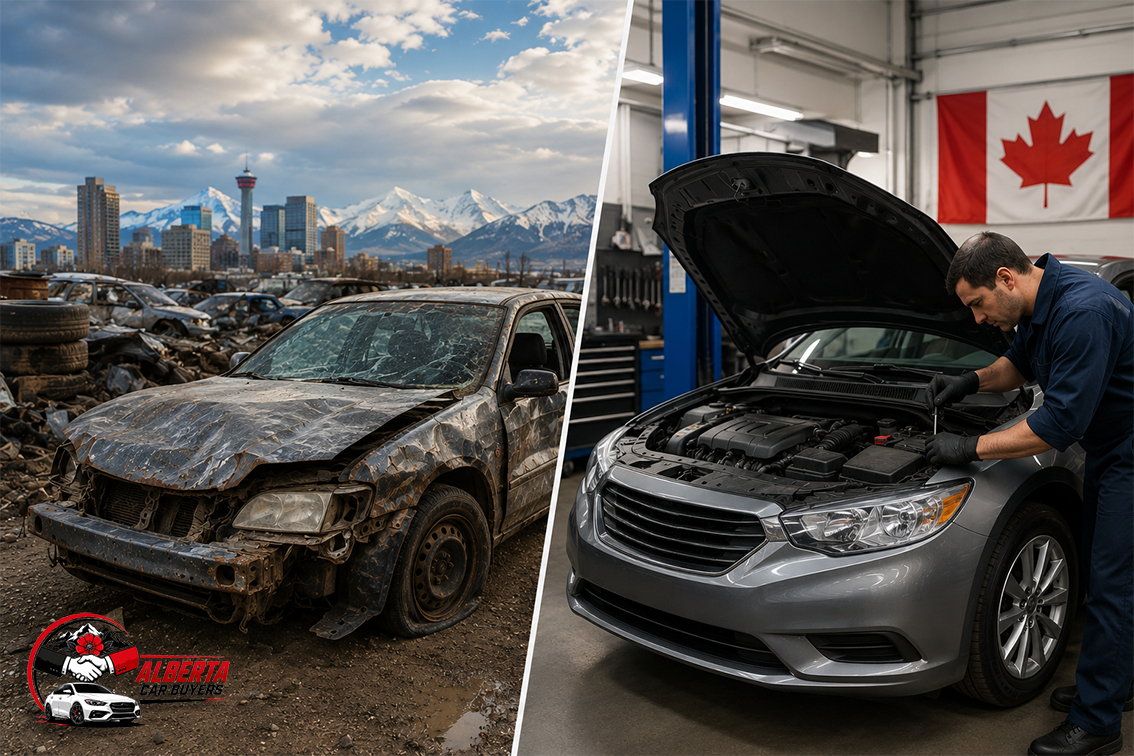

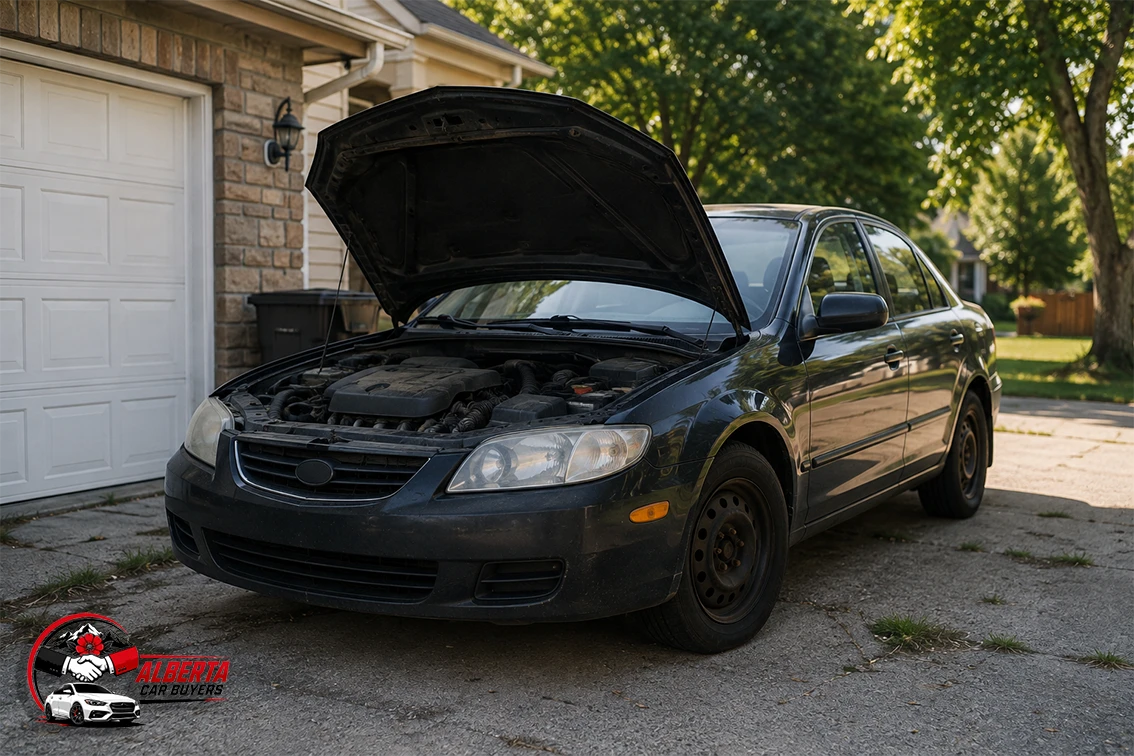
That car sitting in your driveway that won’t start has probably been there longer than you planned. The problem isn’t just that it won’t run, but that you don’t know whether fixing it is worth the money, or whether anyone would even buy it in this condition. Most Alberta sellers with a non-running vehicle assume they’re stuck with two bad choices: pay for a repair or take a loss. There’s actually a third and fourth option that most people don’t consider until they look into it.
Knowing which path fits your situation can mean the difference between spending money you don’t need to and walking away with cash. This guide lays out all four options honestly so you can make the call with a clear picture.
Ready to Get a Cash Offer on Your Non-Running Car?
If your car won’t start and you want to know what it’s worth without any obligation, give us a call or email us at hello@albertacarbuyers.ca. We buy non-running cars across Calgary and 55+ Alberta cities, free towing included, and we handle all the paperwork at your door.

Option 1: Repair the Car and Keep Driving It
This is the first option most people consider, and it’s the right call in some cases. If the vehicle is relatively new, has low mileage, and the fault is something contained like a dead battery, a failed starter, or a clogged fuel injector, a repair often makes financial sense. You already own the car, you know its history, and getting it running again is cheaper than replacing it.
The problem comes when the failure is major. Engine and transmission work on Canadian vehicles routinely runs into the thousands, and shop labor costs in Alberta have climbed steadily alongside parts prices. For a vehicle that’s older, high-mileage, or has already had significant money spent on it, a large repair bill can easily exceed what the car is worth once it’s running again.
Before committing to a repair, it’s worth getting a written estimate and comparing it honestly against the vehicle’s current market value. If the repair cost is more than half the car’s running value, selling as-is is usually the smarter move.
Option 2: Sell It Privately
Private sales are possible for non-running cars, but they come with real friction. The buyer pool for a vehicle that won’t start is narrow: mostly DIY mechanics, rebuilders, and people comfortable buying project cars. That group knows exactly what they’re looking for and they negotiate accordingly.
You’ll also face logistical challenges. A buyer who can’t test drive the vehicle will want a lower price to offset the unknown. You’ll need to arrange delivery or have a tow truck ready, since the car can’t be driven to the buyer. The listing may sit for weeks before you find someone serious. And unlike selling a running car, you’re less likely to get multiple competing offers that push the price up.
If the make and model is popular and parts are in demand, a private sale can still be worth exploring. But if the car is older, in rough shape, or not a commonly sought-after model for rebuilding, a private listing is likely to waste time rather than generate meaningful offers.
Option 3: Trade It In at a Dealership
Trading in a non-running car at a dealership is an option, but most Alberta dealers aren’t set up to take on vehicles in that condition. A dealership’s trade-in offer is based on what they can resell or wholesale the vehicle for, and a car that doesn’t start gets heavily discounted because repair costs come off the top of any offer they’d make.
In most cases, dealers will conduct a thorough mechanical inspection before making any number, and a non-starter will either be turned away or offered a token amount. The trade-in route works well for vehicles in decent running condition but isn’t a reliable exit for a car with a seized engine or a failed transmission. If you’re set on trading in, call ahead and confirm the dealer will even consider the vehicle before making a trip.
Option 4: Sell It for Cash As-Is to a Direct Buyer
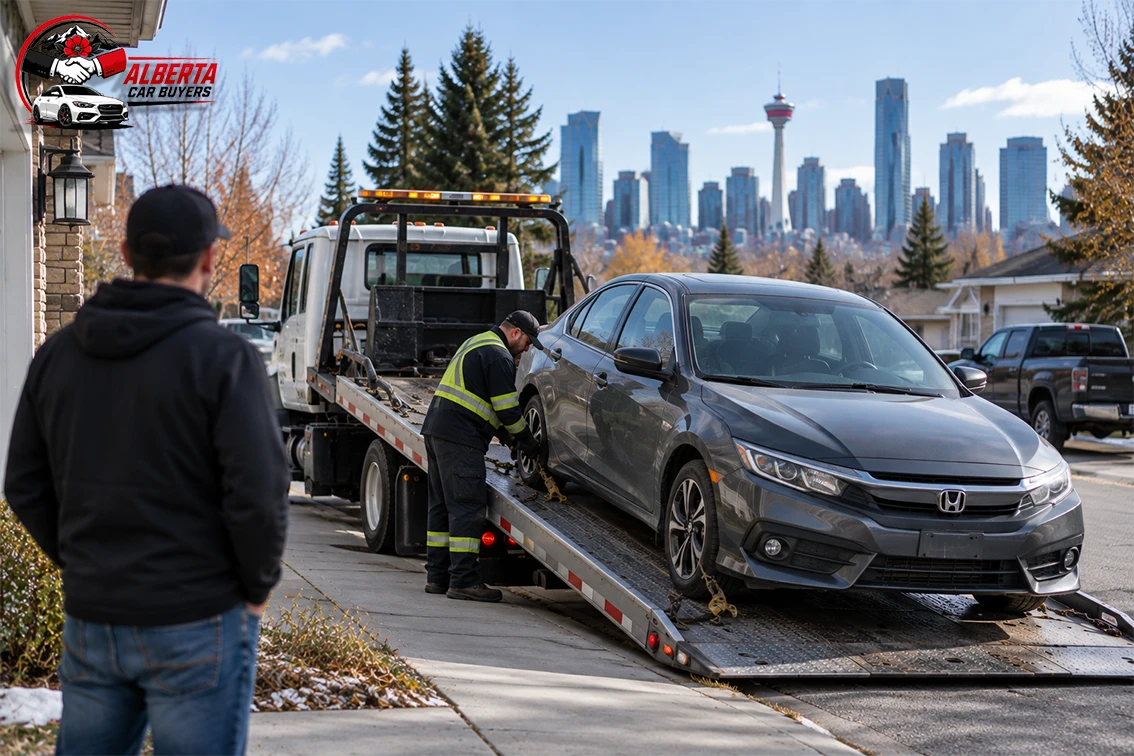
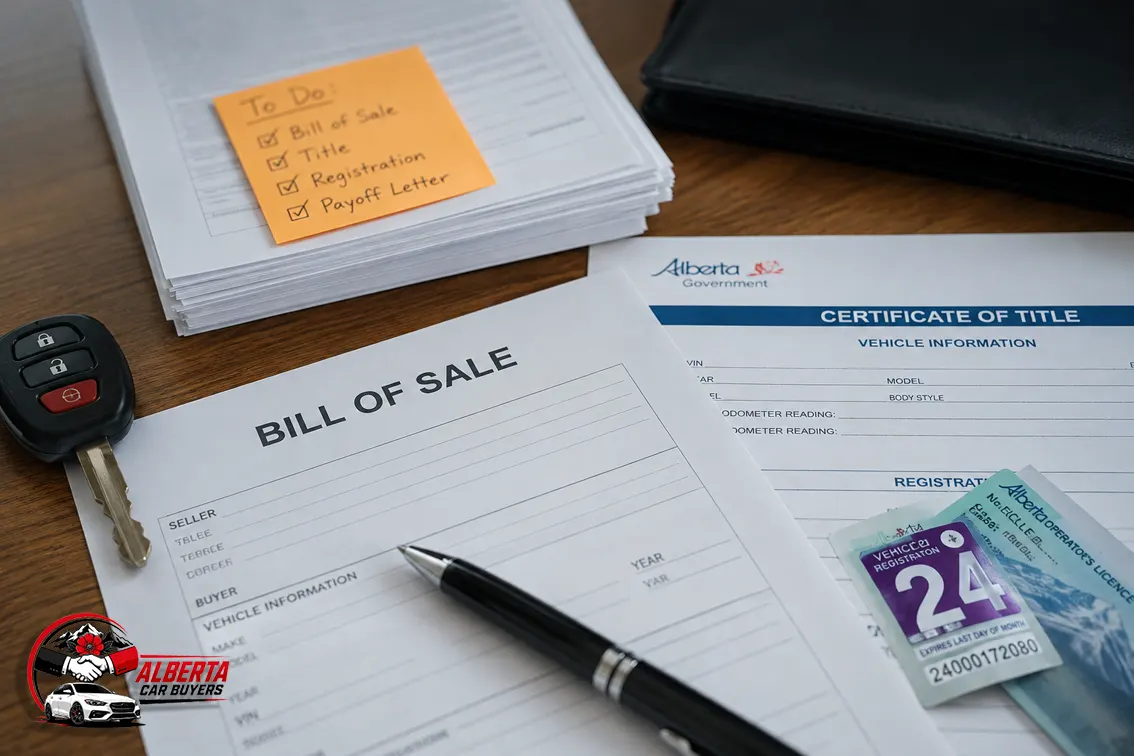
You can sell non-running car in Alberta to a direct cash buyer. It’s the most straightforward option for most Alberta sellers in this situation. The vehicle doesn’t need to start, doesn’t need to be delivered, and doesn’t need any repairs done before pickup. You get a firm offer over the phone, and if the number works, the buyer comes to you with a tow truck, handles the paperwork, and pays before the vehicle is loaded.
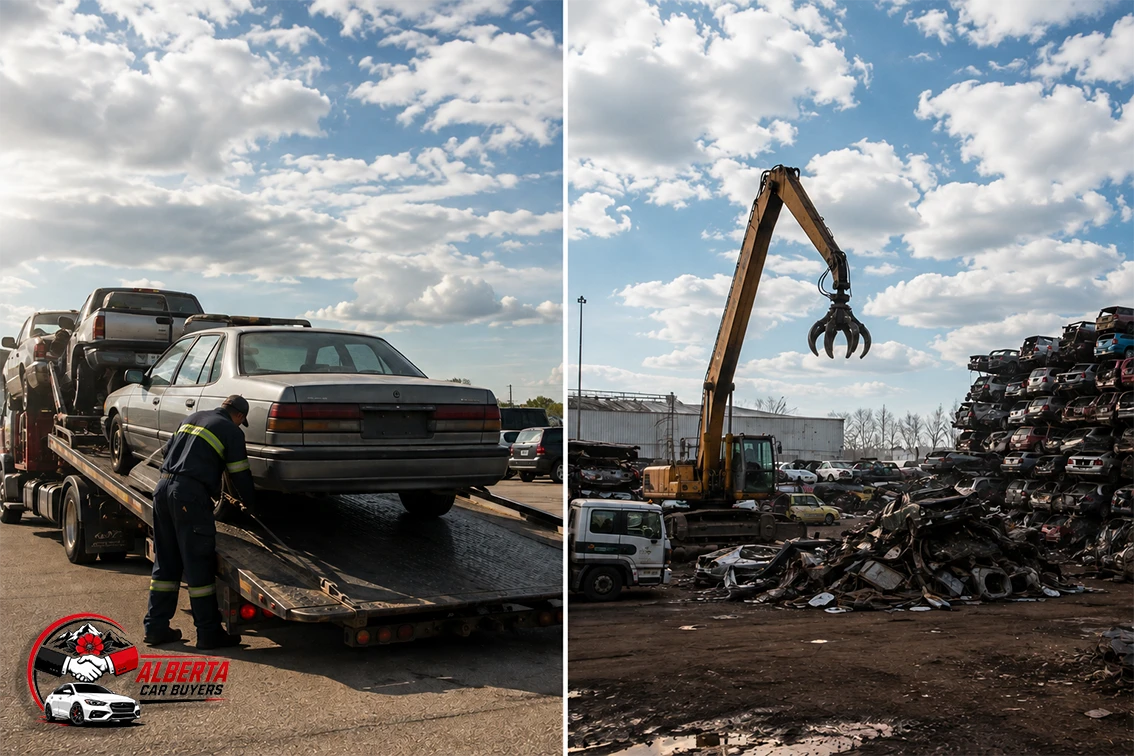
The offer is based on the whole vehicle: its make, model, year, overall condition, and current Alberta scrap metal prices. Even a car with a completely seized engine or a failed transmission still has value in its weight, any sellable components, and its metal content. A non-runner that’s been sitting for a couple of years can still generate a meaningful cash offer, particularly if it’s a popular make or a larger vehicle with more recyclable material.
This option removes the variables that make the other three routes uncertain. There’s no repair gamble, no waiting on private sale listings, and no dealership rejection. The trade-off is that you’re unlikely to get as much as a fully running car would fetch at a private sale, but for a vehicle that won’t start, that comparison isn’t a realistic one anyway.
How to Decide: A Quick Breakdown
| Your Situation | Best Option |
|---|---|
| Vehicle is newer, low-mileage, and the fault is minor | Repair it |
| Popular make or model with strong parts demand, you have time | Private sale |
| You're buying a new car from a dealer and want convenience | Trade-in (call ahead first) |
| Car won't start, older, major mechanical failure, or you need it gone quickly | Sell for cash as-is |
What a Non-Running Car Is Worth in Alberta
The value depends on a few factors: the make and model, the year, how complete the vehicle is, and what’s wrong with it. Vehicles with a failed transmission or engine but otherwise intact bodies and interiors tend to do better than cars that have been picked over or badly rusted.
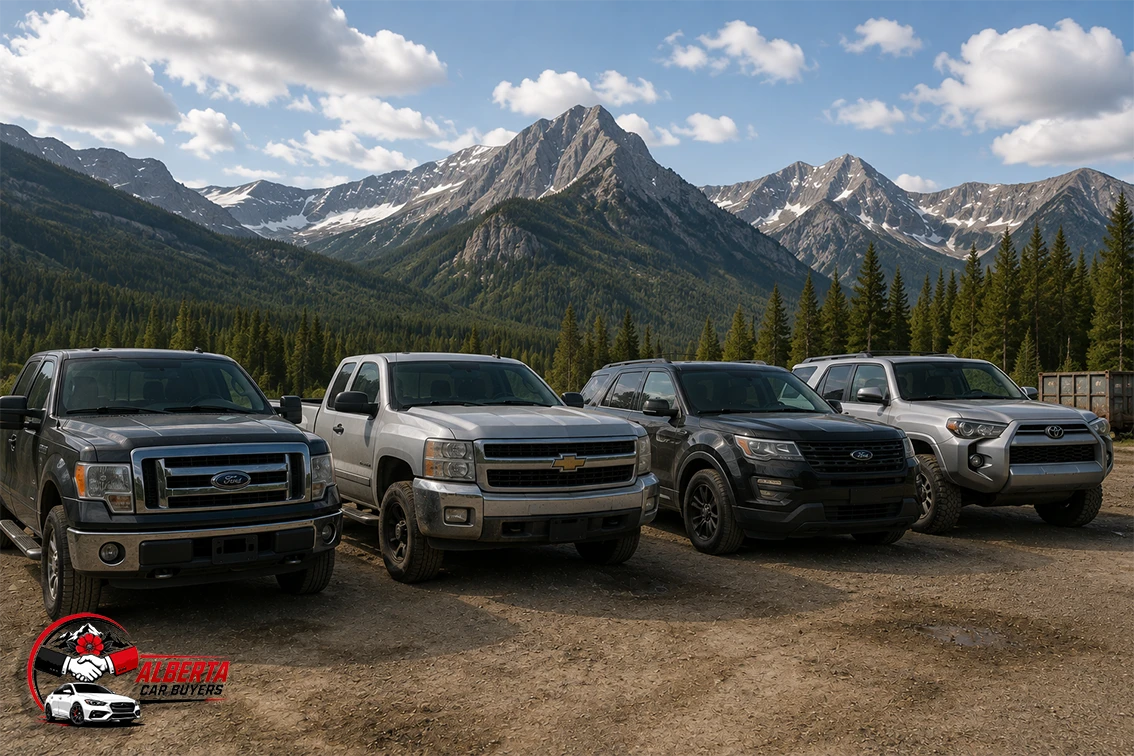
Larger vehicles like trucks and SUVs typically generate higher offers because they carry more weight and often have parts in consistent demand across Alberta. Older compact cars in rough shape sit at the lower end. The honest range for most non-running cars in Alberta in 2026 is somewhere between $200 and $4,500 for a direct cash sale, with newer or larger vehicles pushing higher.
Frequently Asked Questions
Conclusion
A car that won’t start doesn’t have to turn into a drawn-out problem. Repairing it makes sense if the fault is minor and the car has life left in it. A private sale works if you have the right vehicle and enough patience. A dealership trade-in is convenient when you’re buying a replacement but usually isn’t the right move for a car in rough mechanical shape. Selling for cash as-is to a direct buyer is the fastest, lowest-effort option for most Albertans dealing with a non-runner, and it skips the uncertainty that comes with every other route. Figure out where your car sits, weigh the cost and time involved in each path, and go from there.
References & Further Reading
- J.D. Power. 2025 Canada Customer Service Index – Long-Term (CSI-LT) Study. https://www.jdpower.com/business/press-releases/2025-canada-customer-service-index-long-term-csi-lt-study
- Canadian Automobile Association (CAA). Canadians Unclear About the True Cost of Owning a Vehicle. https://www.caa.ca/news/canadians-unclear-about-the-true-cost-of-owning-a-vehicle/
- Canadian Automobile Association (CAA). CAA Driving Costs Calculator – Alberta. https://carcosts.caa.ca/results/alberta/passenger_mainstream/ice
- Government of Alberta. Buying or Selling a Vehicle. https://www.alberta.ca/buying-selling-vehicle
- Government of Alberta. Standard Bill of Sale. https://www.alberta.ca/standard-bill-sale
Ready to Get a Cash Offer on Your Non-Running Car?
If your car won’t start and you want to know what it’s worth without any obligation, give us a call or email us at hello@albertacarbuyers.ca. We buy non-running cars across Calgary and 55+ Alberta cities, free towing included, and we handle all the paperwork at your door.