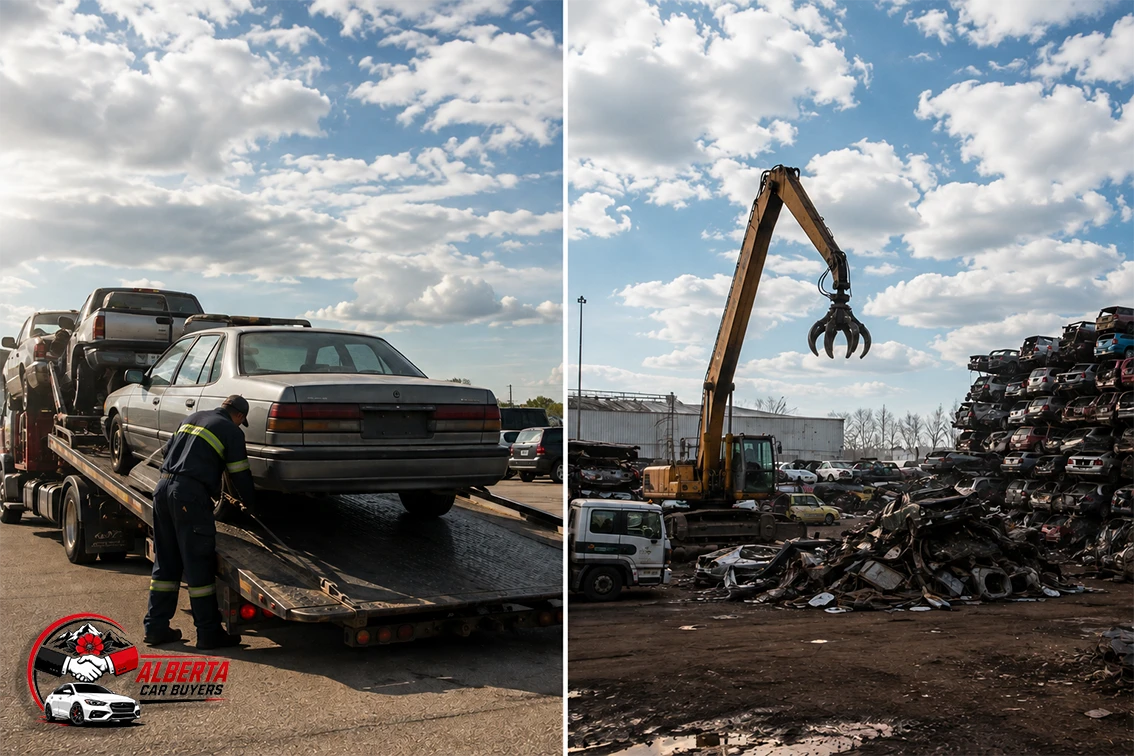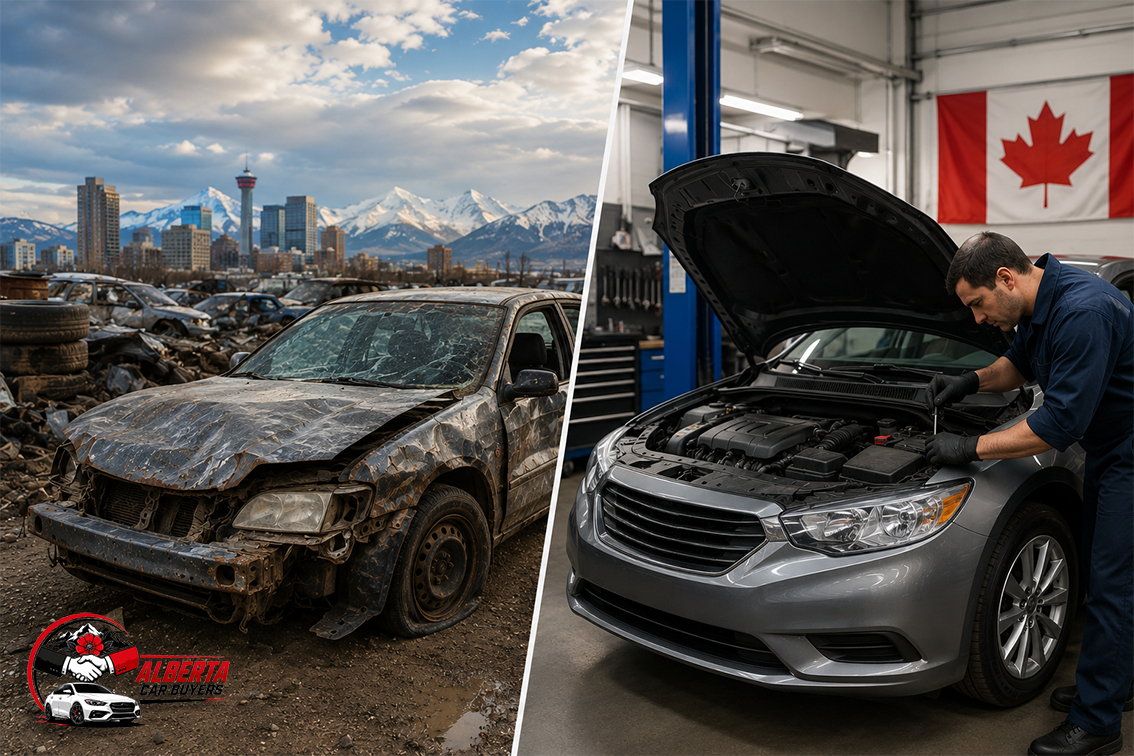

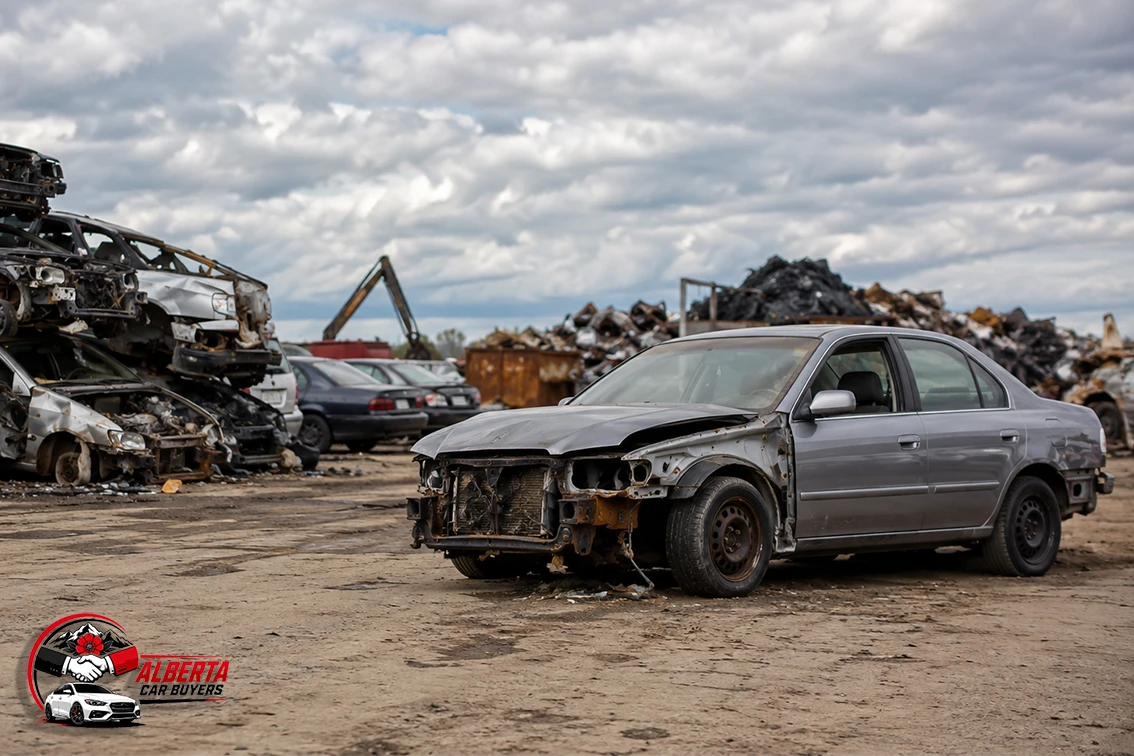
A car sitting in your driveway after a crash or a major mechanical failure raises one question fast: is it worth fixing, selling, or scrapping? Alberta owners often use “scrap car” and “salvage car” as if they mean the same thing, and that mix-up can quietly cost hundreds or even thousands of dollars. The two terms describe different legal statuses, different sales processes, and very different payouts. Once you understand how each one is classified and valued in Alberta, the right decision becomes obvious.
This guide breaks down exactly what separates a scrap car from a salvage car, so you can walk away with the most money and the least hassle.
What Is a Scrap Car in Alberta?
A scrap car is a vehicle that has reached the end of its useful life. It is no longer roadworthy, and repairing it doesn’t make financial sense. Once a vehicle is scrapped, it is permanently dismantled and taken off the road for good. Alberta scrap vehicles are typically processed for:
- Scrap metal recovery
- Materials recycling
- Salvageable parts resale
Alberta’s auto recycling industry follows the Canadian Automotive Recyclers’ Environmental Code (CAREC), a standard built to support Retire Your Ride, Canada’s national end-of-life vehicle scrappage program managed by the Automotive Recyclers of Canada. Alberta has nearly 100 members through the Alberta Automotive Recyclers & Dismantlers Association, all committed to CAREC-driven environmental standards.
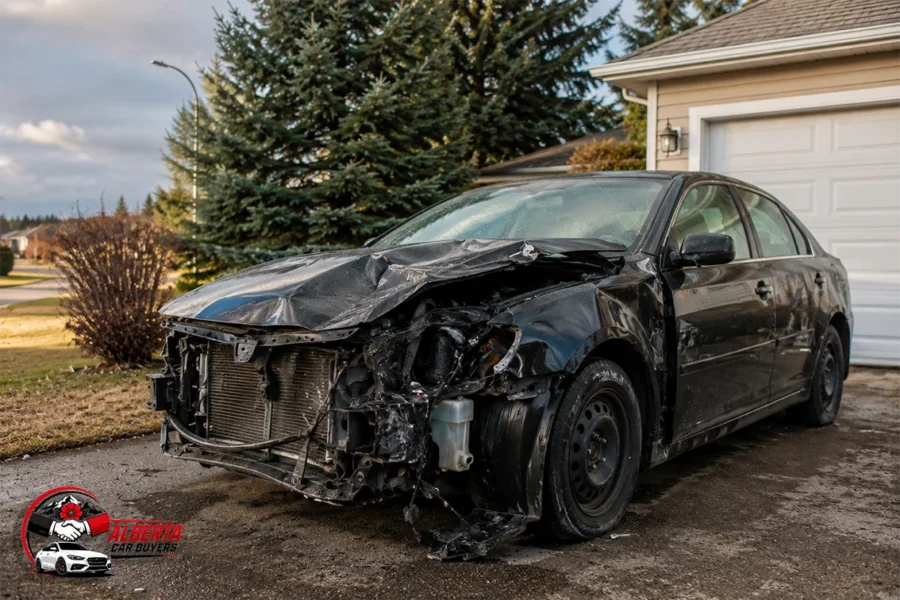
What Is a Salvage Car in Alberta?
A salvage car is different. Under Alberta’s Traffic Safety Act, a “salvage motor vehicle” is a specific legal classification, not just an industry term. In practice, an insurance company assigns this status after determining that repairing the vehicle is not economical or that the damage is severe enough to make the vehicle unsafe. Unlike a scrap car, a salvage vehicle may still be repairable.
In Alberta, a salvage-branded vehicle cannot legally be driven or insured in its current condition. To return it to the road, the owner must, according to Alberta.ca:
- Have the vehicle inspected by a licensed technician at a Salvage Vehicle Inspection Facility
- Complete structural and mechanical repairs that meet original equipment manufacturer or I-CAR standards
- Present the inspection certificate to an Alberta registry agent within 14 days of issue
Once the vehicle passes inspection, its status changes from “salvage” to “rebuilt,” a designation that stays with the vehicle for the rest of its life and must be disclosed at resale.
Scrap Car vs Salvage Car: What Are the Key Differences?
| Factor | Scrap Car | Salvage Car |
|---|---|---|
| Roadworthy | No, permanently retired | No, until repaired and inspected |
| Repair Potential | None | Often repairable |
| Legal Status | Dismantled, removed from registry | Salvage title, can become "rebuilt" |
| Typical Buyer | Scrap yard or recycler | Rebuilder, repair shop, or salvage buyer |
| Value Driver | Metal weight and parts | Damage extent and resale demand |
How Is a Scrap Car's Value Calculated?
Scrap value in Alberta comes down to weight and materials, not condition. Buyers typically base offers on:
- Vehicle weight and metal content
- Current scrap steel and aluminum prices
- Recyclable fluids and components
- Any easily removable parts with resale value
Because pricing tracks daily commodity markets, most scrap buyers only guarantee a quote for a short window before it needs to be refreshed. Interior condition, paint, and minor cosmetic issues have little to no effect on a scrap offer.
How Is a Salvage Car's Value Calculated?
Salvage vehicles are priced more strategically, since a buyer is betting on eventual resale. Value depends on:
- Extent and location of the damage
- Cost and feasibility of repairs
- Make, model, and parts demand
- Pre-accident market value
A salvage vehicle with intact major components, such as the engine or transmission, and strong resale demand can be worth significantly more than its scrap equivalent. Rebuilders specifically look for vehicles where repair costs stay well below resale potential after the work is done.
Which Pays More: Scrapping or Selling as Salvage?
There is no universal answer, but a few patterns hold true across Alberta:
- If the vehicle is old, heavily damaged, or has a rusted-out frame, scrap value is usually the ceiling. No rebuilder will take on a vehicle that costs more to fix than it will ever be worth.
- If the vehicle has moderate, repairable damage and the engine or transmission survived, a salvage buyer will often outbid a scrap yard.
- If speed and simplicity matter more than squeezing out every dollar, scrapping is usually faster since there is no inspection process or rebuild timeline involved.
According to the Insurance Bureau of Canada, insurers generally write off a vehicle when the estimated repair cost plus its salvage value exceeds its actual cash value before the damage occurred, and industry data reported by Canadian Underwriter shows roughly 17 percent of physical damage claims end this way. That makes this decision one a large share of Alberta drivers will face at some point.
How Do You Decide Which Option Is Right for Your Vehicle?
Before deciding, get an honest read on the vehicle’s condition, request quotes from more than one buyer, and factor in how much time you’re willing to spend. A car with a blown engine and rust damage rarely justifies the salvage repair path.
A car with cosmetic or moderate collision damage and a strong drivetrain might be worth more through a salvage sale. Comparing real offers is the only way to know for certain which route puts more money in your pocket.
Get Cash for Your Vehicle Today
If your vehicle falls into the scrap category, or you’d simply rather skip the inspection and rebuild process altogether, Alberta Car Buyers offers free towing and same-day payment anywhere in Alberta. Call +1 (587) 324-2142 or email hello@albertacarbuyers.ca for a no-obligation quote on your vehicle, running or not.
Conclusion
Scrap and salvage vehicles are not interchangeable categories. A scrap car has reached the end of its road life and is valued for its weight and materials, while a salvage car has been written off by an insurer but may still be worth repairing and returning to the road under Alberta’s inspection rules. The right choice depends on the extent of the damage, whether major components survived, and how much time you want to put into the process.
Weighing these factors honestly, and comparing real offers, is what determines whether scrapping or going the salvage route puts more money in your pocket.
Frequently Asked Questions
References & Further Reading
Government of Alberta, “Salvage vehicle inspections” – https://www.alberta.ca/salvage-vehicle-inspections
Traffic Safety Act, Revised Statutes of Alberta 2000, c T-6 (via CanLII) – https://www.canlii.org/en/ab/laws/stat/rsa-2000-c-t-6/
Insurance Bureau of Canada write-off criteria, as reported by Canadian Underwriter (via Hub Insurance Hunter) – https://www.hubinsurancehunter.ca/blog/what-happens-if-my-car-is-a-write-off/
Automotive Recyclers of Canada, “Retire Your Ride” national vehicle scrappage program – https://retireyourride.ca/
Alberta Automotive Recyclers & Dismantlers Association – https://aarda.com/
eServices Alberta, “In-Transit Permit: For Salvage Vehicles” – https://eservices.alberta.ca/in-transit-permits-salvage.html
Written by the Alberta Car Buyers team. Our experience purchasing and removing junk vehicles throughout Calgary gives us practical insight into vehicle valuation, responsible recycling, and the local market trends that matter to sellers.