
An old car sits in the driveway or the corner of a garage, and every option seems to come with a catch. Repairs might cost more than the car is worth, a private sale means ads and strangers, and a tow isn’t free if it won’t start. Meanwhile the car keeps taking up space. The right move depends on its condition, what repairs would cost, what it could realistically sell for, how convenient each route is, and what matters most to you. This guide compares repairing, selling privately, trading in, selling to an auto wrecker, and recycling, so you can choose the option that actually fits your car.
Ready to Sell Your Old Car in Banff?
If you want to know exactly what your vehicle is worth under current Alberta market conditions, Alberta Car Buyers can give you a firm number quickly. We buy vehicles in any condition across Calgary and 55+ Alberta cities, with free towing and cash paid on pickup. Email hello@albertacarbuyers.ca or get a quote and we’ll get back to you with a real offer, no obligation.

Key Takeaways
These points are developed in the sections that follow:
- An old or unwanted car in Banff can usually be handled several ways, including repair, private sale, trade-in, auto wrecker sale, or recycling.
- The right option depends on the vehicle’s condition, repair costs, potential resale value, and how much time and effort you want to invest.
- Repairing an older vehicle may make sense when the expected benefit outweighs the cost, but expensive repairs can change that math.
- A private sale may reach a wider pool of buyers, but it generally takes more time and effort.
- An auto wrecker can be an option when a vehicle is old, damaged, unwanted, or impractical to repair, particularly if it still has usable parts or recyclable materials.
- Before deciding, compare the car’s condition and likely value with the cost, time, and effort of each route.
What Should You Do With an Old or Unwanted Car in Banff?
The best choice for what to do with an old car in Banff depends on the car’s condition, what repairs would cost, what it could realistically sell for, and how much effort you want to spend. A running car with life left may suit a repair or private sale, while a damaged or non-running one may suit a wrecker or recycler.
Is an Old Car Automatically a Scrap Car?
No. Age alone doesn’t decide a car’s fate, and neither does the owner’s wish to be rid of it. A few distinctions keep the decision honest:
- Old: a vehicle with years or kilometers on it that may still be safe, reliable, and worth something to a buyer.
- Unwanted: a car you no longer need, which says nothing about its value. It can still have resale, parts, or material value.
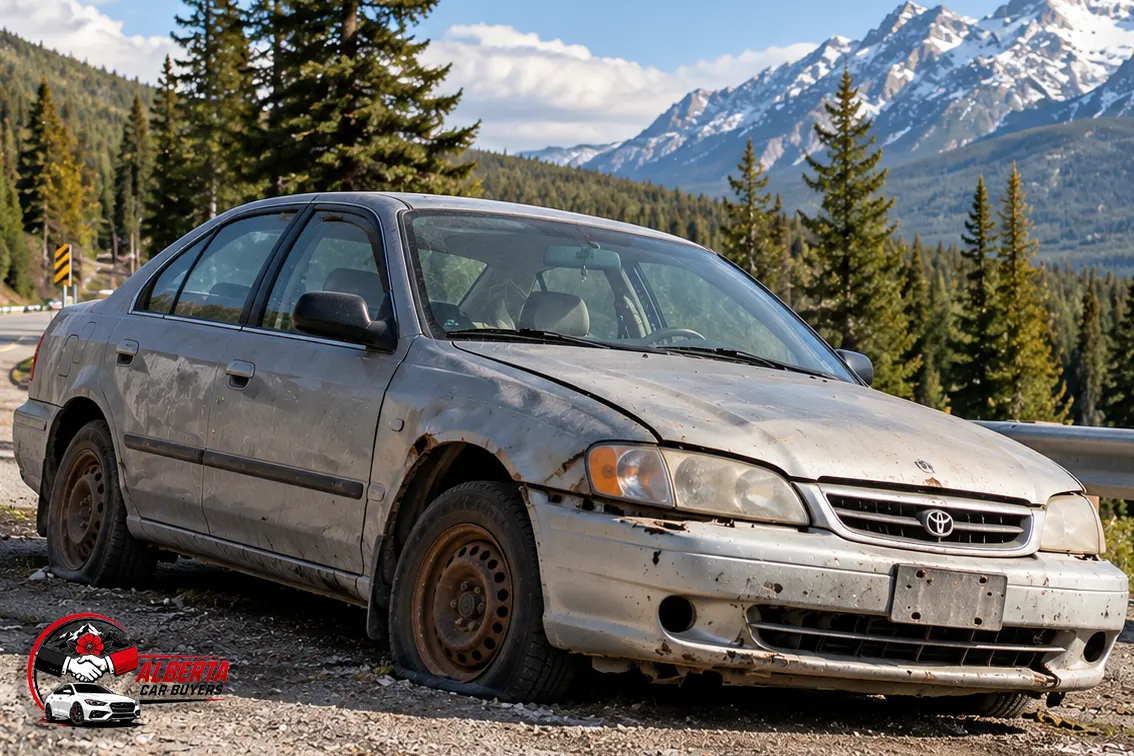
- End-of-life: a vehicle where condition, safety, or repair costs make further use impractical. This is the group that fits recycling most naturally.
Keeping these apart helps you avoid two common mistakes: scrapping a car that could have been sold, and paying to repair one that can’t be saved.
Does Living in Banff Change the Decision?
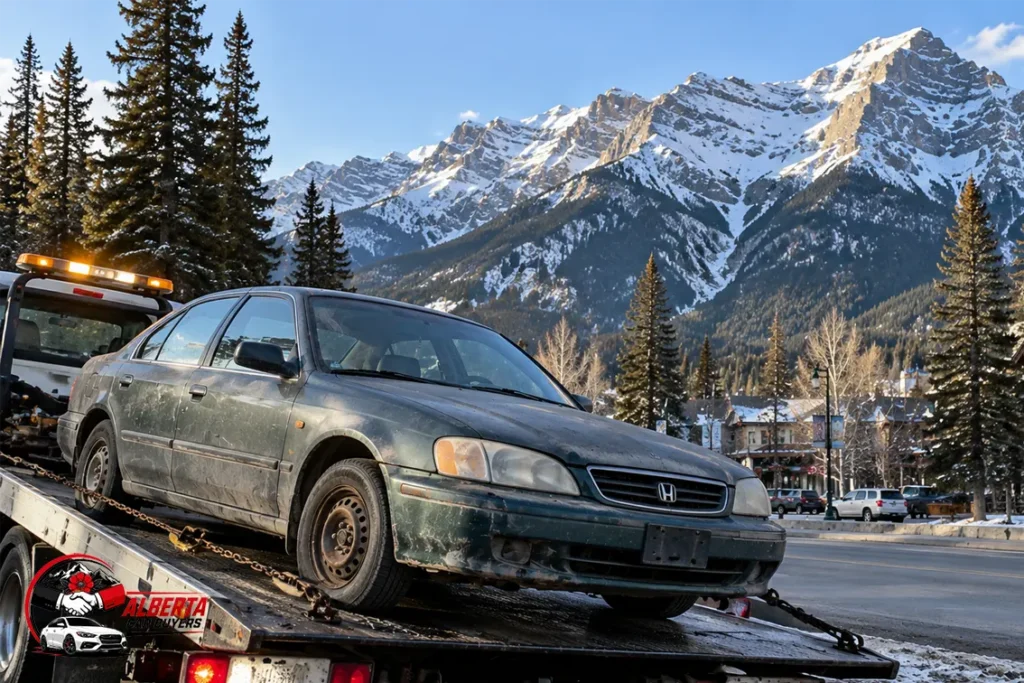
The basic math stays the same, but Banff adds a few practical wrinkles. It’s a small townsite inside Banff National Park, Canada’s first national park, in the Bow Valley west of Calgary, so the pool of nearby private buyers may be smaller than in a big city. Mountain driving, with hills, cold winters, and snowy roads, can also be hard on brakes, batteries, and tires. If the car doesn’t run, ask any buyer or tow operator whether they cover Banff before you count on a pickup.
What Are the Main Options for an Old or Unwanted Car?
You generally have six options: keep the car, repair it, sell it privately, trade it in, sell it to an auto wrecker, or scrap and recycle it. Each fits a different situation, and none is the best. The table shows when each may make sense and what it costs you in time, money, or convenience.
| Option | May Make Sense When | Potential Advantage | Main Trade-Off |
|---|---|---|---|
| Keep it | The vehicle remains useful | No selling process | Ongoing costs |
| Repair | The repair is economically reasonable | Extends the vehicle's use | Upfront repair expense |
| Private sale | The vehicle has buyer appeal | A wider buyer market | More time and negotiation |
| Trade-in | You're buying another vehicle | Convenient | Trade-in value may differ from private-sale value |
| Auto wrecker | The vehicle is old, damaged, unwanted, or non-running | Removal and disposal can be simpler | The offer depends on the vehicle and buyer |
| Scrap or recycling | The vehicle is at the end of its life | Materials can be recovered | Mainly suited to end-of-life vehicles |
Treat the table as a starting point, not a verdict. The options often overlap: one car might get a repair estimate, a trade-in quote, and a wrecker quote before you decide.
Is It Worth Repairing an Old Car, or Should You Sell It?
Repairing an old car is worth it when the repair cost is reasonable compared with the car’s value and remaining life. It’s harder to justify when one repair approaches what the car is worth, the problems keep repeating, or rust has compromised the structure. A written estimate and an honest look at the car’s condition settle most cases. For a closer look at the trade-offs, see the guide to repairing or scrapping an older car.
How Do You Weigh a Repair Estimate?
AMA’s guidance on repairing an older car frames the question simply: if the repair bill is close to what the car is worth, could you replace the vehicle for about that amount? It also stresses a thorough inspection and a hard look at rust and structure. Here’s a way to work through it:
- Have a qualified technician do a thorough mechanical inspection and give you a written estimate.
- Estimate what the car is worth today as it sits, and what it might be worth once fixed.
- Ask whether you could replace the car for roughly the repair amount. If you could, the repair may not be worth it.
- Check for rust and structural damage. A repair shop owner quoted by AMA says a car with a compromised frame or main suspension components should be recycled.
- Watch for big-ticket repairs. Engines and transmissions are especially expensive to replace, and a repair that approaches the car’s value is hard to justify.
Quick Tip: Before paying for a major repair, compare the repair estimate with the vehicle’s current condition, expected remaining life, and potential resale value.
When Does Keeping the Car Make Sense?
Keeping a car can be sensible when it’s reliable, you know its history, and a replacement within your budget wouldn’t be much better. AMA’s guidance also notes that a work vehicle with costly fitted accessories is a different case from a commuter car that’s easier to replace. The catch is cost: a car that sits unused can still carry insurance and registration. If you’re done with it, canceling your registration may bring a refund if you’re eligible.
Should You Sell an Old Car Privately or Trade It In?
Selling privately can reach more buyers and may bring a higher price for a car in decent shape, but it takes time, advertising, and negotiation. A trade-in is quicker and convenient if you’re buying another vehicle, though the credit may differ from what a private buyer would pay. Neither is always the better deal.
What Does a Private Sale Involve?
A private sale puts you in charge of everything, from the listing to the final handshake. Expect to handle several tasks yourself:
- Writing an honest ad and answering buyers’ questions
- Arranging viewings and test drives
- Negotiating a price, and being ready for lower offers on an older vehicle
- Waiting longer than you’d like, since an old or unwanted car in Banff may draw fewer local inquiries
- Providing ID and proof of ownership, since Alberta’s guidance for private buyers tells them to ask for both, and completing a bill of sale
Quick Tip: If you plan to sell privately, be realistic about how the vehicle’s age, condition, mileage, and repair needs may affect buyer interest.
When Does a Trade-In Make Sense?
A trade-in fits best when you’re already replacing the car and want one transaction instead of two. You hand over the old vehicle and apply its value toward the next one. The trade-off is that the credit may be lower than a private buyer would pay, and a dealer may show less interest in a car that’s very old or badly damaged.
When Does Selling to an Auto Wrecker Make Sense?
Selling to an auto wrecker in Banff tends to make sense when a car is old, damaged, non-running, or no longer practical to repair, and you’d rather skip a private sale. Offers depend on the vehicle and the buyer, so a wrecker isn’t necessarily the highest-paying route. It’s one option to compare.
Which Vehicles Suit an Auto Wrecker?
Wreckers are generally set up for vehicles that have more value in parts and materials than as a retail used car. Situations that often point this way include:
- An older car where repairs would cost more than the vehicle is worth
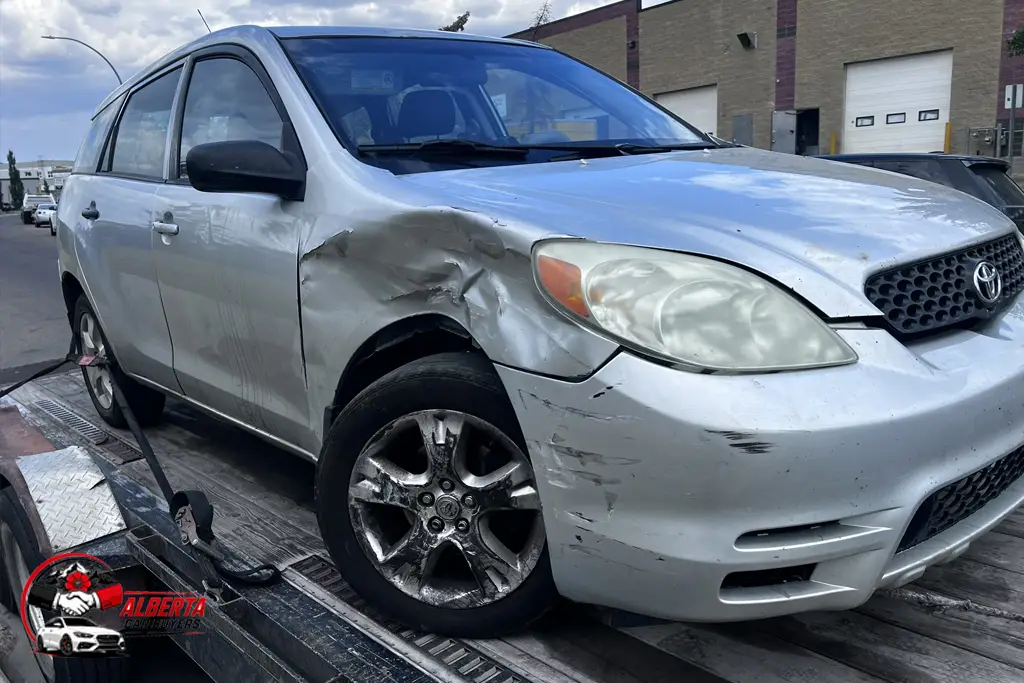
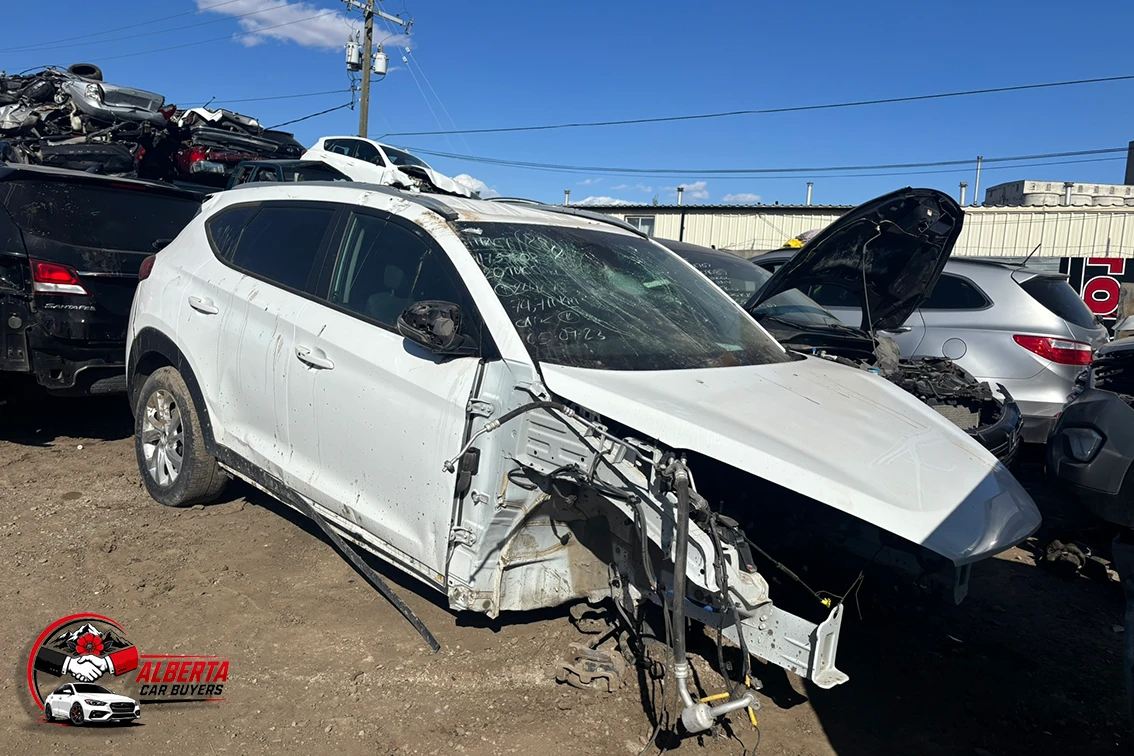
- A damaged vehicle after a collision, hail, or flooding
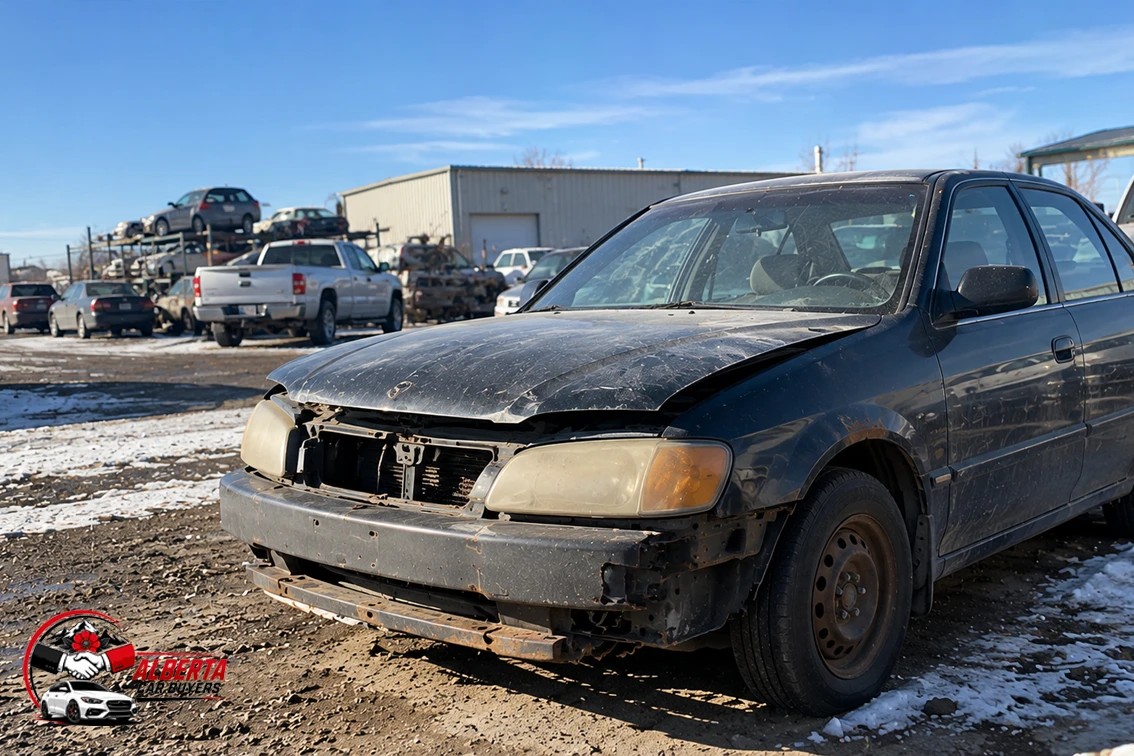
- A car that’s been sitting unused and no longer runs
- An unwanted second vehicle that you’d rather not list and show
Not every vehicle fits, and not every buyer accepts every car, so ask about your specific situation.
Can You Sell a Non-Running or Damaged Car?
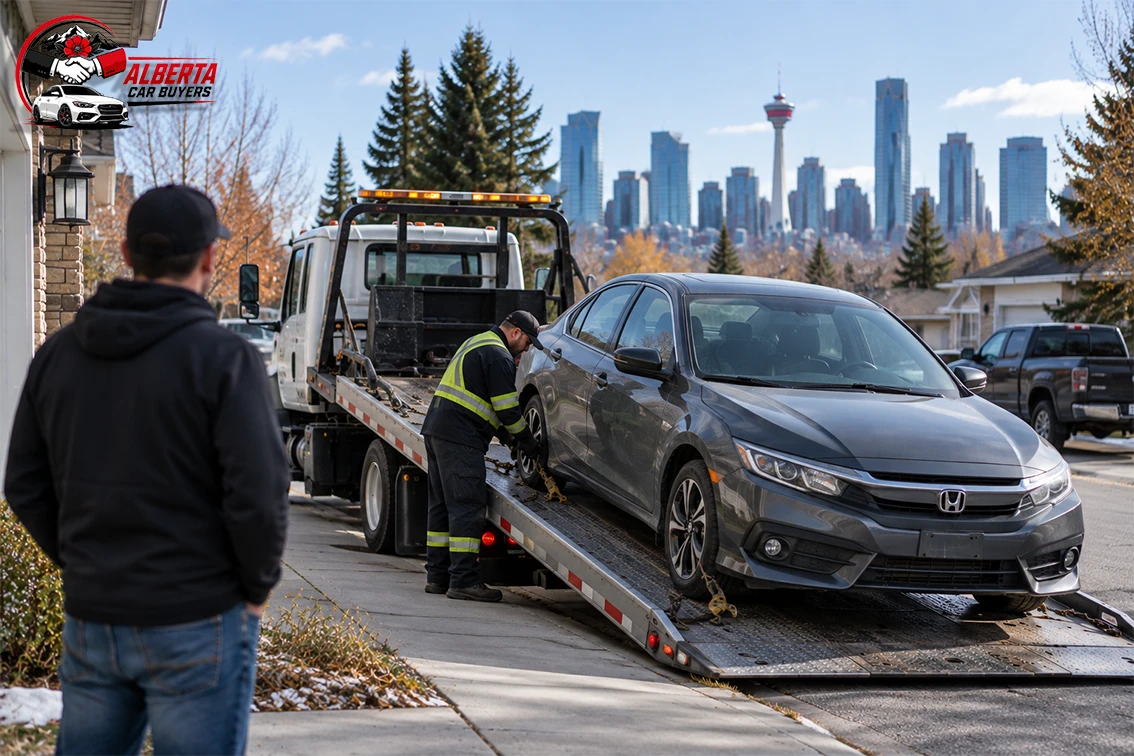
Often, yes. A car that won’t start can still contain metal and parts with resale value, and a damaged car may keep value in what’s still usable, though not every vehicle has significant worth. The main hurdle is moving it, since a non-running car usually needs a tow.
Quick Tip: If the vehicle doesn’t run, confirm how it will be transported before choosing a selling option. A low-value vehicle can become more difficult to sell if towing arrangements are unclear.
How Does an Auto Wrecker Compare With a Salvage Yard?
The terms overlap, and some businesses act as both, but the practical differences can matter. A salvage yard is often a lot where you deliver the vehicle, while some buyers come to the car. Payment timing, towing costs, and paperwork can also differ. This comparison of how auto wreckers compare with salvage yards goes through the differences in more detail.
When Is Scrapping or Recycling the Right Choice?
Scrapping or recycling usually makes the most sense once a car has reached the end of its useful life: repairs are impractical, safety is a concern, or its value lies mainly in parts and metal. Many wrecker sales end in recycling anyway, so the real question is often how the car gets there.
What's the Difference Between Scrap and Salvage?
The words are used loosely, but the idea is straightforward. A scrap car is valued mostly for its metal, while a salvage car is damaged yet may still hold recoverable parts or value. A car can move between categories depending on its condition and who’s assessing it.
What Happens to an Unwanted Car After It's Removed?
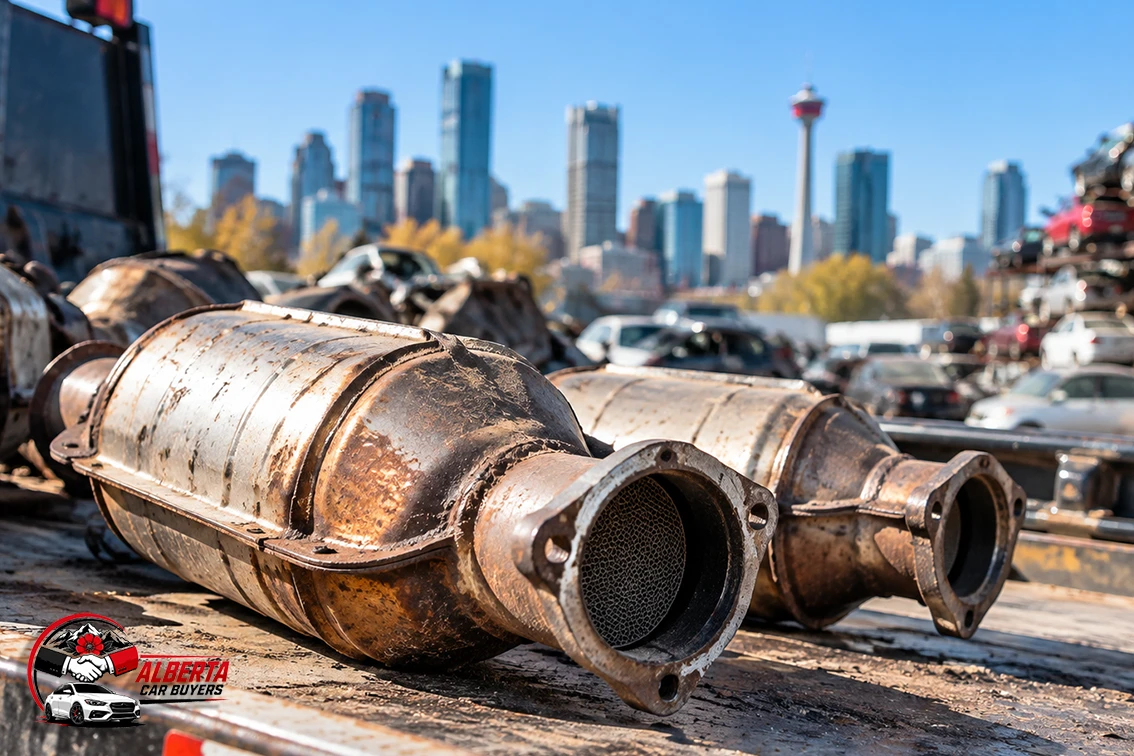
It depends on the buyer and the car. Automotive Recyclers of Canada says professional recyclers first evaluate a vehicle for reusable components and recycle the remaining materials after those parts are recovered. A buyer may also resell a car that’s in better shape. Not every business follows the same standards, so ask how a buyer handles vehicles, fluids, and batteries.
Do Environmental Considerations Matter?
They can. A car left sitting for years can leak oil, coolant, or other fluids, and its battery and tires still need proper handling eventually. Automotive Recyclers of Canada points to the Canadian Auto Recyclers’ Environmental Code, which covers fluids, refrigerants, batteries, mercury switches, and tires for its association members. Not every buyer is a member, so it’s reasonable to ask how a buyer handles these items. Reuse counts too, since parts that return to the road mean fewer new ones to make.
How Do You Decide What to Do With Your Car?
Compare what the car is realistically worth with the cost, time, and effort each option requires. If a repair costs more than the car is worth, repair probably isn’t the answer. If the car runs and has buyer appeal, price a private sale. If it doesn’t run or isn’t worth fixing, get wrecker or recycler quotes.
What's on the Final Decision Checklist?
Work through these questions before choosing what to do with an old car in Banff:
- Is the vehicle still safe and practical to drive?
- What would the necessary repairs cost?
- What is the vehicle realistically worth?
- Does it still have useful parts?
- Does it run?
- Can it be sold privately?
- Would a trade-in make sense?
- Would towing or removal be required?
- How much time do you want to spend selling it?
- Is the vehicle approaching the end of its useful life?
Quick Tip: Compare not only the potential amount you could receive, but also the time, repair costs, towing, advertising, negotiations, and effort involved with each option.
What Should You Ask Before You Commit?
Whichever route you pick, a few questions protect you from surprises. Ask them of any buyer, dealer, or shop:
- Is the quote or offer firm, and what could change it?
- Is towing or pickup included, and is there a charge?
- When and how will I be paid?
- What documents and ID do you need from me?
- What will you do with the vehicle afterward?
What Local Factors Can Complicate the Decision in Banff?
Two local factors are worth weighing: space and timing. Banff’s townsite is small and parking is limited, so an idle car can become a burden quickly, and people who leave after a season often need the car gone by a fixed date. Neither changes the options, but both can change which one is practical.
Why Does Limited Parking Matter?
The Town of Banff describes its townsite as about four square kilometers in size, with limited parking in high demand and a resident parking permit program for downtown streets. For an owner, that means a car you’re no longer driving can still cost you a spot, attention, or both. It’s one more reason not to let the decision drift, since a private sale that drags on or a repair that stalls keeps the car in that space.
How Do Seasonal Departures Change the Timeline?
Some people live in Banff only for a season. When someone is leaving at the end of one, the car often comes with a deadline, which can rule out a slow private sale. On the Banff calls we take, a familiar one is a seasonal worker with a fixed departure date and no time to run a listing. Winter weather can also shift pickup timing, so we ask about access and timing up front.
How Should You Prepare Once You've Picked an Option?
Once you’ve settled on what to do with an old car in Banff, a little preparation keeps the process smooth whichever route you take. Gather your information first, then deal with plates and insurance so the car is fully off your plate.
What Should You Gather First?
Most buyers, shops, and dealers ask the same basic questions, and having the answers ready helps you compare quotes fairly. Pull together the following:
- The year, make, model, approximate mileage, and VIN
- A plain description of the condition, including damage, warning lights, and anything missing
- Whether the car runs, and if not, what happened
- Any repair records or recent estimates
- Your ownership paperwork, keys, and photo ID
- A few clear photos
What Should You Do About Plates and Insurance?
When the car leaves, deal with the pieces that stay with you. Alberta’s license plate guidance says that if you no longer need a plate, you can return it to any registry agent office in person or by mail, and your file is then updated to show you no longer have it. Canceling the registration may also bring a refund if you’re eligible. Your insurer can explain what to do about your coverage once the car is gone.
How Can You Get a Quote if Selling Directly Fits Your Car?
If selling directly is the option that best fits your car’s condition and your priorities, email us at hello@albertacarbuyers.ca with the year, make, model, and condition, or call (587) 324-2142, and we’ll give you an offer based on that description. Towing is free, and we pay at pickup, before the vehicle is loaded. Same-day pickup is often possible in Banff, though mountain weather and seasonal road conditions can shift the timing.
Common Questions
Ready to Sell Your Old Car in Banff?
If you want to know exactly what your vehicle is worth under current Alberta market conditions, Alberta Car Buyers can give you a firm number quickly. We buy vehicles in any condition across Calgary and 55+ Alberta cities, with free towing and cash paid on pickup. Email hello@albertacarbuyers.ca or get a quote and we’ll get back to you with a real offer, no obligation.
Final Thoughts
An old car isn’t a scrap car, and an unwanted one isn’t worthless. Repair economics matter, so start with an honest estimate. A private sale usually takes more time and effort, while a trade-in can be convenient when you’re replacing the vehicle. Auto wreckers can be an option for old, damaged, unwanted, or non-running cars, and recycling may make sense once a car has reached the end of its useful life. Whatever you choose, compare your options before deciding what to do with an old or unwanted car in Banff.
References & Further Reading
- Alberta Motor Association (AMA). When to Repair an Older Car (and When Not To). Published June 17, 2019; last updated January 12, 2024. https://amainsider.com/repair-an-older-car/
- Government of Alberta. Buying a vehicle from a private seller. https://www.alberta.ca/buying-vehicle-private-seller
- Government of Alberta. Cancel vehicle registration. https://www.alberta.ca/cancel-vehicle-registration
- Government of Alberta. Licence plates. https://www.alberta.ca/licence-plates
- Parks Canada. Banff National Park. https://parks.canada.ca/pn-np/ab/banff
- Town of Banff. Visitor-Pay Parking. https://banff.ca/1184/Visitor-Pay-Parking
- Town of Banff. Resident Parking Permits. https://banff.ca/1185/Resident-Parking-Permits
- Collision Repair Magazine (Automotive Recyclers of Canada). Building on Success: A Canadian policy framework for ELVs, August 12, 2026. https://www.collisionrepairmag.com/buyers-guide/recycling/article/15832281/automotive-recyclers-of-canada-building-on-success-a-canadian-policy-framework-for-elvs