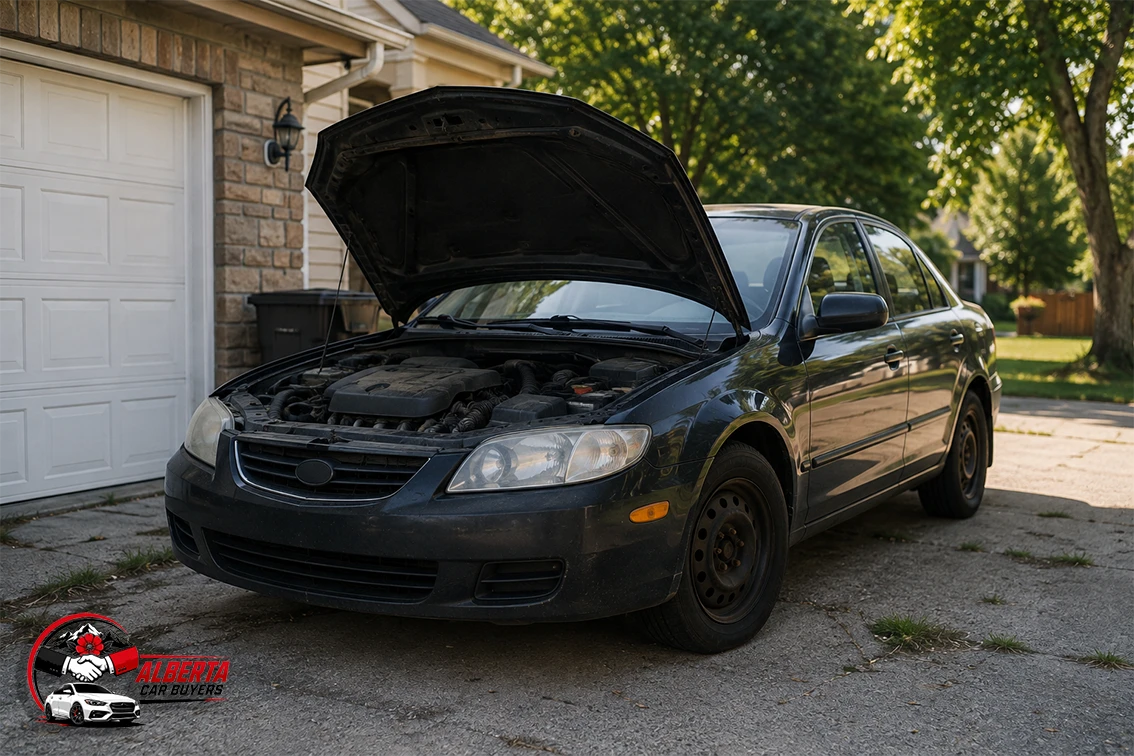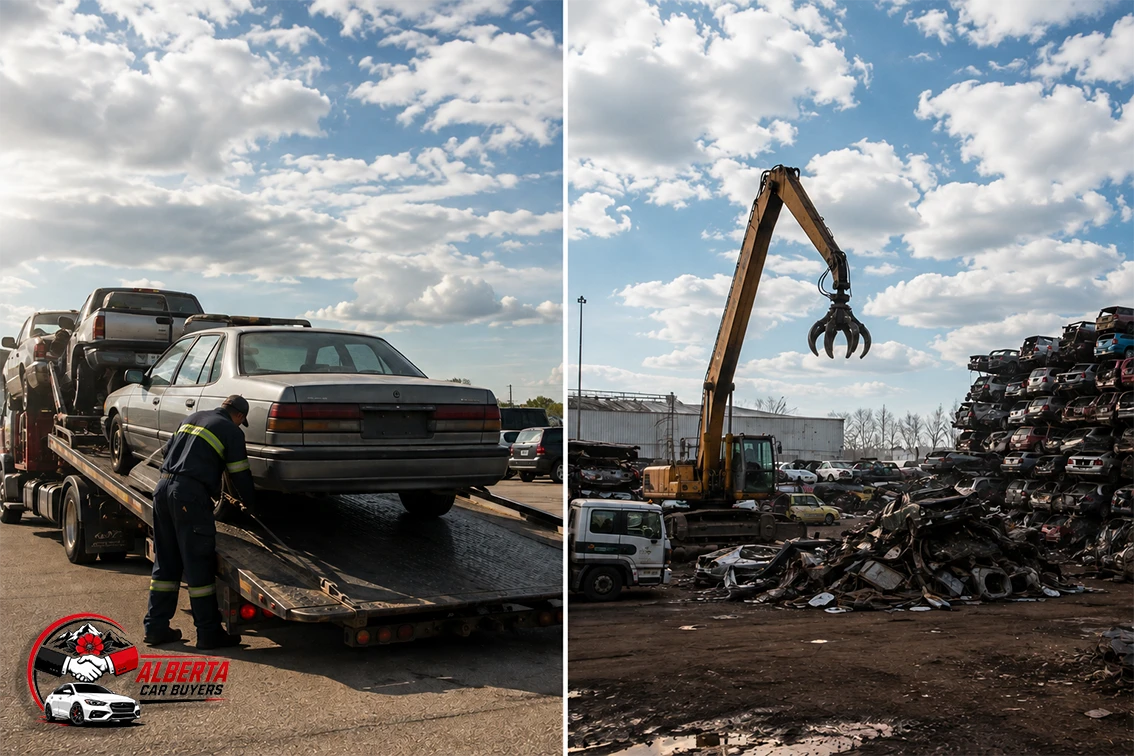

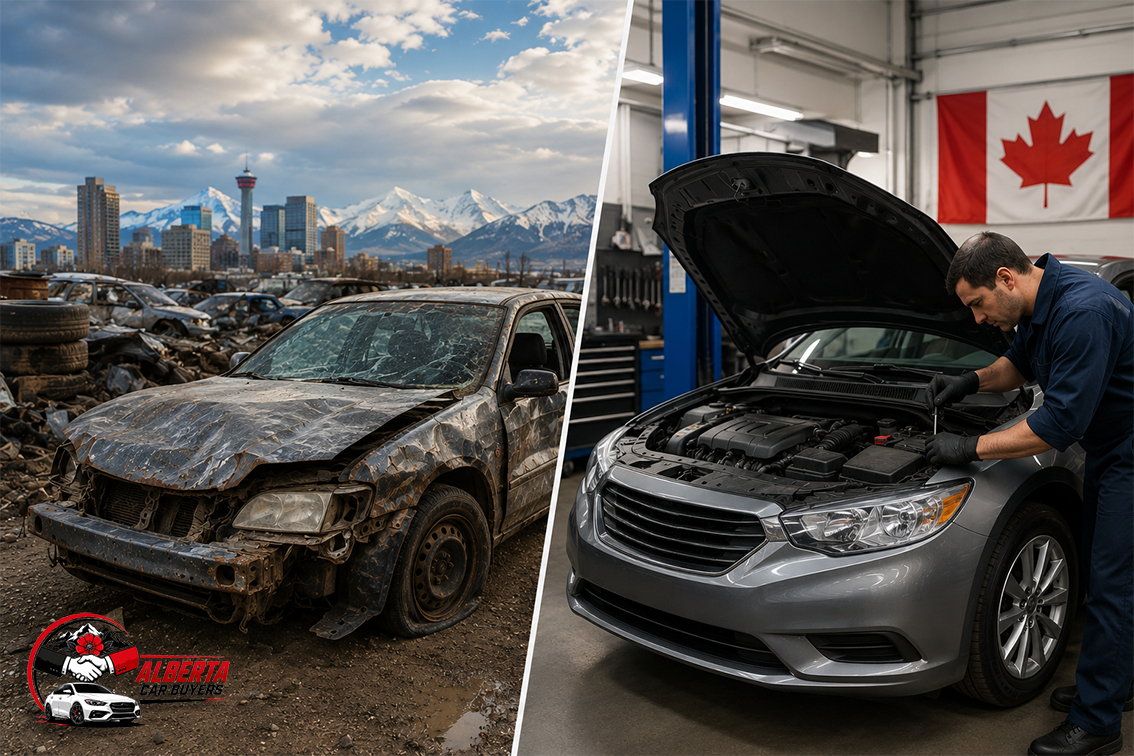
Your check engine light is on again, the mechanic has just quoted you a price that has made you wince, and now you’re looking at your car wondering whether it’s even worth fixing anymore. That moment, with the repair invoice in one hand and your gut feeling in the other, is where thousands of Alberta drivers find themselves every year, especially after a hard winter, a hailstorm or one too many trips to the garage. The real problem isn’t the repair bill itself, but not knowing whether you’re about to throw good money after bad. That’s why the decision of whether to scrap or repair your car in Alberta matters so much: choose wrongly and you either lose a reliable vehicle too early or sink thousands into a car that will never be the same again. This article will walk you through the exact maths, the real Alberta rules and the practical steps to help you make the decision with confidence, as well as what to do next, whichever option you choose.
Got an old, damaged, or unwanted vehicle taking up space?
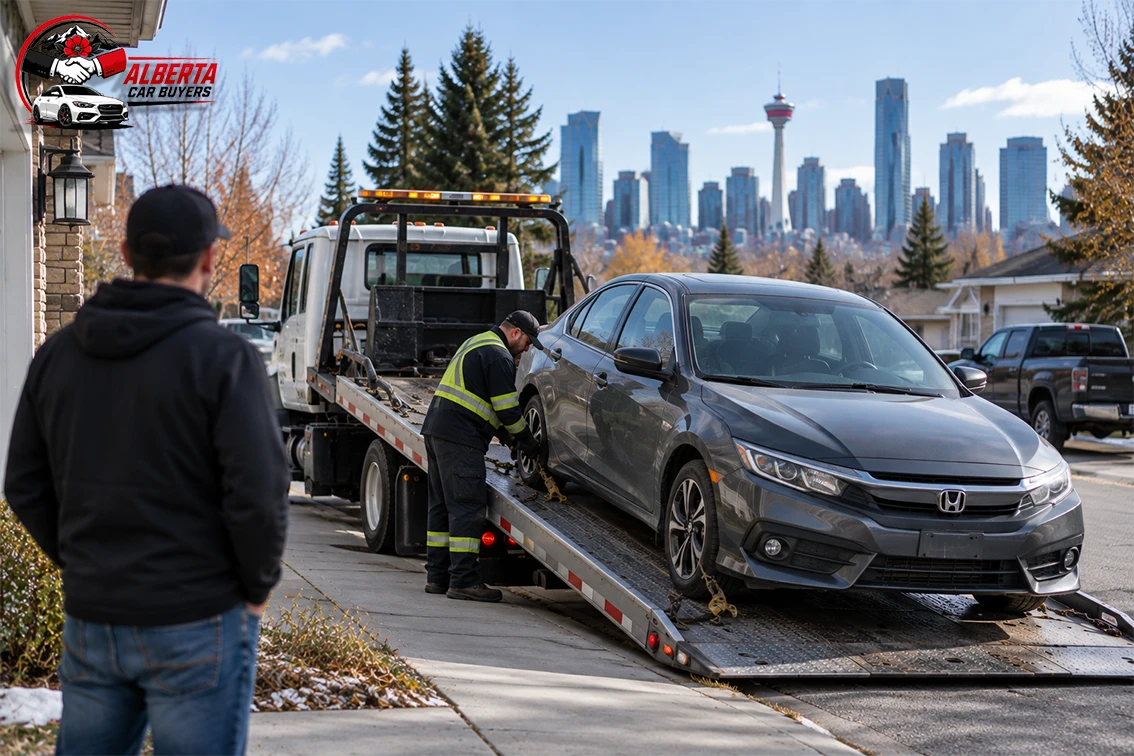
Alberta Car Buyers makes it easy to turn it into cash. We offer fair prices, free towing anywhere in Alberta, and fast, hassle-free service from start to finish. Get a quick quote today and clear your space with confidence.

Scrap or Repair? What This Decision Actually Means
This comparison shows up any time a vehicle needs work that costs a meaningful chunk of what the car is actually worth, and understanding it properly can save or cost you thousands of dollars.
Two Roads, One Broken-Down Car
Scrap car vs repairing car is the financial and practical comparison between two options:
paying a mechanic to fix your vehicle’s current problem(s), or selling/recycling the car as-is to a scrap or salvage buyer and putting that money toward something else. It’s not a legal category, it’s a decision every owner of an aging or damaged vehicle in Alberta eventually has to make.
Why Getting This Call Right Matters So Much
Alberta’s climate is brutal on vehicles. Between deep freeze-thaw cycles, road salt, and hailstorms that have caused over a billion dollars in insured damage in a single storm more than once, cars here age faster than the odometer suggests. A wrong decision compounds:
repair a car that’s already 80% depreciated and you’re pouring money into a shrinking asset; scrap a car that only needed a $400 fix and you’ve walked away from thousands in remaining value. Getting this decision right protects your budget and keeps you from being stranded on a Calgary highway in January.
The Checks Alberta Mechanics and Insurers Actually Use
There’s no single Alberta law that tells you when to scrap a car, but insurers, mechanics, and experienced buyers all use the same handful of checks. Run your car through these in order and the right answer usually becomes obvious.
Do the 50% Math First
The most widely used rule of thumb: if the repair estimate is more than 50% of your car’s current market value (not what you paid for it, and not its value before it broke down), scrapping usually makes more financial sense. A $9,000 repair on a car worth $12,000 is a borderline call; that same $9,000 repair on a car worth $6,000 is not.
Know the Number Your Insurance Adjuster Is Using
Alberta doesn’t set a fixed legal total loss percentage the way some U.S. states do, but in practice, most insurers operating in Alberta will write off a vehicle when repair costs reach roughly 70–80% of its actual cash value, factoring in what the wreck could still fetch at
salvage. If you’re dealing with an insurance claim rather than a mechanical breakdown, this is the number your adjuster is quietly running in the background.
Ask What's Likely to Break Next
A car with over 200,000 km or more than 12–15 years on the road is statistically closer to its next major failure, transmission, engine, or suspension, even if the current repair is unrelated. Ask yourself honestly: is this repair fixing the car, or just buying a few more months before the next expensive problem?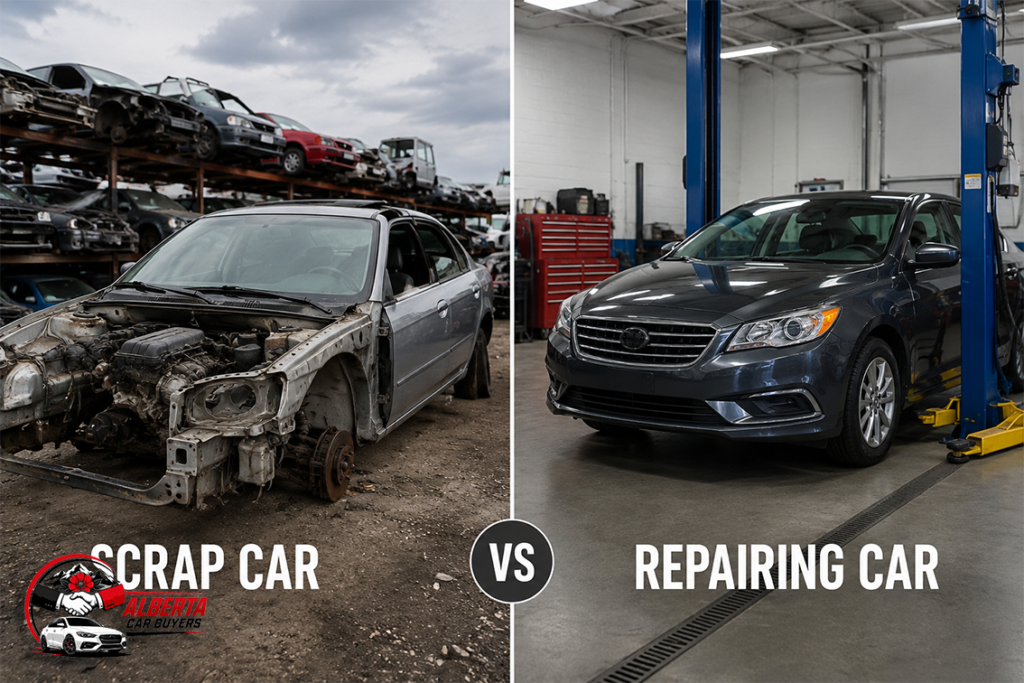
Check Whether It's Even Legal to Put Back on the Road
If the damage affects the frame, airbags, brakes, or steering, and the car has been assigned a “salvage” status by an insurer, Alberta requires a full Salvage Vehicle Inspection, covering both structural integrity and mechanical fitness, before it can legally be re- registered and driven again. That inspection isn’t optional, and it isn’t cheap, which pushes many borderline cars firmly into scrap territory.
Price Out the Parts Before You Commit
Older or less common models can rack up repair costs fast simply because parts are harder to source in Alberta, adding both time and dealer markup to what looked like a simple fix on paper.
Three Alberta Drivers, Three Different Right Answers
Real Alberta scenarios show how the same rule plays out very differently depending on the vehicle.
The Hail-Battered SUV That Wasn't Worth Fixing
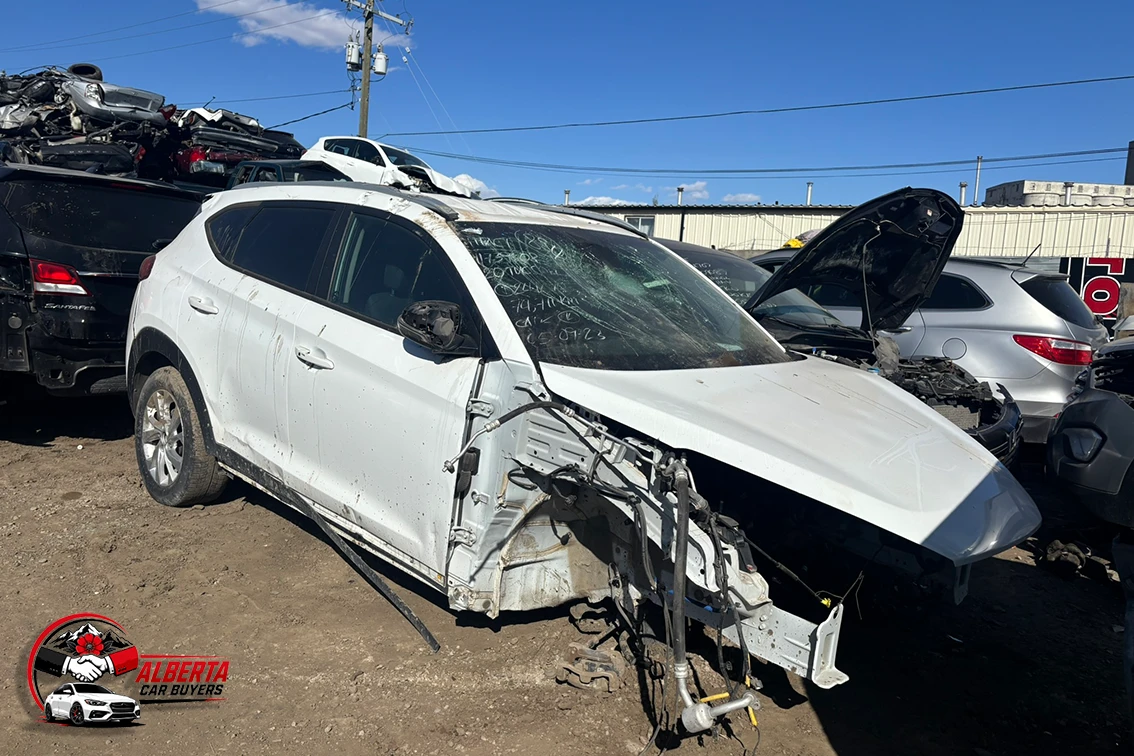
After a Calgary hailstorm, a 2018 SUV worth roughly $14,000 came back from the body shop with an $11,000 dent and paint estimate, nearly 80% of its value. Once the insurer factored in salvage value, it was declared a total loss and the owner took the cash settlement instead of chasing a rebuilt title.
The Reliable Truck With Just One Bad Part
A well-maintained 2016 pickup needed a $1,400 alternator and starter repair, about 12% of its $11,500 value. Clear repair case: one isolated issue on an otherwise reliable, low mileage vehicle with no history of recurring problems.
Weighing What You Gain Against What You Risk
Both routes have real upside and real risk, and the right choice depends entirely on where your specific vehicle falls on the cost-versus-value line.
| What You Gain Either Way | Where Each Option Can Bite You |
|---|---|
|
|
Your Next Move: A Simple Checklist
Once you’re ready to decide, work through this checklist before you commit to either option.
- Get a written repair estimate from a licensed shop, not a verbal guess, itemizing parts and labor.
- Find your car’s current market value using recent local listings for the same make, model, year, and mileage (not the original purchase price).
- Run the 50% rule: divide the repair estimate by the market value.
- Ask about hidden damage risk, especially for frame, electrical, or transmission issues, which routinely run over the initial quote.
- Get a real scrap/cash offer so you’re comparing an actual number, not a guess, Alberta Car Buyers provides free, no-obligation quotes.
- Factor in your daily transportation needs, if losing the car today would strand you, weigh that against the numbers.
- Make the call and act, a car sitting undecided in the driveway is still costing you in insurance and registration.
Frequently Asked Questions
Bottom Line
When repair costs creep past half of what your car is worth, the math almost always favors scrapping over sinking more money in.
In our experience helping Alberta drivers through this exact decision, the owners who come out ahead are the ones who get a real number on both sides, an honest repair quote and an honest cash offer, before they decide anything. Skip the guesswork, and the right choice usually becomes obvious fast.
If your car has landed on the “scrap” side of that equation, Alberta Car Buyers will give you a free, no-obligation cash offer and pick up the vehicle with free towing anywhere in Alberta, no repairs, cleaning, or paperwork headaches required.
References & Further Reading
- Government of Alberta – Vehicle Inspection Program
https://www.alberta.ca/vehicle-inspections - Government of Alberta – Salvage Vehicle Inspection Program
https://www.alberta.ca/salvage-vehicle-inspection-program - Insurance Bureau of Canada (IBC)
https://www.ibc.ca/ - Canadian Black Book
https://www.canadianblackbook.com/ - Government of Canada – Transport Canada Vehicle Safety
https://tc.canada.ca/en/road-transportation/motor-vehicle-safety
Got an old, damaged, or unwanted vehicle taking up space?
Alberta Car Buyers makes it easy to turn it into cash. We offer fair prices, free towing anywhere in Alberta, and fast, hassle-free service from start to finish. Get a quick quote today and clear your space with confidence.