
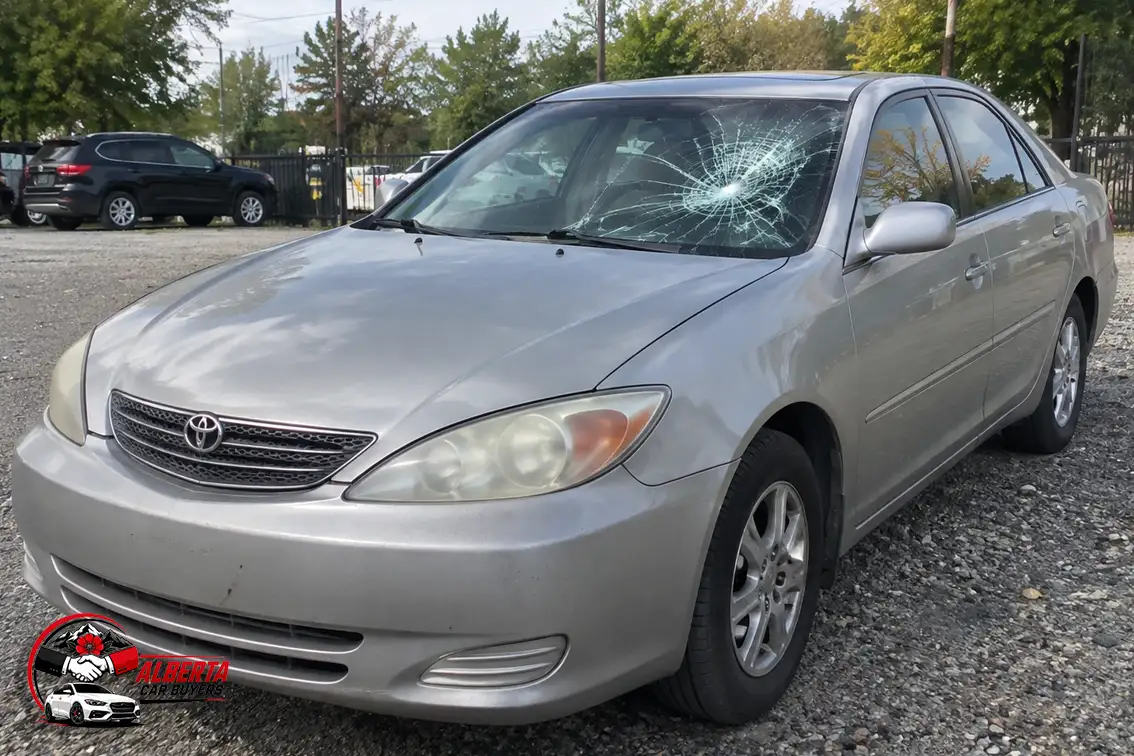
A cracked windshield is rarely a reason to stop a sale, but it’s often a reason to rethink the price. In Alberta, a car with a cracked windshield can still be sold, as long as the seller describes the damage honestly and the buyer understands what they’re getting. The crack still matters, because it affects driver visibility, buyer confidence, and what a repair might cost. Where the crack sits and how far it has spread decide most of the answer, along with the vehicle’s overall condition. This guide explains how to approach selling a car with cracked windshield damage in Alberta, what the province’s inspection criteria say, and how to decide between repairing the glass and selling as is.
Ready to Sell Your Car With a Cracked Windshield?
If you want to know exactly what your vehicle is worth under current Alberta market conditions, Alberta Car Buyers can give you a firm number quickly. We buy vehicles in any condition across Calgary and 55+ Alberta cities, with free towing and cash paid on pickup. Email hello@albertacarbuyers.ca or get a quote and we’ll get back to you with a real offer, no obligation.

Can You Sell a Car With a Cracked Windshield in Alberta?
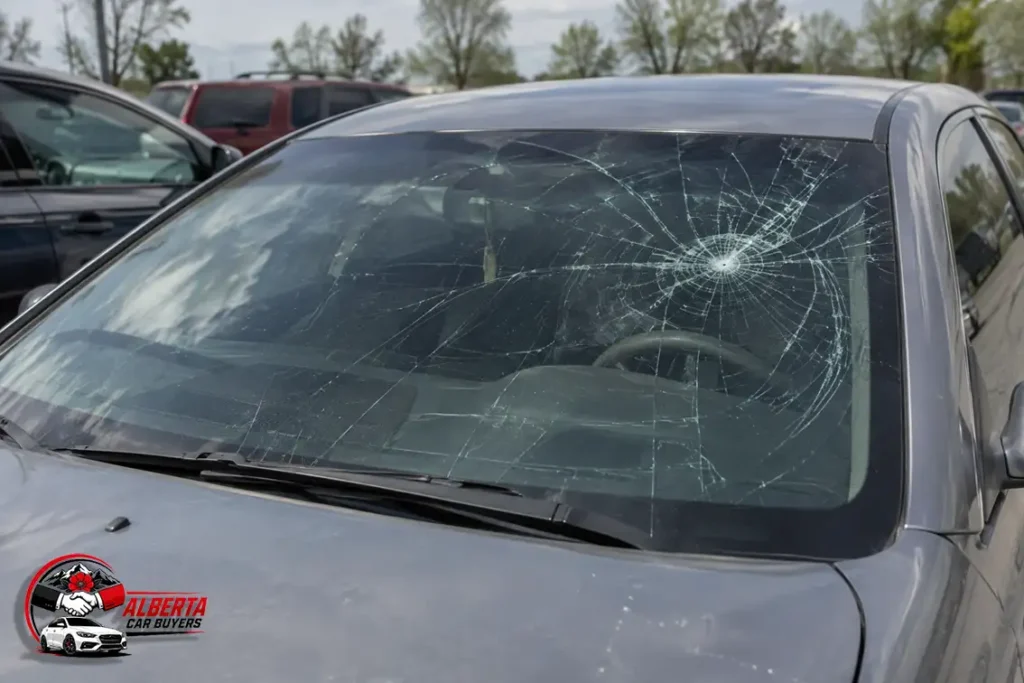
Yes. A cracked windshield doesn’t make a vehicle unsellable in Alberta, but the location and severity of the damage can affect its condition, buyer interest, suitability for road use, and how it fares in certain inspections. Selling a vehicle and driving it are separate questions: a seller can transfer ownership of a car that shouldn’t be driven until the glass is fixed, but should say so plainly.
Some details make the damage more important than others. Watch for these:
- Location. A crack in the driver’s line of sight or the area the wipers sweep matters more than a small mark near a corner.
- Size and spread. Long cracks, and cracks that are growing, raise more concern than a single small chip.
- Depth. Damage that goes through the layers of the glass is more serious than surface damage.
- Position near the edge. Cracks that reach the edge can spread and may weaken the glass.
- Context. The same crack can matter differently for a daily driver, a vehicle going through an inspection, and a car headed for recycling.
Does a Cracked Windshield Lower a Car's Value?
Yes, it usually lowers what a buyer will pay, because buyers factor in the likely repair or replacement cost and the perceived risk. How much depends on the vehicle’s age and overall value, the crack’s location and severity, and the type of buyer. The windshield is one condition factor among many, so anyone selling a car with cracked windshield damage shouldn’t treat it as the whole story.
- Repair cost against vehicle value. On a newer, higher-value vehicle, a buyer may simply plan to replace the glass and adjust the price. On an older, lower-value vehicle, the same repair can be a larger share of the car’s value, so it weighs more heavily in the offer. For vehicles near the end of their life, buyers also look at weight, usable parts, and completeness, which is covered in what affects scrap-car value.
- Visibility and safety. A crack that interferes with the driver’s view is a safety concern as well as a cosmetic one, and buyers know it. A crack outside the driver’s view is easier to tolerate.
- Buyer confidence. A visible crack can make a buyer wonder what else has been neglected. An honest description, clear photos, and a plain statement of the repair plan help reassure them, while an evasive answer tends to lower the offer more than the crack itself.
Should You Repair or Replace the Windshield Before Selling Your Car?
Not necessarily. Repairing the glass first is a financial decision, not a requirement. Fix it before selling only if the cost is clearly lower than the price improvement or the ease of sale you expect, and otherwise sell the vehicle as is. A glass shop can tell you whether a particular chip or crack can be repaired or whether it needs replacement.
Repairing first tends to make sense when:
- the vehicle’s value is high enough that a buyer would reduce the price by more than the repair costs
- the damage is small and the repair is minor
- you’re selling privately and want to avoid arguments over the glass
- the vehicle needs to pass an inspection or stay safe to drive in the meantime
Selling as is tends to make more sense when:
- the repair would cost close to the vehicle’s value
- the vehicle has other damage or problems that make the windshield a small part of the picture
- you’d rather not spend money on a car you’re about to sell
- the buyer is purchasing the vehicle as is, and plans to deal with repairs or recycling
To compare the options, follow these steps:
- Get a written estimate. Ask a glass shop what repair or replacement would cost for your vehicle.
- Estimate the sale price both ways. Think about what the car might sell for with the glass fixed and what it might sell for as is.
- Compare the gap with the cost. If the repair costs more than the gap, selling as is usually makes more financial sense.
Will a Cracked Windshield Fail an Alberta Vehicle Inspection?
It can, in the inspections where the criteria apply. The Government of Alberta’s Vehicle Inspection Program inspects out-of-province, salvage, and unsafe motor vehicles, and it separately requires periodic inspections of commercial vehicles. The Automotive and Light Truck Vehicle Inspection Manual (December 2009 version) sets the windshield criteria for the motor vehicle inspections. The manual describes who is inspected and isn’t written as a rule for every ordinary vehicle sale, so it shouldn’t be treated as a blanket requirement.
What Does Alberta's Inspection Manual Say About Windshield Cracks?
Section 4 of the manual lists the conditions that cause a windshield to be rejected. In paraphrase, the inspection fails a windshield when:
- it has cracks, or blemishes more than 12 mm (about half an inch) in diameter, in the area swept by the wipers, not counting the area under the inside mirror and a 75 mm strip at the top and bottom of the glass
- a crack goes through both layers of the glass
- a crack runs to another edge, or back to where it started, through the wiper-swept area
- the glass is pitted, scratched, or discolored enough to affect the driver’s visibility
- the windshield isn’t marked as approved safety glass
The 12 mm measurement in the manual’s wording is attached to blemishes, with cracks listed separately, so a seller shouldn’t assume a crack under 12 mm in the wiper-swept area would pass. The inspection facility makes that call. The manual governs the inspection it applies to. It doesn’t tell a private seller that every car with a smaller or differently placed chip is unsaleable.
Why Do the Wiper-Swept Area and Visibility Matter?
The criteria focus on the wiper-swept area because it’s the part of the glass the driver looks through, so damage there is most likely to interfere with seeing the road. The same reasoning explains why the manual also rejects pitting, scratches, and discoloration that affect visibility. For a seller, the takeaway is practical: a crack outside the driver’s view is a smaller issue than one inside it. If your vehicle is going through a salvage or out-of-province inspection, a windshield that fails will need to be fixed before a certificate can be issued, and that can affect your selling options.
What Types of Windshield Damage Matter When Selling a Car?
Not all windshield damage affects a sale the same way. The location, size, and tendency to spread decide how much the damage matters, and the table summarizes common situations a seller might face.
| Situation | What it may mean for selling | What to consider |
|---|---|---|
| Small chip outside the driver's view | Often a minor condition issue that buyers may overlook or discount lightly | Photograph it, mention it, and note whether it has changed over time |
| Chip that has started to spread | A buyer may expect a replacement soon, since spreading damage is hard to predict | Say when you noticed the spread, and have it assessed if you can |
| Long crack across the glass | Likely to lower buyer interest, with replacement the more likely fix | Get a quote so you can compare the cost with the price gap |
| Crack in the driver's viewing area | A bigger concern for safety and inspections, and likely to affect offers | Avoid regular driving until it's addressed, and be specific about its location |
| Damage near the edge | May weaken the glass and spread more easily | Describe the position and consider a professional assessment |
| Multiple cracks or severe damage | Often a replacement, and a clear sign of heavier overall damage | Compare replacement cost with the vehicle's value before deciding |
Temperature swings and road vibration can make a crack spread, so a small chip can become a long crack over a winter. A seller can’t always predict that, which is why a recent photo and an honest note about how the damage has changed help a buyer judge the situation.
Can You Sell a Car As-Is With a Cracked Windshield?
Yes. Selling as is means the buyer accepts the vehicle in its current condition and the seller isn’t promising to repair anything before the sale. It doesn’t excuse a misleading description. Knowingly misrepresenting a vehicle’s condition can create problems for a seller, so the safest approach is to be accurate and keep a record.
Tell the buyer about the crack. A visible crack will be seen at the first viewing, and a buyer who finds an undisclosed problem may walk away or push the price down further. Mention it in the listing and again in person.
Put it in writing. The Government of Alberta’s standard bill of sale includes space for special conditions of the sale. A short note that the windshield is cracked and the vehicle is sold as is helps both sides remember what was agreed.
A useful condition description for a cracked windshield includes:
- where the crack is and roughly how long it is
- whether it’s in the driver’s view or the wiper-swept area
- whether it has spread, and when you noticed
- any chips or other glass damage
- photographs taken in daylight
- other known problems with the vehicle
What Are Your Options for Selling a Car With a Cracked Windshield?
Three routes are open to most sellers, and none is better for every vehicle. This comparison relates only to the windshield problem.
Selling privately. A private buyer sees the crack in person and may negotiate or ask to have the vehicle inspected, since Alberta.ca advises private buyers to arrange a safety inspection at a vehicle inspection facility. This route can bring a higher price for a vehicle that’s otherwise in good shape, but it takes time and requires clear disclosure.
Trading the vehicle to a dealer. A dealer who resells a used vehicle to a consumer in Alberta must provide a Mechanical Fitness Assessment that states whether the vehicle complies with the Vehicle Equipment Regulation and describes any items that don’t. Windshield glazing falls within that regulation, so a dealer has a reason to check the glass and may factor the cost of fixing it into a trade-in offer.
Selling to a cash-for-cars buyer. These buyers assess the vehicle as is and weigh the windshield alongside the rest of its condition. This route suits owners who don’t want to arrange repairs first, and offers vary from buyer to buyer.
A windshield crack isn’t always the only problem. If the glass was damaged in an accident along with other parts of the car, see the guidance on selling a damaged car in Alberta. If a hailstorm caused the damage, the windshield is probably one of several damaged areas, so weigh it together with the rest.
What Should You Do Before Selling a Car With a Cracked Windshield?
A short checklist keeps the sale organized and gives buyers fewer reasons to hesitate. Work through these five steps:
- Document the damage. Take clear daylight photos of the crack from inside and outside, with a close-up and a wider view that shows its position on the glass.
- Gather vehicle and ownership information. Have the VIN, the year, make, and model, the kilometers, and your proof of ownership ready.
- Check whether other problems affect the decision. If the vehicle also doesn’t start or move, or has engine or drivetrain problems, list those too, because they can matter more to a buyer than the windshield.
- Decide whether to repair or sell as is. Use a written estimate and a realistic view of the price difference.
- Describe the windshield accurately when you ask for an offer. Say where the crack is, how large it is, whether it has spread, and whether the vehicle is safe to drive.
How Does a Cracked Windshield Affect a Cash-for-Cars Offer in Alberta?
A cash buyer may consider the cost of repairing or replacing the windshield as part of the vehicle’s overall condition, but there’s no universal deduction for it. The effect depends on the buyer, the vehicle, and the rest of its condition, so be wary of anyone who names a fixed amount before seeing the vehicle.
Do cash buyers consider windshield damage? Often they do, as one condition factor. For a drivable vehicle that could be resold, the glass may matter more. For an older or damaged vehicle, buyers tend to look at weight, usable parts, and completeness, and the windshield is a smaller piece of the picture.
Can other vehicle problems matter more? Yes. A seized engine, major collision damage, or missing parts will usually influence an offer more than a cracked windshield. If several problems exist, the windshield may barely register.
Why do offers differ between buyers? Buyers have different costs, different ways of reselling or recycling, and different appetites for risk. Two honest buyers can reach different numbers for the same vehicle, which is why comparing more than one offer is useful.
Selling a Car With a Cracked Windshield to Alberta Car Buyers
Alberta Car Buyers is one route for an Alberta owner who needs to sell a car with a cracked windshield and wants an offer on the vehicle as it is, without first repairing the glass. The next steps are simple: describe the vehicle and the windshield, share the details, and request an offer.
How Can You Describe the Windshield Damage When Requesting an Offer?
Tell them where the crack is, roughly how long it is, whether it’s in the driver’s view, and whether it has spread. Include photographs if you can, and say whether the vehicle is safe to drive. An accurate description lets the offer reflect the vehicle as it actually is, and it avoids surprises later. If the windshield is only one of several problems, list those too.
What Vehicle Information Should You Provide?
Share the year, make, model, and general condition, along with whether the vehicle runs and any other damage. Photographs of the exterior, interior, and the windshield help. Mention the kilometers if you know them, and say whether the vehicle has been in an accident. The more complete the picture, the easier it is to give you a clear offer, and you won’t be asked to guess at details you don’t have.
How Can Alberta Car Buyers Help With the Selling Process?
Call (587) 324-2142 or email hello@albertacarbuyers.ca with the vehicle details and a description of the windshield. You’ll receive a free offer with no pressure to accept, and if you agree, you can schedule pickup. You can ask for an offer before deciding whether to repair the glass, and photos sent with your message help. To see the steps from start to finish, read how the Alberta Car Buyers process works.
FAQs
Ready to Sell Your Car With a Cracked Windshield?
If you want to know exactly what your vehicle is worth under current Alberta market conditions, Alberta Car Buyers can give you a firm number quickly. We buy vehicles in any condition across Calgary and 55+ Alberta cities, with free towing and cash paid on pickup. Email hello@albertacarbuyers.ca or get a quote and we’ll get back to you with a real offer, no obligation.
Final Thoughts on Selling a Car With a Cracked Windshield
A cracked windshield can affect value, safety, and inspection results, but it doesn’t, by itself, decide whether a car can be sold. The location and severity of the crack matter most, and repairing it first makes sense only when the cost is lower than the price benefit. Whichever route you choose, describing the damage accurately protects both you and the buyer.
References & Further Reading
- Government of Alberta, Automotive and Light Truck Vehicle Inspection Manual, Version 1.0 (December 2009): https://open.alberta.ca/publications/automotive-light-truck-vehicle-inspection-manual-version-1
- Alberta King’s Printer, Vehicle Equipment Regulation, Alta Reg 122/2009: https://kings-printer.alberta.ca/documents/Regs/2009_122.pdf
- Alberta King’s Printer, Vehicle Inspection Regulation, Alta Reg 211/2006: https://kings-printer.alberta.ca/documents/Regs/2006_211.pdf
- Alberta.ca, Buying a vehicle from a private seller: https://www.alberta.ca/buying-vehicle-private-seller
- Alberta.ca, Standard bill of sale: https://www.alberta.ca/standard-bill-sale
- AMVIC, Buying used (Mechanical Fitness Assessment): https://www.amvic.org/consumer/buying-a-vehicle/buying-used/
- Read Also: