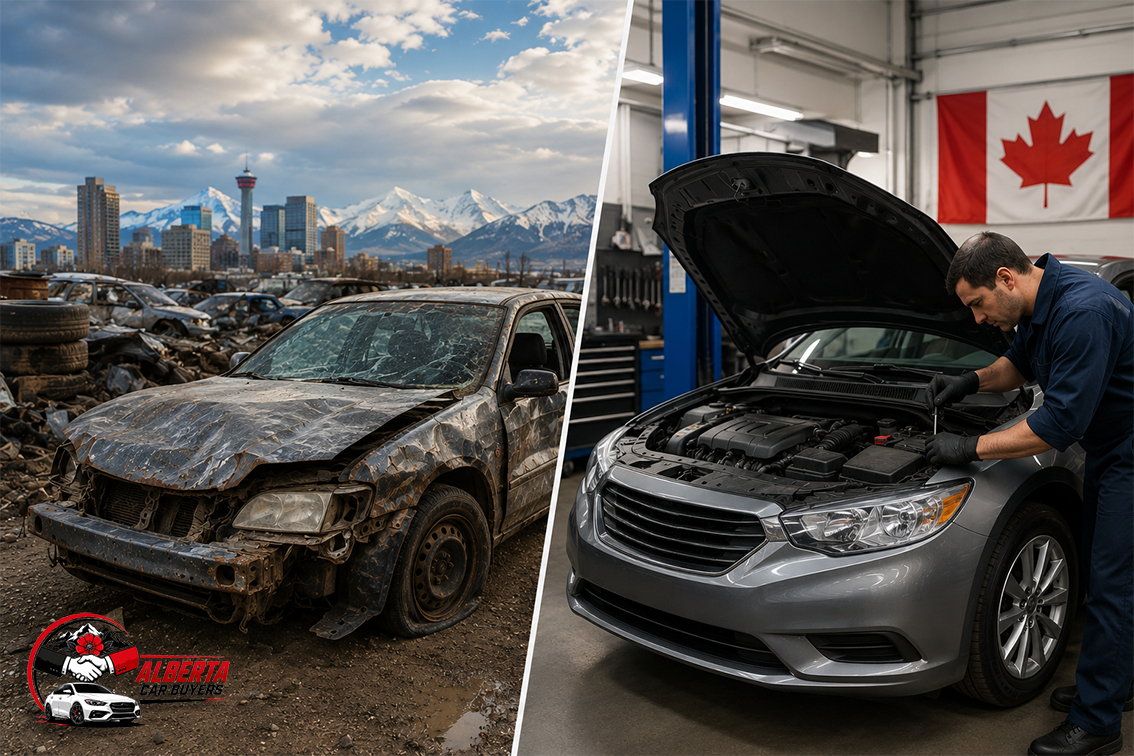

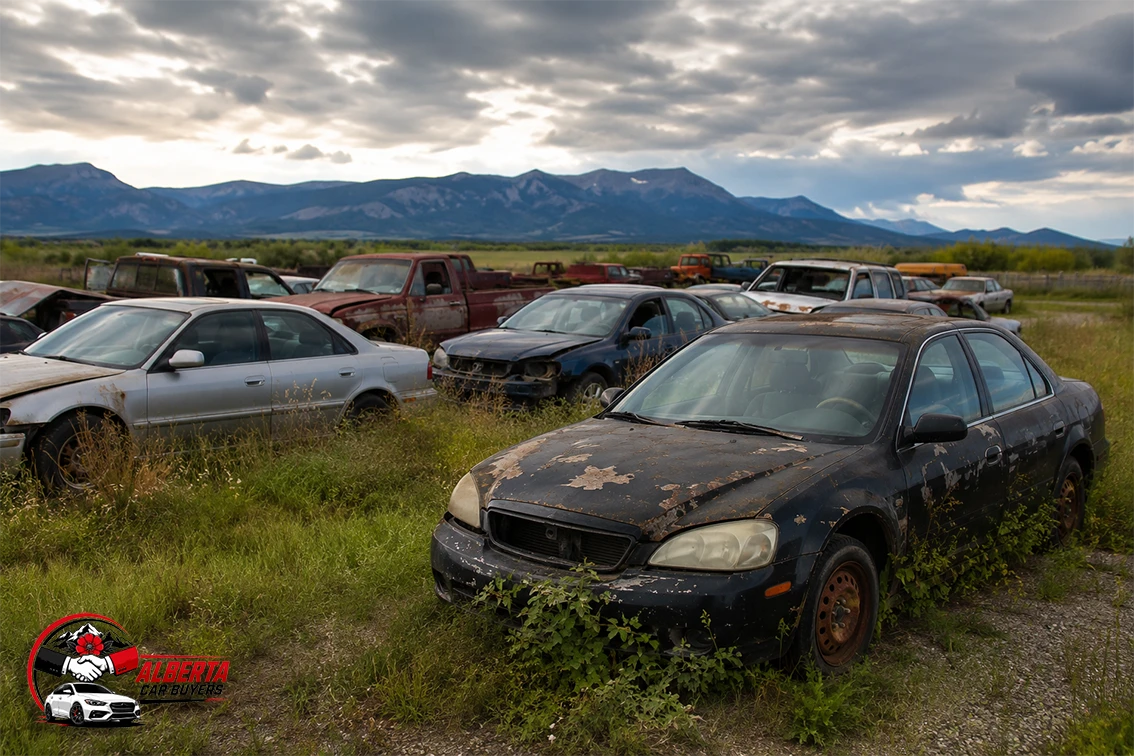
Alberta’s vehicle fleet is aging fast. The average car or light truck on Canadian roads is now around 10.5 years old, a record high, and that number has been climbing quickly in recent years. If you’re holding onto a vehicle that’s past its prime, non-running, or too damaged to sell privately, you’re not alone, and you have options that don’t involve months of Marketplace listings. Selling to a local auto wrecker can turn a parked liability into same-day cash, but the process works differently than most owners expect.
Knowing how offers are actually calculated, and what to check before you hand over the keys, is the difference between a fair deal and a frustrating one. Here’s what actually matters.
How Local Wreckers Actually Price a Vehicle
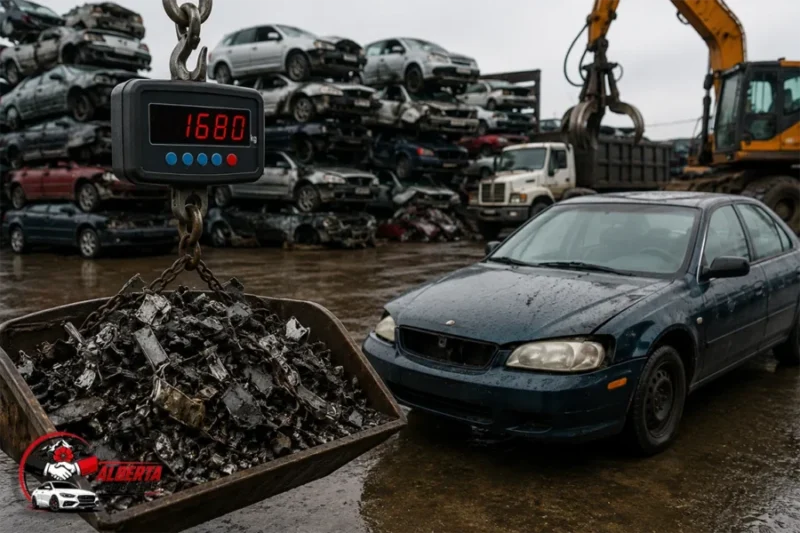
A wrecker’s offer isn’t a guess, and it isn’t one flat number either. It starts with the current scrap steel rate, which sits at roughly $0.08 to $0.12 per pound in Canada right now. On steel content alone, that translates to a base value of about $200 to $450 for a typical sedan and $350 to $900 for an SUV or light truck. But that’s the floor, not the typical payout. Once salvageable parts and overall condition are factored in, total offers across Alberta commonly range from $300 up to $10,000, depending heavily on the vehicle.
A few specific things move an offer well beyond the base scrap number:
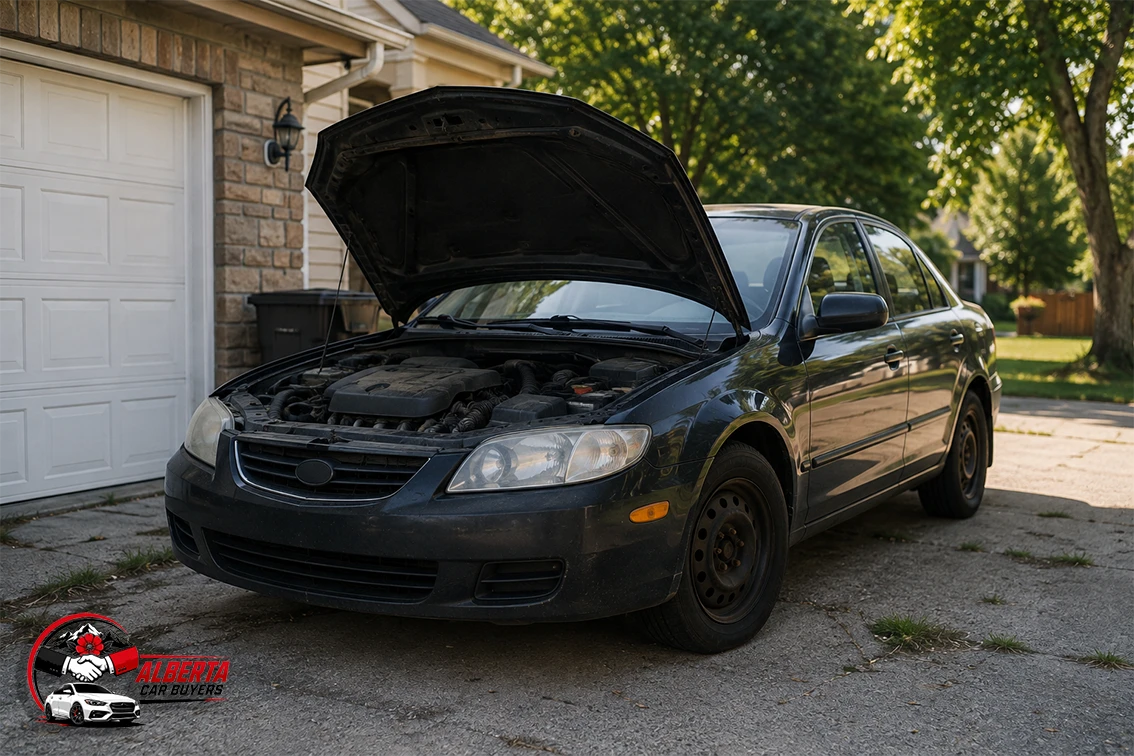
- Does the engine turn over? A running vehicle is worth substantially more than a true non-runner, since the engine and transmission can be resold rather than shredded.
- Is the catalytic converter intact? These are one of the highest-value single parts on an aging vehicle, adding roughly $100 to $500 depending on the converter type, since they contain platinum, palladium, and rhodium.
- Battery and alternator condition. Working electrical components add resale value beyond scrap weight.
- Corrosion and structural damage. Alberta winters and road salt accelerate frame rust, which affects how much of the vehicle is usable versus shred-only.
A stripped, seized sedan lands near the scrap floor. A complete vehicle with a working drivetrain can be worth several times that. This spread is exactly why two “wrecker” quotes on the same car can look completely different: one buyer may be pricing scrap weight only, while another is factoring in the whole vehicle.
What Happens During Intake
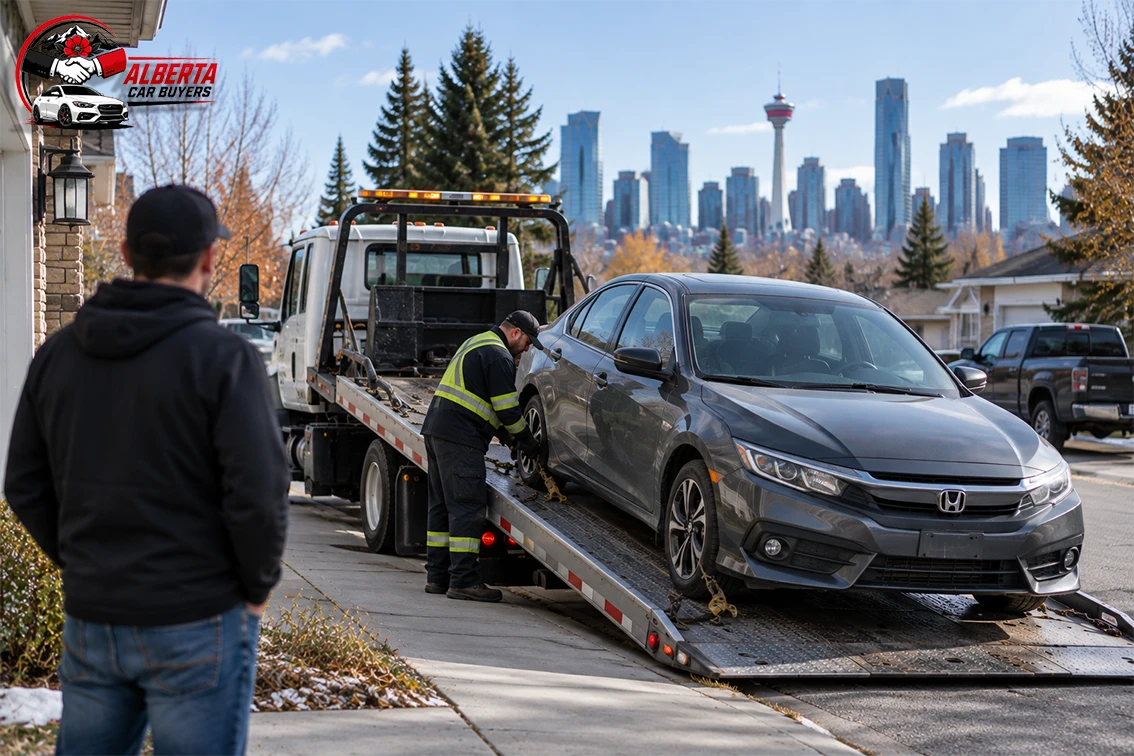
The process is more procedural than people expect. A legitimate wrecker will:
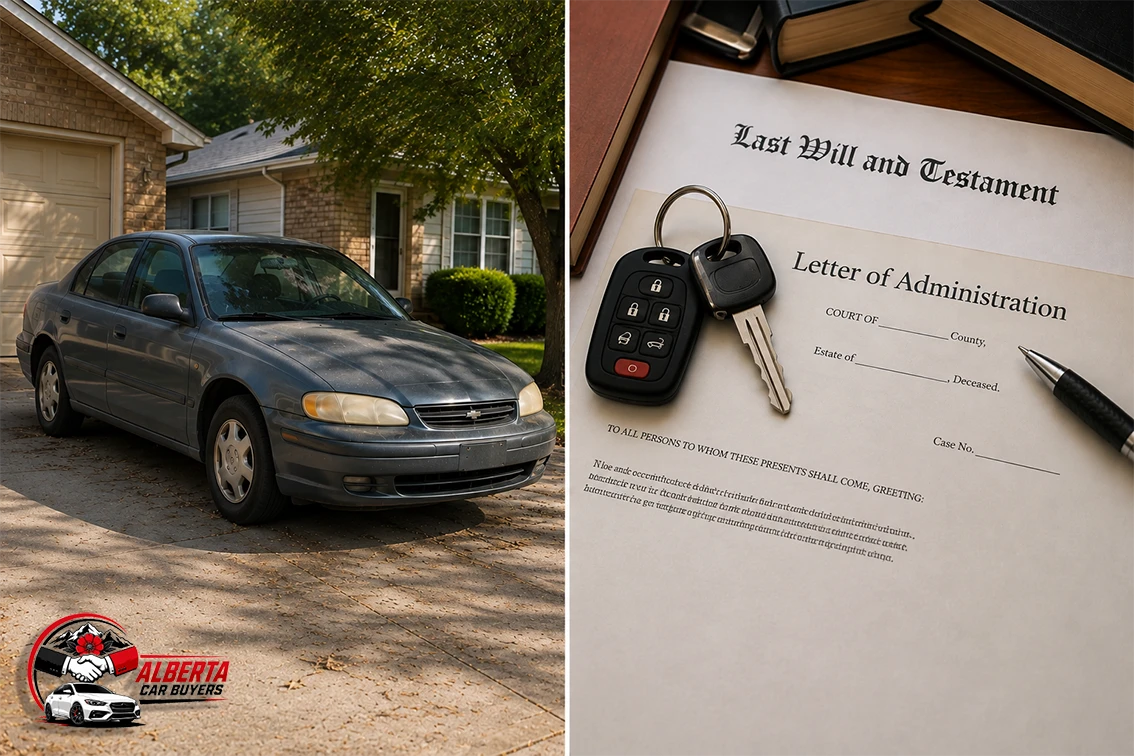
- Verify your ID and confirm you’re the registered owner (or have authorization to sell)
- Run a lien check before finalizing any offer
- Take photo documentation of the vehicle’s condition
- Handle deregistration paperwork as part of the sale
Same-day payment is common, but it’s not guaranteed. Missing registration or an active lien on the title can delay things until that’s sorted out.
What Your Vehicle's Condition Typically Means for the Offer
| Vehicle Condition | What's Driving the Number | Typical Alberta Range |
|---|---|---|
| Non-running, stripped or heavily corroded | Scrap steel weight only | $200–$450 (sedan), $350–$900 (SUV/truck) |
| Non-running, engine and drivetrain intact | Scrap weight plus resalable engine/transmission | $500–$1,500 |
| Running, high mileage or older model | Working components add resale value beyond metal weight | $800–$2,500 |
| Running, complete with intact catalytic converter and electronics | Full parts and condition assessment | $1,500–$10,000 |
These ranges shift with the vehicle’s make and model, current scrap metal prices, and local parts demand, so they’re a starting point for comparison, not a guarantee. The difference between the top and bottom rows isn’t really about age, it’s about how much of the vehicle can still be resold instead of shredded.
Selling a Scrap, Salvage-Branded, or Out-of-Province Vehicle
Alberta treats salvage and damage history seriously. Under AMVIC’s rules, sellers and dealers must disclose in writing whether a vehicle has ever been declared salvage or non-repairable, and a salvage-branded vehicle that hasn’t gone through inspection and been rebranded “rebuilt” can’t be registered for road use at all. That makes wreckers a practical route for vehicles that would otherwise be stuck: no private buyer wants a car they can’t legally drive away, but a wrecker doesn’t need the vehicle to be roadworthy to buy it for parts and scrap.
Where Wrecker Pricing Differs From a Condition-Based Offer
It’s worth understanding that many local wreckers price primarily on scrap weight and current metal market rates, with parts value as a secondary adjustment. That’s a fundamentally different model from services that assess a vehicle’s individual parts and overall condition before making an offer. Neither approach is wrong, but as the table above shows, they can produce noticeably different numbers on the same car. It’s worth knowing which model you’re dealing with before you accept the first offer you get.
Environmental Impact of Recycling
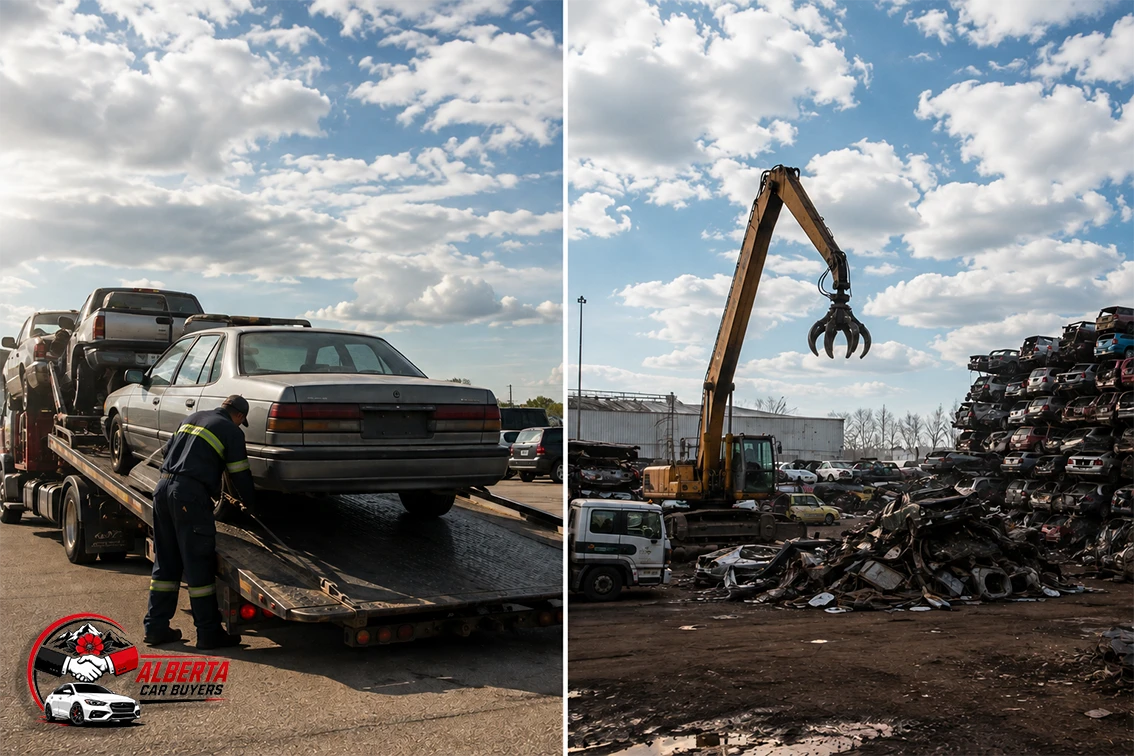
Automobiles are among the most recycled consumer products, and the steel recovered from end-of-life vehicles goes straight back into manufacturing new steel products. Recycling through a licensed operator also means fluids, batteries, and hazardous materials get handled to proper environmental standards instead of leaching into a scrapyard or landfill. That’s part of why licensed recyclers and salvagers as a distinct business category, separate from general dealers, with their own compliance requirements.
Red Flags to Watch For
Before you sell, check for these warning signs:
- No fixed business address or physical yard you can visit
- Cash-only with no receipt or bill of sale offered
- A quoted price that mysteriously drops once the driver arrives
- Pressure to sell on the spot without time to check the offer elsewhere
- Refusal to run or discuss a lien check
You can verify a business’s AMVIC license status directly through AMVIC’s public licensing lookup before you commit to anything.
Get an Offer That Looks at More Than Scrap Weight
If you’d rather have your vehicle’s parts, mechanical condition, and overall shape factored into the offer instead of scrap weight alone, that’s a different service model worth exploring before you commit to a straight wrecker sale. Alberta Car Buyers evaluates vehicles this way, based on real condition, not just tonnage. Call +1 (587) 324-2142 or email [email protected] for a no-obligation assessment.
Conclusion
Selling to a local auto wrecker is genuinely one of the fastest ways to deal with an aging or damaged vehicle in Alberta, and for cars that are salvage-branded or truly non-running, it may be the only practical option left. The trade-off is that pricing can lean heavily on scrap weight rather than a full assessment of what your vehicle’s parts and condition are actually worth, and the gap between a scrap-only floor and a condition-based offer is often larger than owners expect.
Before you sell, confirm the buyer’s licensing, ask exactly how their offer was calculated, and don’t be afraid to get a second opinion if the number feels low. A little diligence up front protects you from both lowball offers and the small number of unlicensed operators still working outside the rules.
FAQs
References & Further Reading
AMVIC (Alberta Motor Vehicle Industry Council)
- Business licence search / verify a licensed business: https://www.amvic.org/ (homepage has the “Search Now” licence lookup tool)
- Vehicle history and salvage disclosure requirements: https://www.amvic.org/consumer/buying-a-vehicle/buying-used/
- General code of conduct / Consumer Protection Act obligations: https://www.amvic.org/about-us/laws-and-regulations/general-code-of-conduct/
Auto Service World / S&P Global Mobility
- https://www.autoserviceworld.com/whys-canadian-average-vehicle-age-so-low/
- https://www.autoserviceworld.com/from-the-magazine-vehicle-average-age-will-keep-growing/
ScrapMonster Canada — Alberta scrap metal prices (corrected, Alberta-specific)
Statistics Canada
Current Scrap Metal Prices Canada
- https://www.currentscrapmetalpricescanada.com/
- https://www.currentscrapmetalpricescanada.com/scrap-car-prices-in-canada.php
Written by the Alberta Car Buyers team. Our experience purchasing and removing junk vehicles throughout Calgary gives us practical insight into vehicle valuation, responsible recycling, and the local market trends that matter to sellers.