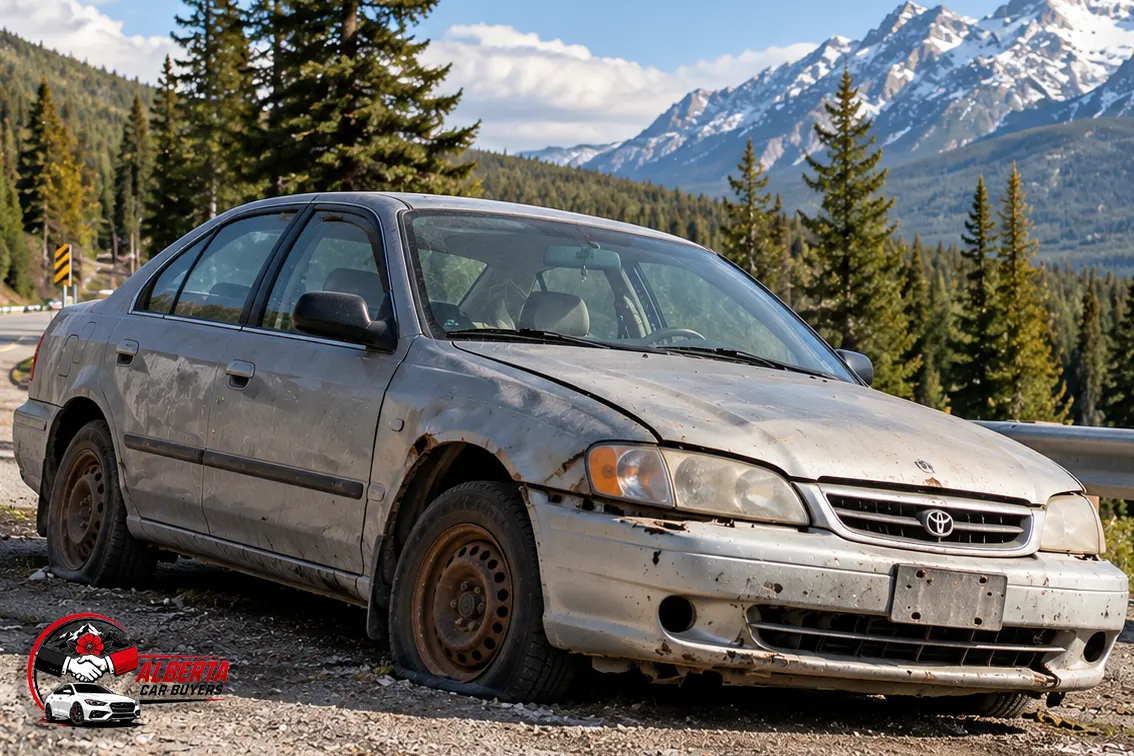

Almost every owner of an old, wrecked, or unwanted car asks the same thing: how much is a junk car worth in Lethbridge? People tend to expect one number, like a weight multiplied by a scrap price, and the real answer is more than that. Two cars from the same year can land far apart if one runs and is complete while the other is damaged, stripped, or missing major parts. That gap matters, because it affects whether you repair, sell, or scrap the car, and whether an offer is fair. This guide explains what drives junk car value, how the factors interact, and how to prepare for an honest comparison of offers.
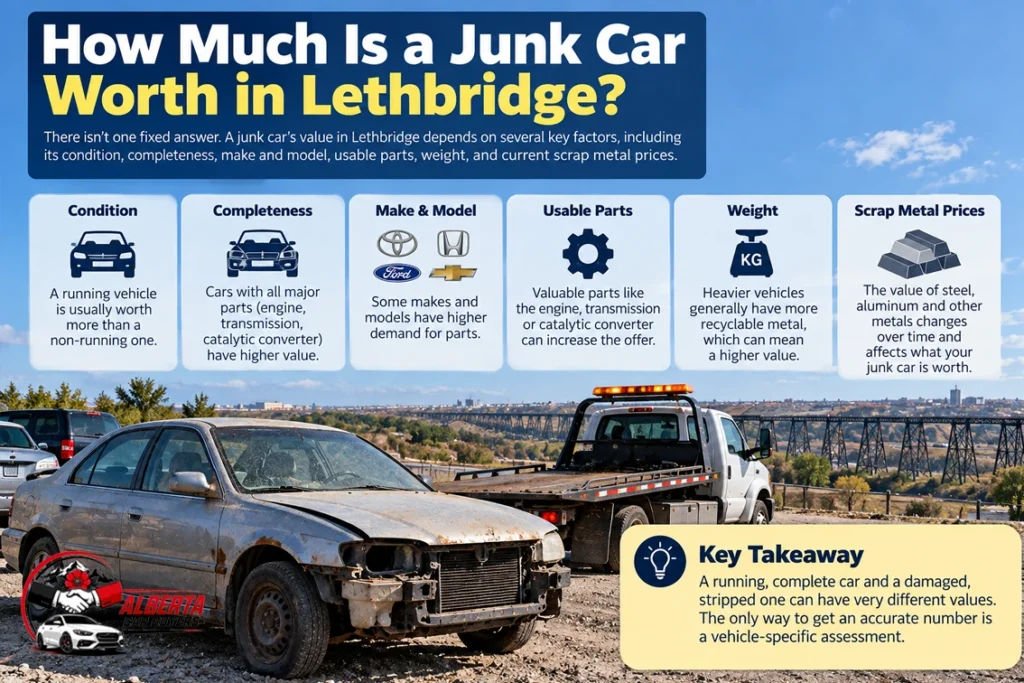
Quick answer: There is no fixed price for a junk car in Lethbridge. Value depends on condition, completeness, make and model, usable parts such as the engine, transmission, and catalytic converter, weight, and current metal prices. A complete car that runs is usually worth more than a stripped one, so the most reliable number comes from an auto wrecker in Lethbridge that assesses your specific vehicle.
Ready to Sell Your Junk Car in Lethbridge?
If you want to know exactly what your vehicle is worth under current Alberta market conditions, Alberta Car Buyers can give you a firm number quickly. We buy vehicles in any condition across Calgary and 55+ Alberta cities, with free towing and cash paid on pickup. Email hello@albertacarbuyers.ca or get a quote and we’ll get back to you with a real offer, no obligation.

Key Takeaways
These are the main ideas, and each one is explained in the sections below:
- There’s no single fixed price for every junk car in Lethbridge.
- Vehicle condition, completeness, make and model, usable parts, and recyclable materials can all affect value.
- A car doesn’t necessarily have to run to have value.
- Missing or damaged components can change the vehicle’s overall value.
- Current market conditions can influence the value of recyclable materials and certain components.
- The most useful way to assess a junk car is to consider the vehicle as a whole rather than focusing on one factor.
How Much Is a Junk Car Worth in Lethbridge?
There isn’t one fixed answer to how much a junk car is worth in Lethbridge. Value depends on the vehicle’s condition, completeness, make, model, usable parts, weight, and what recyclable materials are worth at the time. A running, complete car and a damaged, stripped one can sit far apart, so only a vehicle-specific assessment gives a real number.
So when someone asks how much is a junk car worth in Lethbridge, the honest answer starts with questions about the car. Junk car value in Lethbridge also isn’t the same as what the car would fetch in a private sale, which is why it helps to know which kind of value you’re really asking about.
If you’d like general market pricing first, scrap car prices in Alberta covers the broader picture. Come back here to see why an individual car can land above or below those general numbers.
Types of Value a Car Can Have
People use “worth” to mean several different things, and the numbers don’t carry over from one to another. This table shows how they differ:
| Type of value | What it's based on | When it usually applies |
|---|---|---|
| Private-sale value | What an individual buyer would pay for a usable car | A running, road-ready vehicle with buyer appeal |
| Trade-in value | What a dealer will credit toward another vehicle | You're replacing the car and the dealer wants it |
| Salvage value | Usable parts and components that can be resold | A damaged or unwanted car with parts worth recovering |
| Junk-car value | The vehicle as a whole, taken as-is, including parts and materials | An old, damaged, or non-running car |
| Scrap or material value | The metal and other recyclable materials | An end-of-life vehicle with little else left |
If you’re sorting out where your car sits, the difference between scrap and salvage cars is a useful place to start.
What Determines the Value of a Junk Car?
A junk car’s value is shaped by several factors working together: its make, model, and year, its running status and mechanical condition, whether it’s complete, what usable parts it still has, its weight and recyclable materials, and current market conditions. No single factor decides the outcome, and weight alone isn’t the whole picture.
The factors build on each other, so it helps to read them as a set. This table shows how they fit together, and the sections after it explain each one.
| Factor | What a buyer looks at | How it can affect value |
|---|---|---|
| Make, model, year, mileage | Parts demand, plus the age and use of the vehicle | Can raise or lower interest in the car and its components |
| Running status and mechanical condition | Whether it runs and what failed | A usable engine or transmission may add parts value, while a ruined one adds mostly metal |
| Completeness | Which major components are still there | Missing components can lower an offer |
| Usable parts | Condition of and demand for specific components | Can add value beyond the metal |
| Weight and materials | Recoverable steel, aluminum, and other metals | Sets part of the material value |
| Market conditions | Current metal markets | Can shift the material side between quotes |
Make, Model, Year, and Mileage
These can matter. Parts demand differs from one vehicle to the next, and a buyer who can resell components from a common model may value it differently than one with few resale options. Year matters too, though an older car isn’t automatically worth less than a newer one. Mileage can influence the value of a running vehicle and its major components, but for a damaged or end-of-life car it often matters less than condition and completeness.
Running Status and Mechanical Condition
A car that runs, or could run with a modest fix, is often assessed differently than one with a seized engine or failed transmission. Mechanical condition matters because an intact engine or transmission may hold resale value as parts, while a ruined one contributes mostly as metal. Accident damage works the same way: what counts is how much of the car is still usable.
Completeness and Missing Parts
A complete vehicle gives a buyer more to work with, so a missing engine, transmission, catalytic converter, wheels, or body panels can lower an offer. It doesn’t mean the car has no value, since the remaining parts and metal still count, but the number will usually reflect what’s actually there. The details differ by vehicle, so ask each buyer how they’d treat whatever is missing.
Even a car without an engine can still be worth money. The engine is one of the larger components, so losing it lowers what a buyer can recover, but the rest of the vehicle still has metal and possibly usable parts such as wheels, body panels, or a transmission. Say plainly that the engine is gone when you ask for a valuation, because a quote based on a complete car won’t hold up once the vehicle is seen.
Quick Tip: Don’t remove valuable components automatically. Taking parts off can change the vehicle’s overall value, so understand the consequences first, and research whether you can scrap a car with parts missing before you start dismantling.
Usable Parts That Tend to Matter
The ranking depends on the vehicle and the buyer, but these are the components buyers commonly look at:
- Engine: a sound one can hold resale value as a part, while a seized one contributes mostly as metal.
- Transmission: a usable unit may be worth recovering, depending on demand for that model.
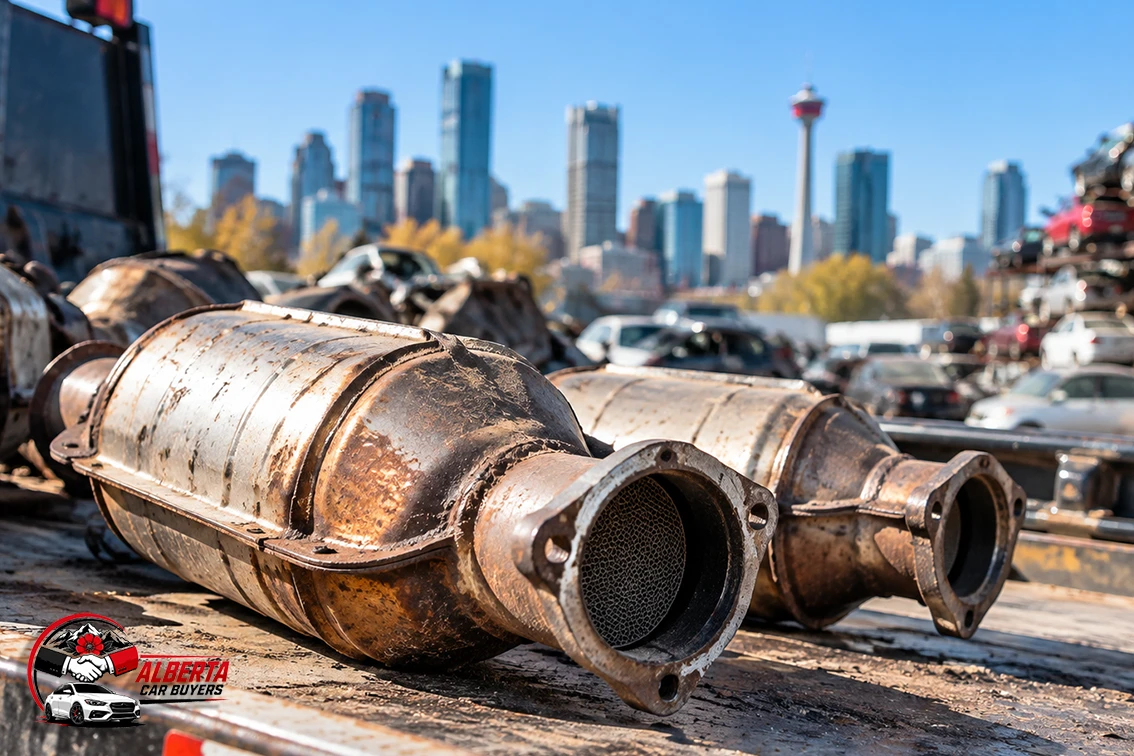
- Catalytic converter: Alberta regulates catalytic converters as scrap metal, requiring buyers to record details about the seller, and any value depends on the specific part and the market, not a standard figure.
- Wheels and tires: their condition and fit for other vehicles influence whether they’re worth recovering.
- Body panels: undamaged panels may be resold, while damaged ones add little.
Automotive Recyclers of Canada says professional recyclers first evaluate a vehicle for reusable components before recycling what remains, which is why usable parts can matter so much.
Weight and Recyclable Materials
A heavier vehicle contains more recoverable steel and other metal, so weight can raise the material side of a car’s value. But treating weight multiplied by a scrap price as the whole formula oversimplifies how buyers actually assess a car. A buyer also looks at completeness, usable parts, damage, and parts demand, so two cars of equal weight can be assessed very differently. For junk car value in Lethbridge, as anywhere, the whole vehicle matters more than any single multiplication.
Market Conditions
The value of steel, aluminum, copper, and the metals in catalytic converters moves with broader markets, so the material portion of a car’s value can change between one quote and the next. That’s one reason an offer from last season may not match today’s. The market affects the material side of value, while condition and completeness still shape the vehicle-specific side.
Does a Junk Car Still Have Value If It Doesn't Run or Is Damaged?
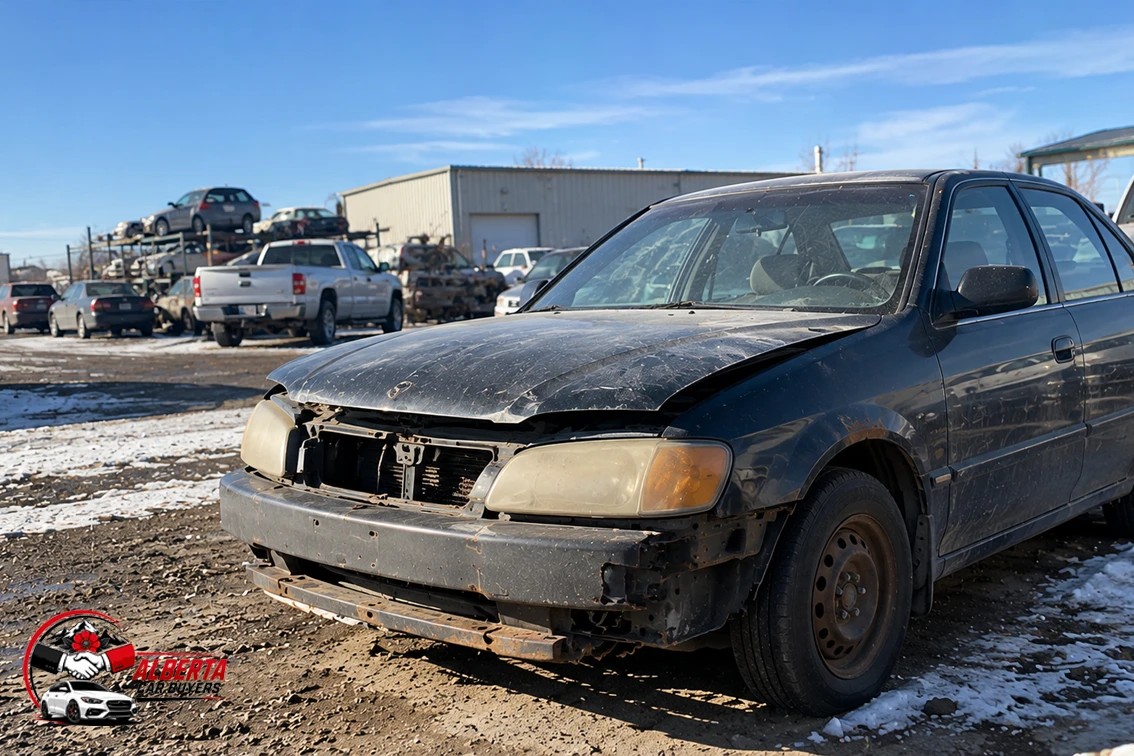
Often, yes. A junk car that doesn’t run can still contain reusable parts and recoverable metal, and a damaged car may retain value in whatever is still usable. Non-running and damaged cars tend to be valued differently than running ones, but neither status means the vehicle is worthless. How much value remains depends on the specific vehicle.
What’s wrong with the car shapes the answer, so here’s how common situations differ:
| Situation | What may still have value | What can reduce value |
|---|---|---|
| Won't start (for example, a dead battery) | Often much of the car, since the fault may be minor | Towing, if it can't be moved |
| Won't run (seized engine or failed transmission) | Remaining parts, body, and metal | Loss of a major component's resale value |
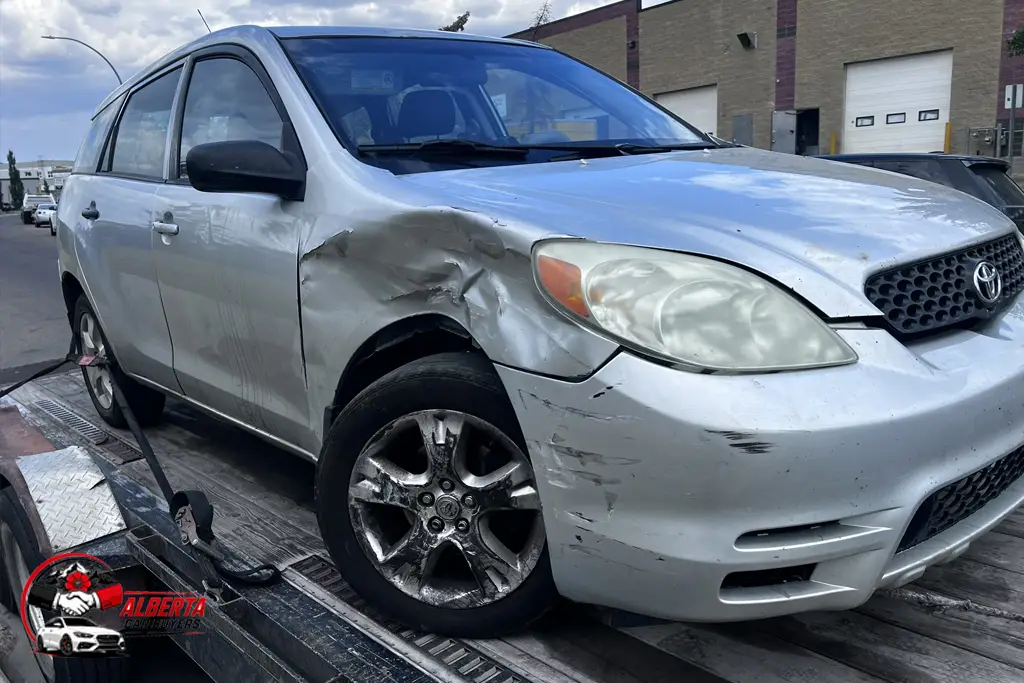
| Hail-dented but still running | Mechanical parts and drivetrain | Cosmetic damage and broken glass |
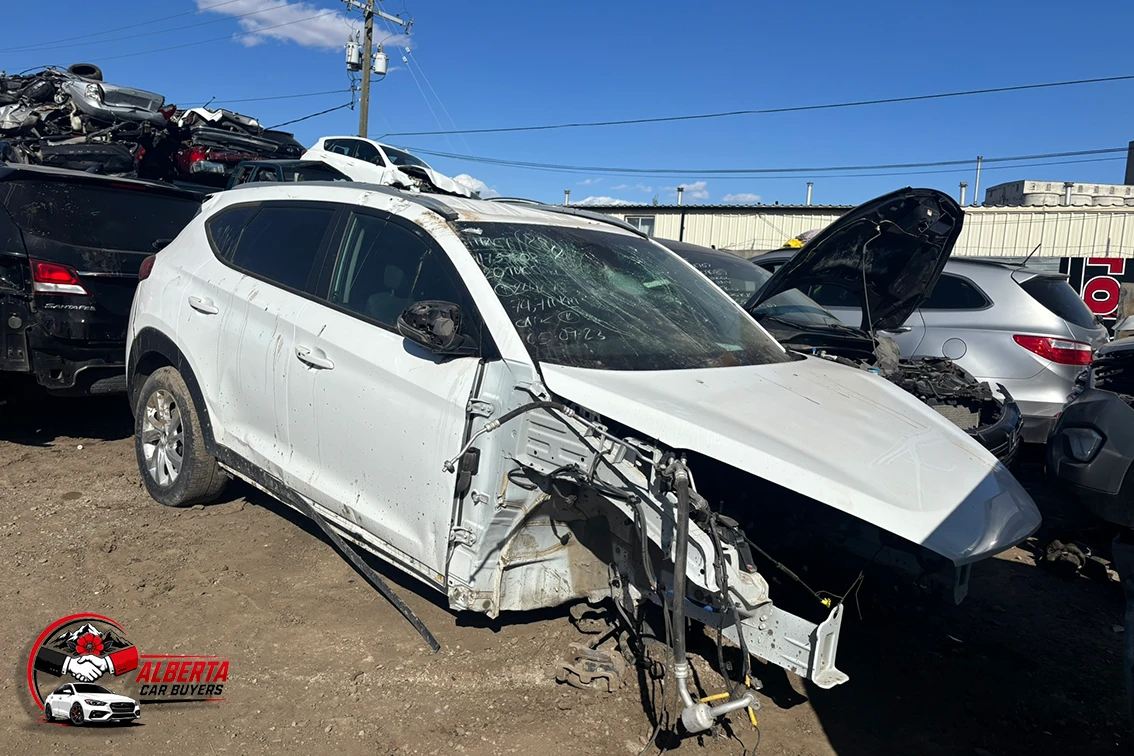
| Collision-damaged | Undamaged components and metal | Structural or major mechanical damage |
Non-Running Cars
A car that won’t start has usually lost some value compared with a running one, but it still has weight, metal, and potentially salvageable components. What changes is mostly logistics, since a non-running vehicle typically needs a tow or flatbed. A dead battery and a seized engine are very different situations, so describe what actually failed, because the cause shapes how a buyer sees the car.
Damaged Cars and Southern Alberta Hail
Cosmetic damage leaves the engine, transmission, and other mechanical parts intact, while severe structural or mechanical damage reduces what’s recoverable. Southern Alberta sees hail regularly: the Insurance Bureau of Canada’s September 22, 2026 release on summer storms lists an August 11, 2026 hail and flood event that caused nearly $70 million in insured losses in Alberta and affected Lethbridge, Coaldale, Claresholm, and Didsbury.
A hail-dented car that still runs is a different case from one that’s mechanically failed, and a buyer assessing it will usually separate cosmetic dents from anything that affects the drivetrain, the glass, or the structure. A write-off label also comes from an insurance claim decision, and a buyer may value the vehicle differently.
Why Do Two Similar Junk Cars Get Different Offers?
Two similar junk cars can get different offers because small differences in condition, completeness, and parts demand add up, and because buyers have different costs and different demand for parts. The material market also shifts over time. Comparing offers fairly means comparing the same details, not just the headline numbers.
Consider two cars from 2010 that look alike on paper but aren’t:
| Detail | Car A | Car B |
|---|---|---|
| Year | 2010 | 2010 |
| Running status | Runs | Doesn't run |
| Engine | Present | Missing |
| Catalytic converter | Present | Missing |
| Damage | Minor cosmetic | Collision damage |
| Illustrative offer (hypothetical) | $800 | $250 |
Illustration only: the dollar figures in the last row are invented to show how far apart two similar cars can land. They aren’t quotes, a Lethbridge market price, or a promise of what any vehicle will receive. Even though the year matches, these aren’t the same vehicle for valuation purposes, and treating them as equal is a common mistake.
Common Reasons Offers Differ
Offers usually differ for reasons that are easy to trace:
- Condition details: running status, mechanical problems, and the extent of damage
- Completeness: whether the engine, transmission, catalytic converter, wheels, and panels are all there
- Parts demand: how easily a buyer can resell components from that particular model
- Material market timing: where metal values stand on the day of the quote
- Logistics: towing distance, access to the vehicle, and what the offer includes
- Accuracy of the description: how closely the car matches what the buyer was told
When a Quote Changes Between the Phone Call and Pickup
A quote is only as good as the description behind it. If the car turns out to have more damage, fewer parts, or a different running status than described, the buyer may adjust the amount. It helps to ask whether a quote is firm or an estimate, and what could change it. At pickup, our driver checks the vehicle against the description we were given, which is why we ask about missing parts, damage, and running status on the first call. Accurate details at the start are the best protection against a surprise at the curb.
Location and Logistics in Lethbridge
It can matter for logistics. Buyers or tow operators may be based in Lethbridge or travel in from elsewhere, which can affect timing and whether towing is included. A car in the city may be easier to collect than one on a rural property, and nearby communities like Coaldale may be covered differently by different buyers. Ask where the truck is coming from, whether towing is free, and how soon a pickup is realistic.
How Can You Prepare Before Asking for a Valuation?
Prepare by gathering accurate details about the car, deciding whether anything should be left alone, and planning to give every buyer the same information. A careful, honest description leads to a more realistic assessment, while a vague one tends to produce a quote that shifts later.
Information to Gather First
Most valuation questions come down to the same short list, and having it ready makes comparisons fair. If you plan to sell a junk car in Lethbridge, pull together the following:
- Year, make, and model
- Approximate mileage
- Running status, and what failed if it doesn’t run
- Major damage, including accident damage
- Missing parts, such as the engine, transmission, or catalytic converter
- General location and how easy the car is to reach
- Ownership paperwork, since Alberta’s guidance says a registration certificate alone doesn’t prove ownership
Being open about major damage helps, because a realistic description produces a realistic number. Alberta’s registry agent finder lists several offices in Lethbridge if you need help with ownership documents.
Quick Tip: Before requesting a valuation, have the year, make, model, approximate mileage, running status, major damage, missing parts, and general location ready. Complete information leads to a more realistic assessment.
Repairing or Stripping the Car Before You Sell
Think before you do either. A large repair bill doesn’t automatically mean the car has no value, so compare it with the vehicle’s realistic value. Pulling parts off can also backfire, because it changes the car’s overall value and may leave a stripped shell on your property. The City of Lethbridge’s Unsightly Property Bylaw lists factors an officer may consider when deciding whether a property is unsightly, and two of them involve vehicles. One is a derelict vehicle, defined as one that’s dilapidated, partially or completely dismantled, or not capable of operating under its own power. The other is the outdoor storage of more than one intact, operable unregistered motor vehicle. These are factors, not automatic violations, and whether a property qualifies is for the City’s designated officers to decide.
Paperwork Questions
Ownership is the main one. Buyers generally want to confirm that the seller is entitled to sell the car, which usually means photo ID and ownership documents, and requirements can vary by buyer. Alberta’s scrap metal rules also add recorded details for transactions involving regulated items like catalytic converters. Ask each buyer what they need before pickup day instead of assuming.
Comparing Offers Fairly
Comparing offers only works if every buyer starts from the same facts. Give each one the same description of condition, completeness, and location, then compare side by side. Look beyond the amount to what’s included: whether towing is free, when payment happens, and whether the number is firm or could change at pickup. An offer that looks higher but charges for towing may not be better.
Quick Tip: If you’re comparing offers, give each buyer the same basic information about condition, completeness, and location.
- Read Also:
How Can You Get a Vehicle-Specific Valuation in Lethbridge?
If a Lethbridge vehicle is old, damaged, non-running, or no longer practical to repair, an assessment from an auto wrecker in Lethbridge can be one option for finding out whether it has remaining value. To ask us for one, email hello@albertacarbuyers.ca with the details from your checklist, or call (587) 324-2142. Towing is free, and we pay at pickup, before the vehicle is loaded. Pickup timing in Lethbridge depends on our schedule, so ask for the next available date when you call, and compare what you hear with any other quotes.
Common Questions About Junk Car Value in Lethbridge
Ready to Sell Your Junk Car in Lethbridge?
If you want to know exactly what your vehicle is worth under current Alberta market conditions, Alberta Car Buyers can give you a firm number quickly. We buy vehicles in any condition across Calgary and 55+ Alberta cities, with free towing and cash paid on pickup. Email hello@albertacarbuyers.ca or get a quote and we’ll get back to you with a real offer, no obligation.
Final Thoughts
Junk car value in Lethbridge varies from vehicle to vehicle, which is why “how much is a junk car worth in Lethbridge?” can’t be answered with one number. Condition, completeness, make and model, usable parts, weight, and market conditions all play a part, and condition and completeness often matter most. Treat the vehicle as a whole, give every buyer the same accurate information, and compare offers on what’s included, not just the amount. From there, a vehicle assessment is the natural next step for turning general factors into a real figure.
References & Further Reading
- Government of Alberta. Scrap metal transactions (page published September 10, 2025). https://www.alberta.ca/scrap-metal-transactions
- City of Lethbridge. Unsightly Property Bylaw (Bylaw 5630), consolidation dated June 2, 2025; the City notes the consolidation is not the official version. https://www.lethbridge.ca/media/lqcbj3kh/5630-unsightly-property-bylaw.pdf
- Insurance Bureau of Canada. Summer storms across Alberta, Saskatchewan and Manitoba cause more than $1.8 billion in insured losses, September 22, 2026. https://www.ibc.ca/news-insights/news/summer-storms-across-alberta-saskatchewan-and-manitoba-cause-more-than-1-8-billion-in-insured-losses
- Collision Repair Magazine (Automotive Recyclers of Canada). Building on Success: A Canadian policy framework for ELVs, August 12, 2026. https://www.collisionrepairmag.com/buyers-guide/recycling/article/15832281/automotive-recyclers-of-canada-building-on-success-a-canadian-policy-framework-for-elvs
- Government of Alberta. Register an Alberta vehicle in other jurisdictions (proof of ownership and registration certificates). https://www.alberta.ca/register-an-alberta-vehicle-in-other-jurisdictions
- Government of Alberta. Find a Registry Agent. https://www.alberta.ca/lookup/find-a-registry-agent.aspx