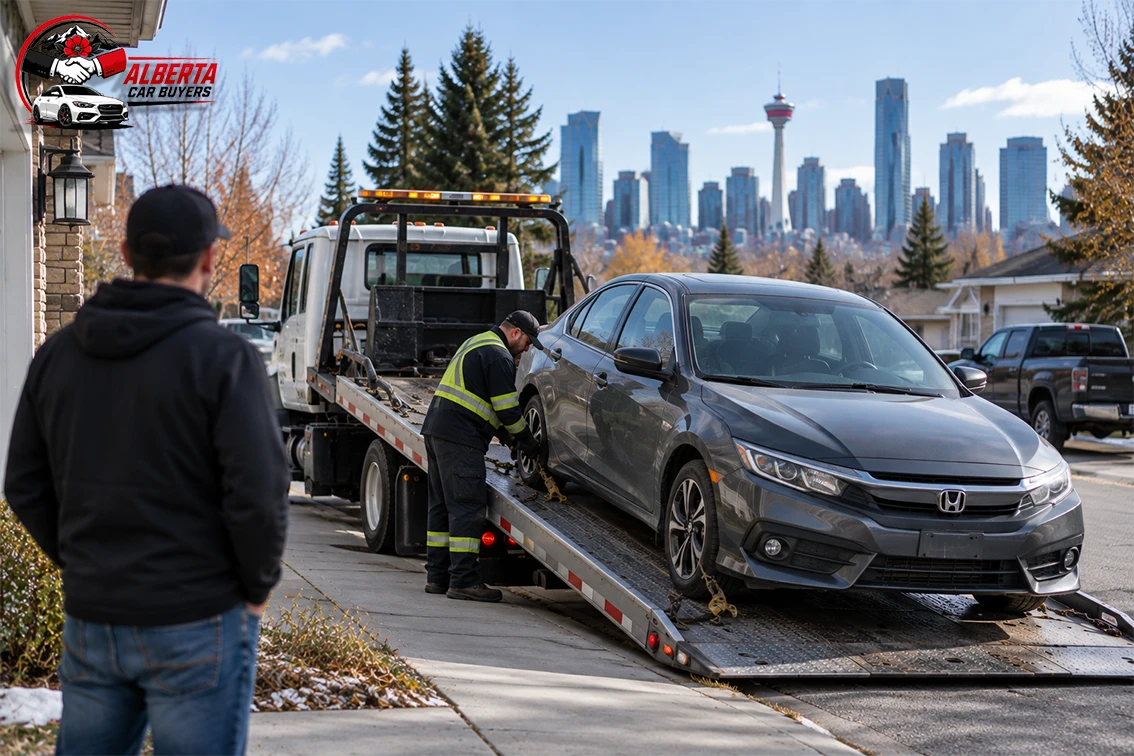

A damaged car sitting in your driveway is a decision waiting to be made. Most Calgary owners either commit to an expensive repair without checking the numbers first, or assume a wrecked car has no value and give it away. Neither approach serves you well. The smarter move is to run a quick financial comparison before doing anything. Repair costs in Calgary are rising, and what wreckers will pay for a damaged vehicle is higher than most people expect.
This guide walks you through how to make that call clearly, what the numbers actually look like, and how to get the most out of a vehicle you’ve decided to let go.
How to Decide: Repair Costs vs. What the Car Is Actually Worth
The core question is straightforward: does the cost of repairing the vehicle exceed what the car is worth once it’s fixed? If yes, selling makes more financial sense. If no, repairing may be worth it, depending on your situation.
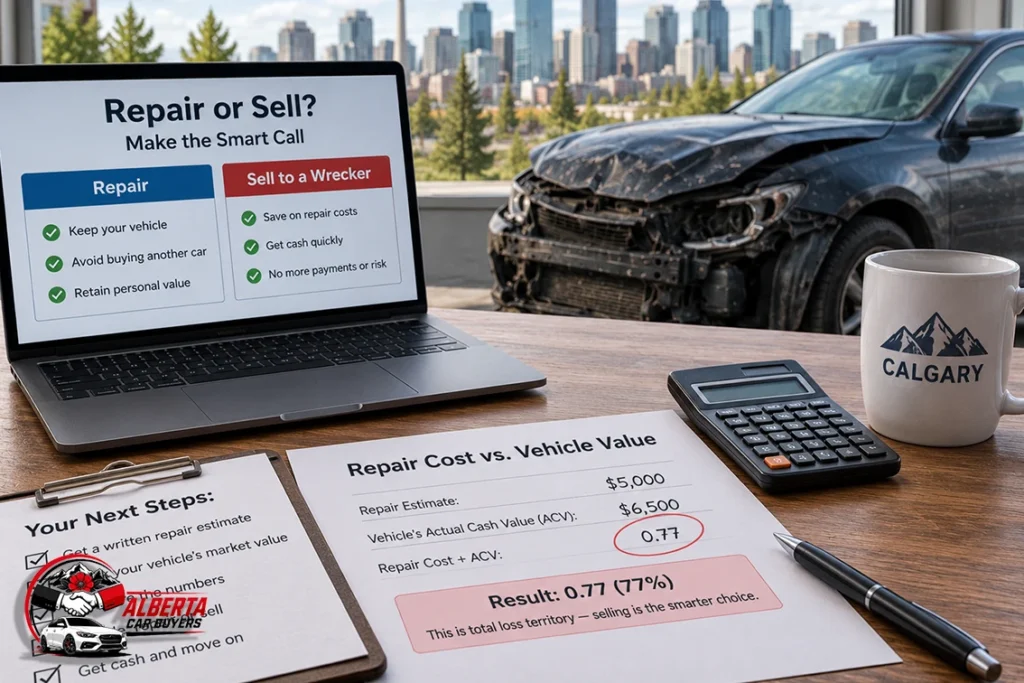
A useful benchmark comes from the insurance industry. In Canada, insurers typically treat a vehicle as a total loss when repair costs reach 70% to 80% of the vehicle’s actual cash value (ACV). That threshold exists because once repairs approach that range, the financial case for fixing the car collapses even before accounting for the possibility of further issues down the road.
You don’t need an insurance adjuster to apply this logic yourself. Here’s how:
- Get a written repair estimate. Take the vehicle to an independent shop in Calgary. Labor rates at independent shops currently run $100 to $130 per hour in Alberta, compared to $145 to $190 per hour at dealerships. Getting at least two estimates gives you a reliable figure to work with.
- Find your vehicle’s actual market value. Check what comparable vehicles are selling for on Kijiji or Canada Drives in the Calgary area. This is your ACV: what the car would be worth in good condition.
- Calculate the ratio. Divide your repair estimate by the ACV. If the result is 0.7 or higher, you’re in total loss territory and selling is almost certainly the better financial decision.
- Factor in your equity position. If you still owe money on the vehicle, that changes the maths. A car worth $8,000 with $6,000 still owing and a $5,000 repair bill is a very different situation than the same car owned outright.
When Repairing Makes Financial Sense
Repairing is worth considering when the damage is cosmetic or involves a single system, the repair cost sits well below 50% of the vehicle’s market value, and the car is otherwise in solid mechanical shape. It also makes more sense when the vehicle has high replacement value, meaning what you’d spend to buy a comparable vehicle would be significantly more than the repair cost. Newer vehicles with low kilometers and strong resale value in the Calgary market, like late-model trucks and SUVs, often clear this bar.
When Selling to a Wrecker Makes More Sense
Selling to a wrecker makes sense when repair costs approach or exceed 70% of what the car is worth, when the vehicle has multiple mechanical issues beyond the visible damage, when it’s older and would require ongoing maintenance even after repairs, or when you simply need cash now rather than a repaired vehicle later. In Calgary’s market, where repair cost inflation has been running ahead of the national average, more vehicles are crossing that threshold than owners realise.
What Calgary Auto Wreckers Actually Pay for Damaged Cars
Most people underestimate what a damaged vehicle is worth to a wrecker. Auto wreckers aren’t just buying scrap metal; they’re buying usable parts, and a damaged car can still have significant parts value even when it’s not drivable.
What affects your payout:
| Factor | Why It Matters |
|---|---|
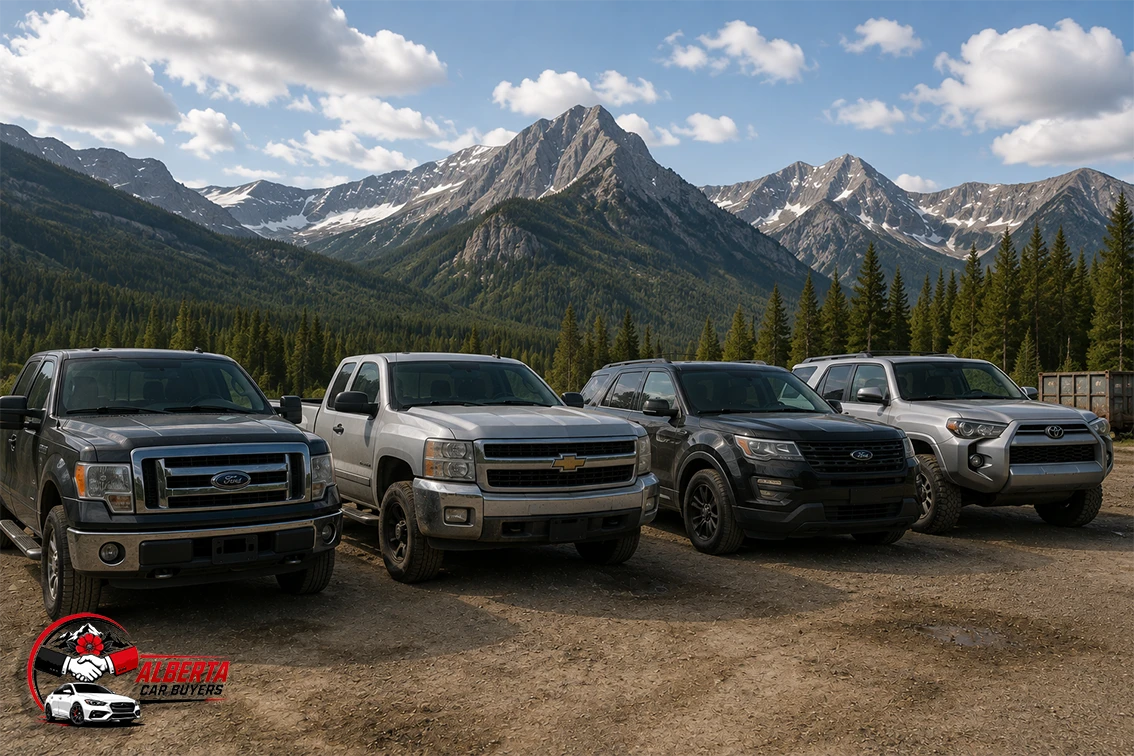
| Make and Model | High-demand vehicles (F-150, Silverado, RAV4) generate stronger parts demand in the Calgary market. |
| Year and Kilometres | Newer vehicles with lower kilometres have more usable parts. |
| Type and Location of Damage | Structural damage is more limiting than body or cosmetic damage. |
| Intact Major Components | Engine, transmission, and catalytic converter condition significantly affect the offer. |
| Metal Weight | Heavier trucks and SUVs return more in base scrap value. |
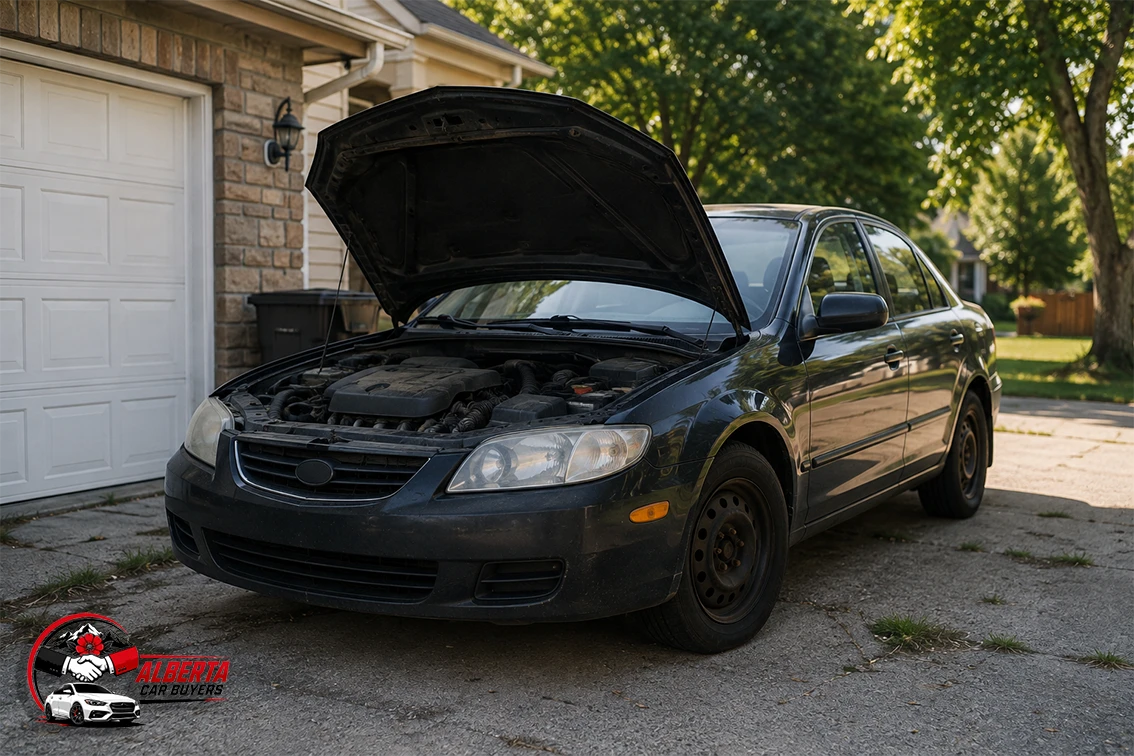
Wreckers price vehicles by considering both scrap metal value and recoverable parts value. A damaged vehicle with an intact drivetrain and a good catalytic converter is worth considerably more than one that’s been stripped or has a seized engine. Being honest about what’s damaged and what isn’t gets you a more accurate quote and avoids last-minute adjustments at pickup.
How to Get the Most Cash for a Damaged Car in Calgary
Getting the best offer for a damaged vehicle comes down to preparation and knowing who to call.
- Don’t repair anything before getting quotes. Buyers price what they see. A partial repair that cost you $500 may not increase the offer by the same amount, and in some cases won’t move it at all.
- Know what’s still working. Before you call, take stock of what’s intact: engine condition, transmission, whether the catalytic converter is in place, and which body panels are undamaged. This information directly affects your offer.
- Get more than one quote. Offers vary between buyers depending on their current parts inventory and demand. A vehicle one buyer has no use for may be exactly what another needs.
- Have your paperwork ready. You’ll need your vehicle registration and a government-issued photo ID to complete the ownership transfer in Alberta. Missing paperwork slows the process and can delay your payment.
- Be upfront about the damage. Describing the damage accurately when you call leads to an accurate offer. Surprises at pickup almost always result in a revised quote, and usually not in your favour.
Sell Your Damaged Car in Calgary Today
If you’ve run the numbers and selling makes more sense, Alberta Car Buyers is ready to help. We buy damaged vehicles in any condition across Calgary and the surrounding area, offer free towing, and pay you on the spot. There are no hidden fees and no pressure. Call us at +1 (587) 324-2142 or email is [email protected] to get a real offer on your vehicle.
Frequently Asked Questions
Conclusion
The repair vs. sell decision comes down to one comparison: what repairs will cost versus what the car is actually worth. When repair costs push past 70% of your vehicle’s market value, the financial case for fixing it rarely holds up, and Calgary’s rising labour rates make that threshold easier to hit than it used to be. Wreckers pay more than most people expect for damaged vehicles, especially when major components are still intact. If you’re leaning toward selling, get your paperwork together, know what’s still working on the car, and get at least a couple of quotes before committing. The vehicle has value; it’s a matter of knowing where it lies.
References & Further Reading
- BrokerLink. Can I Keep My Car After the Insurance Write-Off? brokerlink.ca/blog/can-i-keep-my-car-after-the-insurance-write-off. Published February 24, 2026.
- CAA South Central Ontario. What Is a Total Loss? caasco.com/insurance/auto/what-is-a-total-loss. Accessed July 2026.
- MyChoice. The Rising Cost of Car Repairs in Canada: Market Analysis. mychoice.ca/blog/rising-cost-of-car-repairs-canada. Published February 10, 2026. (Underlying data sourced from Statistics Canada repair cost inflation figures.)
- On the Move Canada. How Much Should My Car Repair Cost in Canada? (2026 Guide). onthemovecanada.com/living/banking/how-much-should-my-car-repair-cost. Accessed July 2026.
- Government of Alberta. Transfer a Vehicle Registration. alberta.ca/transfer-vehicle-registration. Last updated July 8, 2026.
- ScrapMonster. Scrap Metal Prices in Calgary, Alberta. scrapmonster.com/scrap-yards/prices/calgary/1441. Updated bi-weekly, accessed July 2026.