
If your vehicle is old, damaged, or no longer worth repairing, an auto wrecker may seem like the obvious next call. The hesitation usually comes right after that: what actually happens once you make contact? Who inspects the car, what decides the offer, and who handles the paperwork and the towing? Not knowing is often what leaves an unwanted car sitting in the driveway for another season. The process gets far more predictable once you understand how a vehicle is assessed, what affects the offer, which documents may be needed, how pickup works, and where the car goes afterward. This guide walks through each stage step by step, so you know what to expect before you agree to anything.
Ready to Sell Your Car to an Auto Wrecker in Red Deer?
If you want to know exactly what your vehicle is worth under current Alberta market conditions, Alberta Car Buyers can give you a firm number quickly. We buy vehicles in any condition across Calgary and 55+ Alberta cities, with free towing and cash paid on pickup. Email hello@albertacarbuyers.ca or get a quote and we’ll get back to you with a real offer, no obligation.

Key Takeaways
Here’s the short version of what this guide explains:
- Selling to an auto wrecker typically involves an assessment, an offer, ownership verification, and a pickup or drop-off arrangement.
- Condition, completeness, make, model, age, and usable parts can all influence a vehicle’s value.
- A vehicle doesn’t necessarily need to run to be considered for purchase or removal.
- Before pickup, confirm the price, condition, pickup arrangements, payment method, and any document or key requirements.
- After pickup, the vehicle may be inspected for reusable parts and recyclable materials.
What Happens When You Sell a Car to an Auto Wrecker in Red Deer?
When you sell a car to an auto wrecker in Red Deer, the process generally starts with sharing the vehicle’s details, followed by an assessment and an offer. If you accept, the buyer confirms ownership and documents, arranges pickup or drop-off, completes payment, and takes the vehicle, which may then be dismantled for parts and recycled. Steps can vary between buyers.
That’s a general pattern, not a fixed script. One wrecker might quote from a phone call, another wants photos first, and some send a tow truck while others expect you to deliver the car.
Is an Auto Wrecker the Same as a Salvage Yard or a Scrap-Car Buyer?
The terms overlap in everyday conversation but aren’t always interchangeable:
- Auto wrecker: typically buys vehicles to dismantle them, selling reusable parts and recycling what’s left.
- Salvage yard: often the lot where vehicles or their parts are stored and sold.
- Scrap-car buyer: usually focuses on a vehicle’s metal value.
- Vehicle descriptions: “old,” “damaged,” “non-running,” “junk,” and “scrap” can overlap, but they aren’t identical.
Many businesses blend these roles, so ask what the buyer does with your car.
Why Would Someone Sell to an Auto Wrecker Instead of Repairing or Selling Privately?
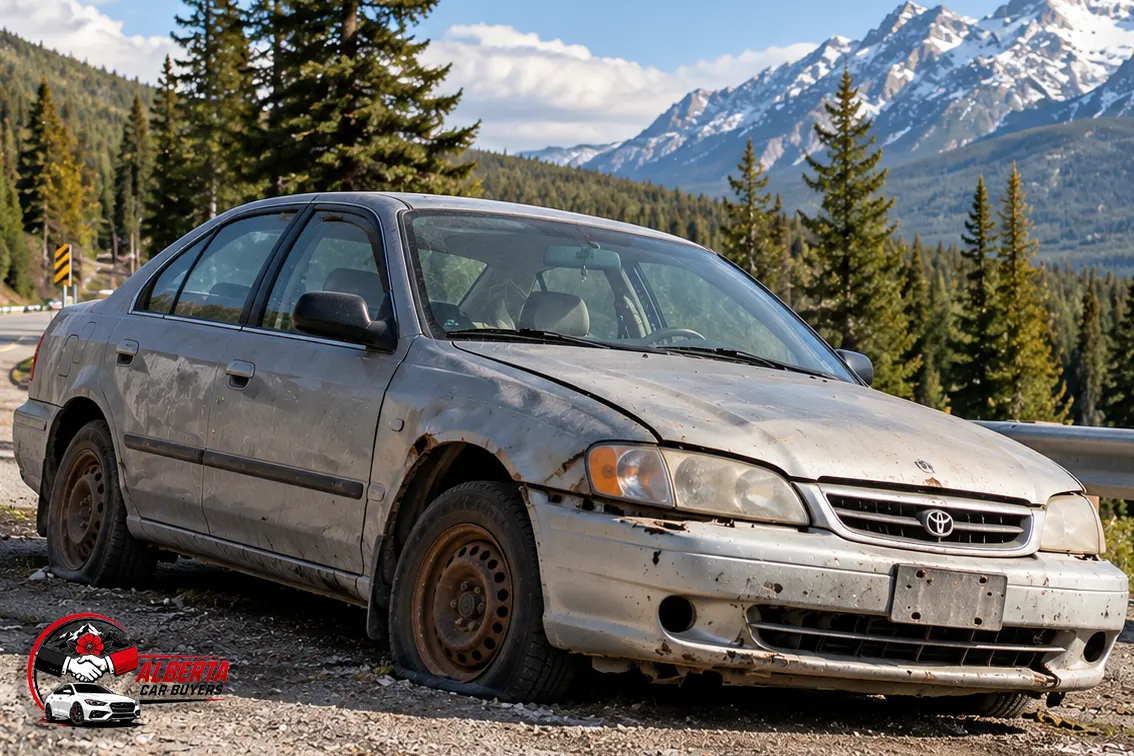
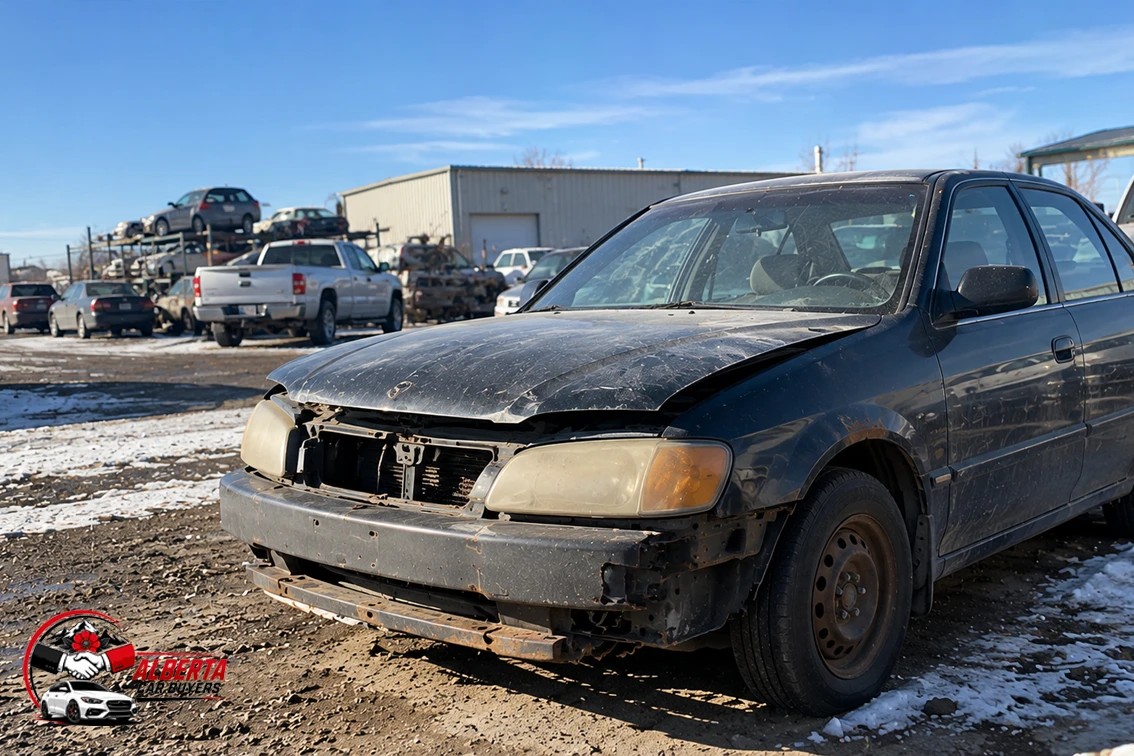
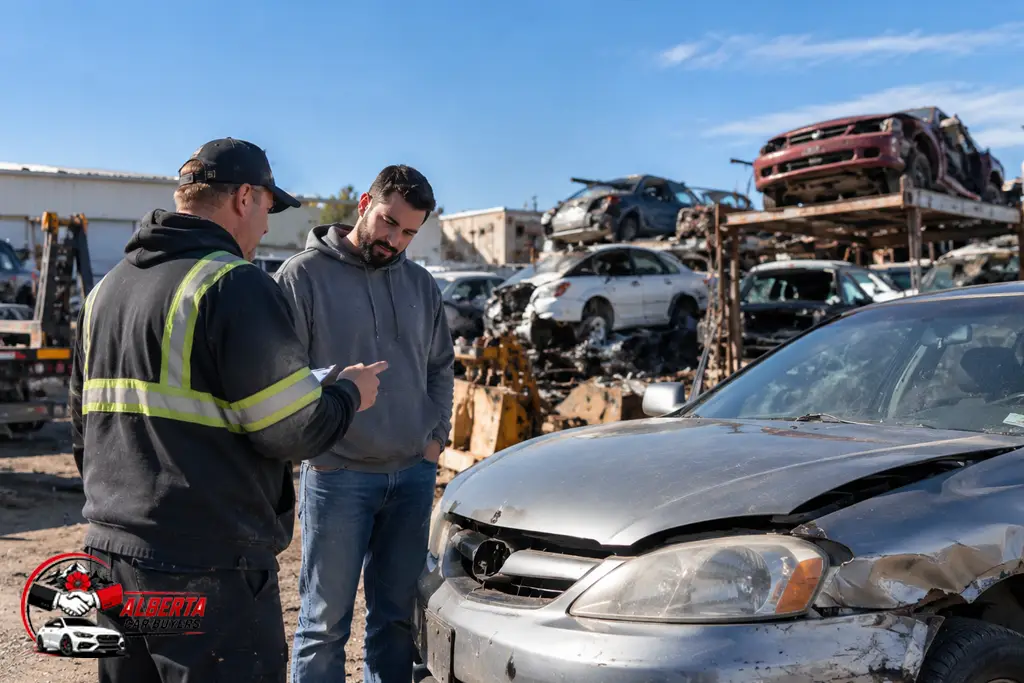
People usually choose an auto wrecker when a vehicle costs more to fix than it’s worth, won’t start, or has sat unused too long to sell easily. The appeal is convenience: one buyer, often a pickup, and no listings or test drives. Owners who sell a car to an auto wrecker in Red Deer are often in one of the situations below.
When Do Repairs Stop Making Sense?
Compare a written repair estimate with what the car could realistically sell for. Repairs most often stop making sense in these situations:
- An older vehicle where one repair, such as a transmission job, would cost more than the car is worth
- A car that doesn’t start and has no obvious, affordable fix
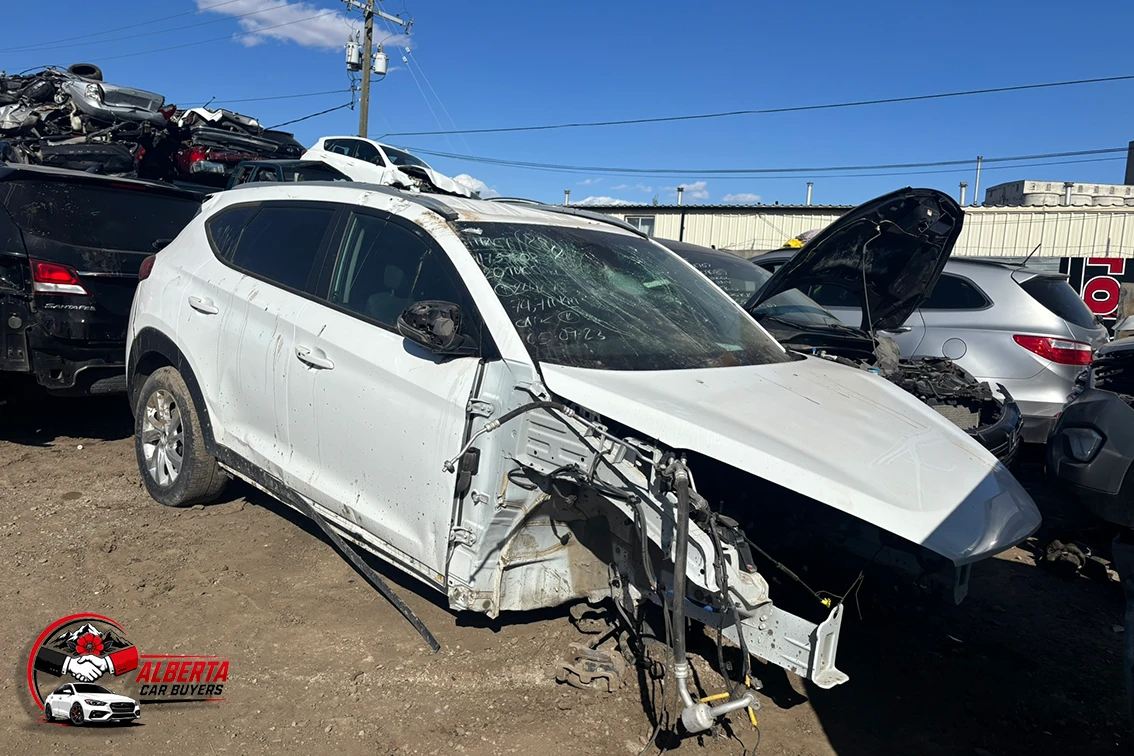
- A vehicle damaged by a collision, hail, or flooding
- A car that has sat unused through a few Red Deer winters and now needs more work than it’s worth
There’s a local reason not to wait. The City of Red Deer takes property complaints about derelict vehicles parked on private property under its Community Standards Bylaw 3669/2021, so a dead car left in a driveway or on a lot can turn into a bylaw issue. Whether a given vehicle counts is up to the city.
How Does Selling to a Wrecker Compare With a Private Sale or Trade-In?
Each route trades something away:
- Private sale: can bring a higher price for a running car, but you handle the listing, inquiries, and paperwork.
- Trade-in: convenient if you’re buying from that dealer, though very old or damaged cars may get less interest.
- Auto wrecker: typically suited to vehicles that aren’t worth much at retail, since the buyer values parts and materials instead.
For more on this, see the benefits of selling a car to an auto wrecker in Alberta.
What Are the Steps When You're Selling a Car to an Auto Wrecker?
Selling a car to an auto wrecker in Red Deer typically follows nine steps, from gathering your vehicle’s details to the handover, payment, and what happens to the car next. The order can shift between businesses, but this is the general sequence:
- Gather basic vehicle information
- Request an assessment or offer
- Discuss the vehicle’s condition
- Review the offer and transaction terms
- Confirm documentation and ownership requirements
- Arrange pickup or drop-off
- Prepare the vehicle
- Complete the pickup and transaction
- The vehicle enters the next stage of its life
Step 1: Gather Basic Vehicle Information
Start with the year, make, model, approximate mileage, and VIN, which is usually visible on the dashboard near the windshield. Note whether it runs and what’s wrong with it. Buyers use these details to understand the vehicle before anyone travels.
Quick Tip: Have the vehicle’s year, make, model, approximate condition, and running status ready when you request an assessment. Clear information helps the buyer understand the vehicle before arranging pickup.
Step 2: Request an Assessment or Offer
Contact the buyer by phone or online form and describe the vehicle. Some businesses quote from your description, while others ask for photos or want to inspect the car first. Treat an early number as an estimate until you know it’s firm, and ask what could change it. Contacting more than one buyer lets you compare offers side by side.
Step 3: Discuss the Vehicle's Condition
Mention damage, warning lights, missing components, and anything replaced or removed, such as wheels, the battery, or the catalytic converter. A buyer’s assessment depends on whether the car is complete and what’s still usable, so an honest description keeps the offer from shifting once someone actually looks at the vehicle. It also keeps the pickup quick, since the driver isn’t reassessing the car.
Step 4: Review the Offer and Transaction Terms
Look at more than the dollar figure. Ask whether towing is included, when and how you’ll be paid, and what could change the amount at pickup. Receiving an offer usually doesn’t obligate you to sell, but confirm that.
Quick Tip: Before you agree to an offer, confirm whether the quoted amount depends on the vehicle’s actual condition, missing parts, or other details that may be verified at pickup.
Step 5: Confirm Documentation and Ownership Requirements
Ask exactly what the buyer needs from you. That commonly includes government-issued photo ID and ownership paperwork, though requirements vary. If you’re missing a document, raising it early gives you time to track it down before pickup is booked, and it helps the buyer plan the visit. Ask which documents they’d like to see on the day. The documents section below explains what Alberta’s registry guidance says.
Step 6: Arrange Pickup or Drop-Off
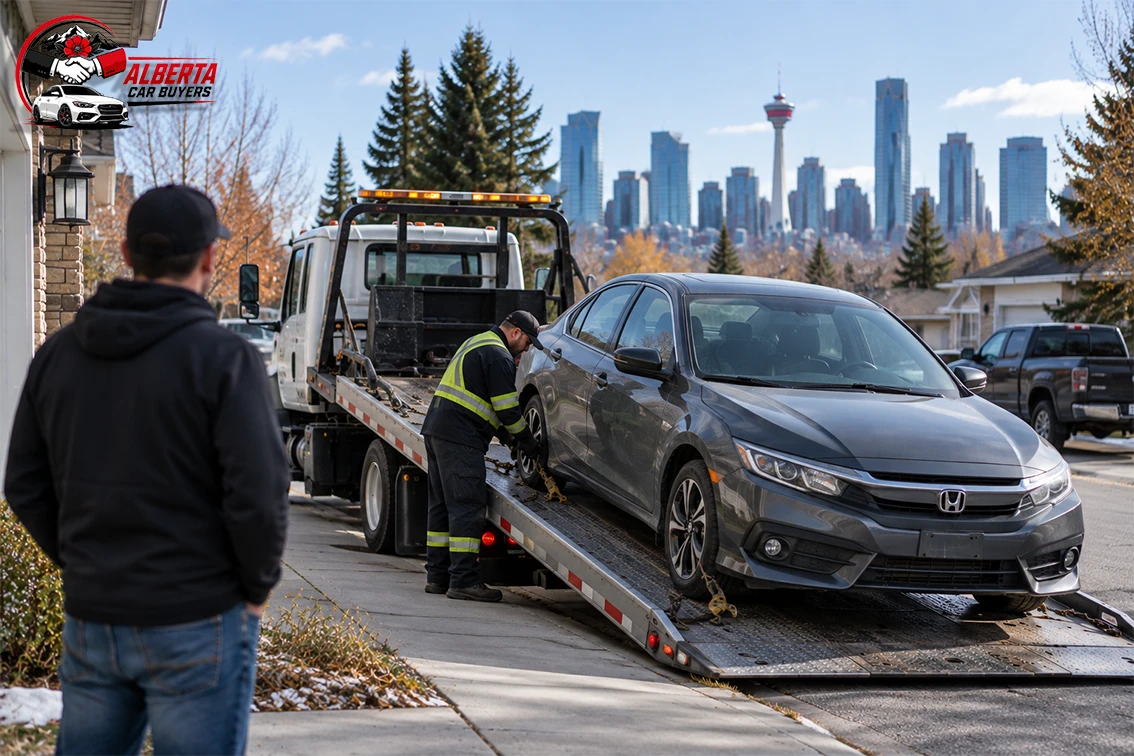
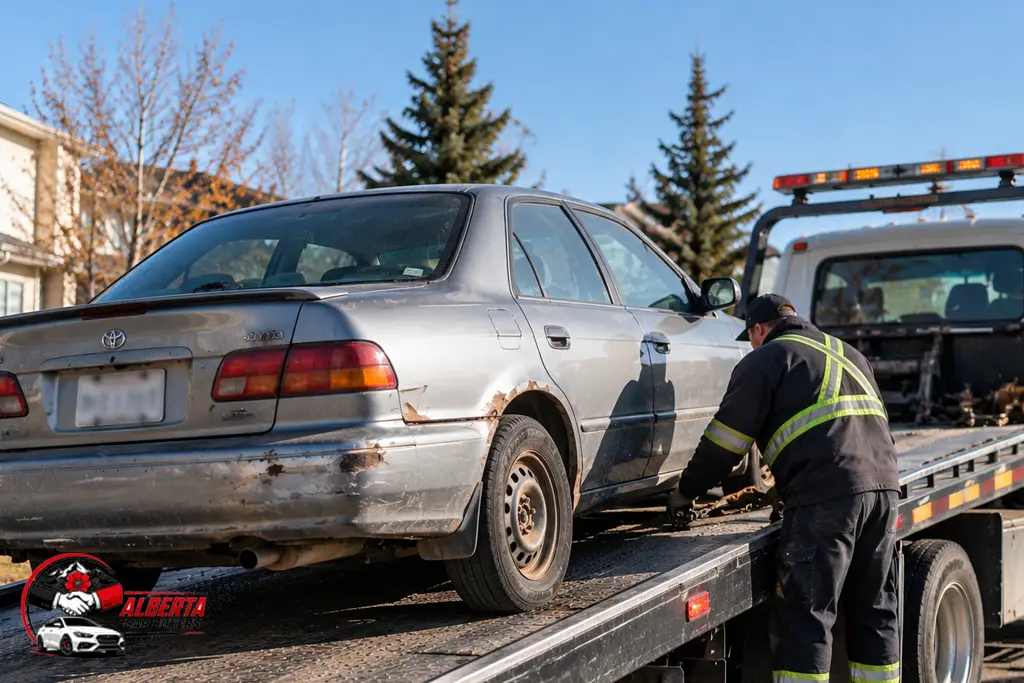
If the buyer offers pickup, agree on a time and confirm the car’s exact location, especially if it’s behind a locked gate, in a Red Deer alley, or on an acreage in Red Deer County. If you’re dropping it off, confirm the yard’s hours and whether a non-running car can be delivered. Ask about any towing charge before committing to a date, and keep your phone handy that day.
Step 7: Prepare the Vehicle
Clear out the glove box, trunk, door pockets, and the space under the seats, and check for garage door openers or parking passes. Gather your keys, ID, and ownership paperwork, and plan for your license plates, which are typically kept by the seller.
Quick Tip: Remove personal belongings from the vehicle and gather the documents, keys, and ownership information you may need before it’s collected.
Step 8: Complete the Pickup and Transaction
The driver or yard staff will typically compare the vehicle with your description, check the VIN against your paperwork, and confirm the agreed terms. You sign, receive payment in the agreed form, and hand over the keys. Keep a copy or photo of the paperwork and any receipt.
Quick Tip: Before you hand over the vehicle, confirm the agreed transaction details and make sure the payment arrangements are clear.
Step 9: The Vehicle Enters the Next Stage of Its Life
After the handover, what happens to the car depends on the buyer and the vehicle. Many are stripped of reusable parts, drained of fluids, and processed for recycling, though a buyer may handle a vehicle in better shape differently. You don’t normally need to do anything further with the vehicle itself, but you’ll want to take care of your plates and insurance on your end. The section on what happens after pickup explains what typically follows.
What Does the Process Look Like at a Glance?
The table shows where you’re responsible and where the buyer takes over. Not every wrecker uses this exact sequence.
| Stage | What You Do | What May Happen |
|---|---|---|
| Vehicle information | Provide basic details | The buyer reviews the vehicle |
| Assessment | Describe the condition | The vehicle is evaluated |
| Offer | Review the proposed amount | Terms are discussed |
| Documentation | Provide required information | Ownership is confirmed |
| Pickup | Prepare the vehicle | The vehicle is collected |
| Transaction | Confirm payment | The sale is completed |
| After pickup | Stop using the vehicle | It may be dismantled or recycled |
How Does an Auto Wrecker Assess a Vehicle and Decide What It's Worth?
An auto wrecker typically assesses a vehicle by reviewing its year, make, model, condition, completeness, and running status, then weighing the value of reusable parts and recoverable materials. Offers can differ between buyers because each business has its own demand for parts and its own costs.
What Factors Can Influence the Offer?
No single factor decides the number. These come up most often:
- Year, make, and model: demand for parts differs by vehicle.
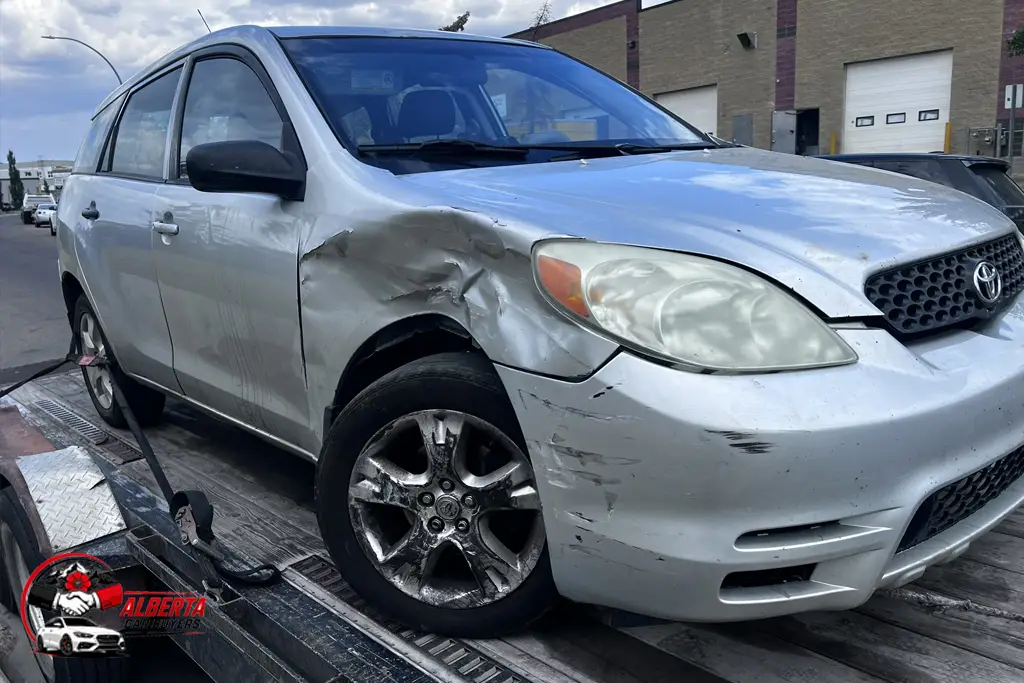
- Overall condition: collision, flood, fire, or hail damage can reduce what’s recoverable, though usable parts may remain.
- Completeness: a complete car generally gives the buyer more to work with.
- Running status: a working engine and transmission can be resold.
- Material value: the metal in a vehicle has a value that moves with the market.
Two buyers can quote different amounts for the same car, so no single price applies to every vehicle in Red Deer.
Does a Non-Running or Incomplete Car Still Have Value?
It can. A vehicle that won’t start still contains metal and may hold parts with resale value, so it mostly changes the logistics, such as arranging a tow. These options for selling a car that won’t start lay out the common routes. Missing components can lower an offer, so mention them up front. See also this guide to selling a car with missing parts.
What Documents and Ownership Details Might You Need?
Most buyers ask for government-issued photo ID and some proof that the vehicle is yours to sell, such as a bill of sale or other ownership paperwork. Requirements vary, so ask what your buyer needs before pickup day.
Why Isn't a Registration Certificate Enough on Its Own?
The Government of Alberta states that an original registration certificate doesn’t constitute proof of ownership, and its guidance points to a bill of sale or another transfer document instead. Alberta’s standard bill of sale lists both parties’ names and addresses, the VIN, a vehicle description, the price, and signatures. If a loan is still owing, tell the buyer early, since it can affect the sale.
What Should You Do About License Plates and Insurance?
Alberta’s license plate guidance says that if you no longer need a plate, you can return it to any registry agent office in person or by mail, and your file is then updated to show you no longer have it. Canceling your registration may also bring a refund if you’re eligible. Alberta’s registry agent finder can point you to an office in Red Deer, and your insurer can explain what to do about your coverage.
Why Might a Buyer Ask for a Photo ID?
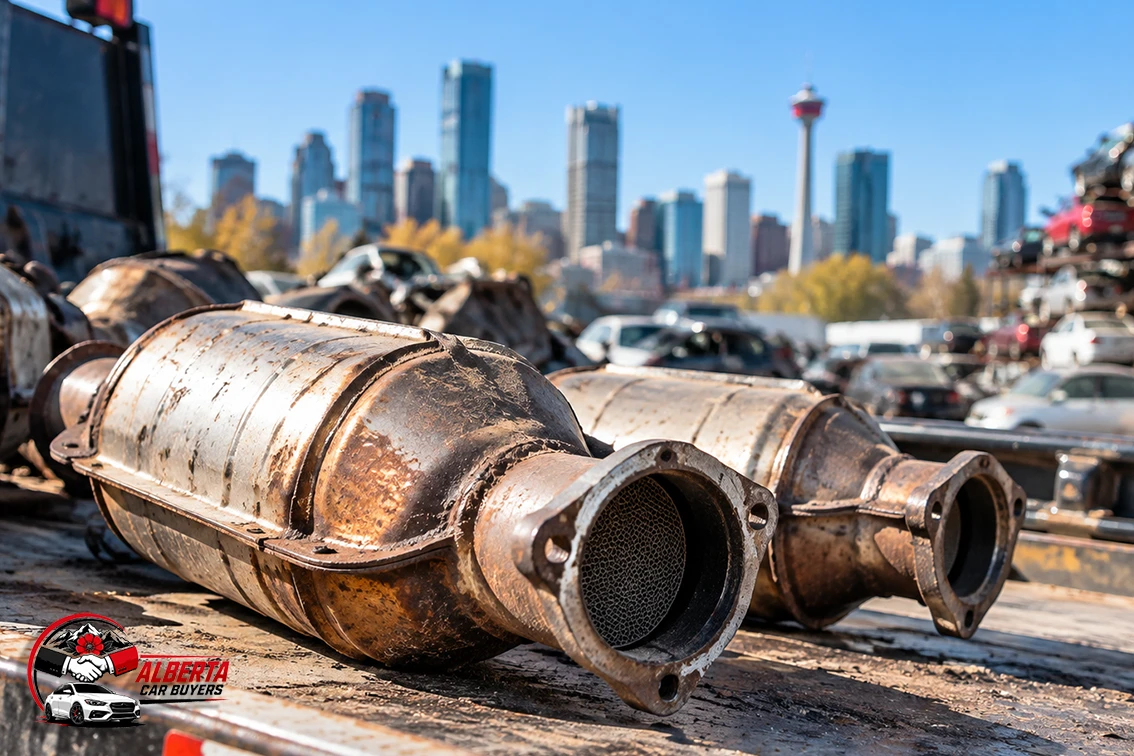
Photo ID lets the buyer confirm you’re the person named on the paperwork. Alberta’s scrap metal rules add another reason in some transactions: purchasers of regulated items such as catalytic converters and lead-acid batteries must record the seller’s name, address, and government-issued photo ID. Those rules cover the specific items, not automatically every vehicle sale, so requests can vary between buyers.
- Read Also:
Do Auto Wreckers Pick Up Cars in Red Deer, and What Happens at Pickup?
Some auto wreckers in Red Deer pick up vehicles, while others expect sellers to deliver them, so confirm it rather than assume. Ask whether pickup is offered at your address, whether towing is free or charged, and whether the service area covers where the car is parked, whether that’s in the city, in Red Deer County, or in a nearby town such as Sylvan Lake, Lacombe, Blackfalds, or Penhold.
Does Where the Buyer Is Based Matter in Red Deer?
It can. Red Deer sits on Highway 2 between Calgary and Edmonton, so you may hear from buyers based in either city as well as local ones. A buyer who regularly covers central Alberta may schedule faster than one making a special trip, though that’s not a rule. From October to April, snow and ice on driveways and rural approaches can also complicate loading, so mention access conditions when you book.
What Happens When the Vehicle Is Collected?
Pickup is usually quick if the groundwork is done. Most collections follow this rhythm:
- The driver confirms the vehicle and VIN match the paperwork
- The car’s condition is compared with your description
- You sign the buyer’s documents and receive payment
- The keys are handed over, and the car is loaded or towed
If the car doesn’t match your description, the buyer may revisit the offer.
How Does Payment Usually Work?
Settle payment arrangements before pickup instead of at the curb. Ask whether you’ll be paid before the vehicle leaves, which method will be used, and whether deductions such as a towing charge could apply. Get a receipt showing the amount and date. If you’re asked to hand over the car first, get the payment timeline in writing, with the date and amount.
What Happens to Your Car After an Auto Wrecker Takes It?
After pickup, an end-of-life vehicle is typically checked for reusable parts, drained of fluids, and stripped of recoverable materials, with what’s left processed for recycling. The exact steps depend on the business, the vehicle’s condition, and the facilities involved.
Are Parts Reused, and What Happens to the Fluids and Metals?
Often. Automotive Recyclers of Canada (ARC) says professional recyclers first evaluate a vehicle for reusable components and recycle the remaining materials only after those parts are recovered. Engines, transmissions, wheels, and body panels can be sold when usable. ARC also points to the Canadian Auto Recyclers’ Environmental Code, which covers fluids, refrigerants, batteries, mercury switches, and tires, and is required for its provincial association members. Not every business is a member, so practices differ, and it’s fair to ask how a buyer handles these items. Recovered metals are recycled, and what’s left of the body is processed.
What Should You Prepare and Ask Before You Sell?
Use this short checklist before you commit, then again before pickup.
Before You Request an Offer
Having your information ready makes the quote more reliable. Pull together the following before you call or fill out a form:
- Year, make, model, approximate mileage, and VIN
- A plain description of the condition, including damage and anything missing
- Whether the car runs, and if not, what happened
- Your bill of sale or other ownership paperwork, and whether any loan is owing
Before Pickup Day
Most pickup-day problems trace back to something small. A quick run through this list prevents the usual ones:
- Remove all personal belongings and check every compartment
- Gather the keys, your photo ID, and your ownership documents
- Take off your license plates, since they typically stay with you
- Reconfirm the price, payment method, and pickup time
- Photograph the car and odometer for your records
Questions to Ask the Buyer
A few direct questions reveal how a business works and whether its offer is dependable. Ask them and note the answers:
- Is this quote firm, and what could change it at pickup?
- Is towing included, and is there any charge?
- Will I get a receipt or copy of the paperwork?
- How and when will I be paid?
- What do you do with the vehicle after you collect it?
Where Can You Learn More About Selling to an Auto Wrecker in Red Deer?
Before selling a car to an auto wrecker in Red Deer, you can review the auto wrecker in Red Deer service page from Alberta Car Buyers, which serves Red Deer and central Alberta, to see how it handles quotes and pickup, then compare it with other buyers. You can also call (587) 324-2142 with questions.
Final Questions Answered
Ready to Sell Your Car to an Auto Wrecker in Red Deer?
If you want to know exactly what your vehicle is worth under current Alberta market conditions, Alberta Car Buyers can give you a firm number quickly. We buy vehicles in any condition across Calgary and 55+ Alberta cities, with free towing and cash paid on pickup. Email hello@albertacarbuyers.ca or get a quote and we’ll get back to you with a real offer, no obligation.
Final Thoughts
Selling to a wrecker is less stressful when you know the sequence in advance. Understand the process before you agree to anything, give the buyer accurate information, and confirm the offer and terms. Prepare your documents and the vehicle, and settle pickup arrangements early. After the handover, the car may be dismantled, reused, or recycled. If you sell a car to an auto wrecker in Red Deer with those points covered, you’ll know what to expect.
References & Further Reading
- Government of Alberta. Register an Alberta vehicle in other jurisdictions (proof of ownership and registration certificates). https://alberta.ca/register-an-alberta-vehicle-in-other-jurisdictions
- Government of Alberta. Standard bill of sale. https://www.alberta.ca/standard-bill-sale
- Government of Alberta. Scrap metal transactions. https://www.alberta.ca/scrap-metal-transactions.aspx
- Government of Alberta. Cancel vehicle registration. https://www.alberta.ca/cancel-vehicle-registration.aspx
- Government of Alberta. Licence plates (returning license plates to a registry agent). https://alberta.ca/licence-plates
- Government of Alberta. Find a registry agent. https://www.alberta.ca/lookup/find-a-registry-agent.aspx
- City of Red Deer. Report a problem: Property complaints / Unsightly property (derelict vehicles on private property under Community Standards Bylaw 3669/2021). https://reddeer.ca/reportaproblem/categories/property-complaints/unsightly-property
- Collision Repair Magazine (Automotive Recyclers of Canada). Building on Success: A Canadian policy framework for ELVs (August 2026). https://www.collisionrepairmag.com/buyers-guide/recycling/article/15832281/automotive-recyclers-of-canada-building-on-success-a-canadian-policy-framework-for-elvs